Best Marine Grade Gear Oil for Outboard and Inboard Systems
Answering the common buyer question: which marine gear oil provides reliable protection for outboard and sterndrive gears? This guide focuses on premium, mid-range, and OEM-compatible options to help boat owners, technicians, and DIY enthusiasts pick the right lubricant. The top picks below are chosen for marine engine use, water-resistant performance, and compatibility with common gear cases. Ideal buyers include anglers, saltwater boat owners, and recreational sailors seeking long gear life and anti-wear protection.
| Product | Best For | Notes |
|---|---|---|
| Quicksilver Premium Gear Lube | Direct replacements in Mercury systems | Excellent wear protection and water-entry protection |
| Lucas Oil Marine Gear Oil | Generic 75W-90 needs | Follow manufacturer specs |
| STAR BRITE 80W-90 Marine Gear Lube | High-viscosity marine applications | Strong corrosion protection and API specs |
| Mercury OEM High-Performance Gear Lube | MerCruiser/sterndrive extreme use | Genuine OEM formula |
| Yamaha Yamalube 80W-90 Gear Lube | Yamaha and many brands | 32 oz pack, known for compatibility |
Quicksilver by Mercury Marine 80W-90 Premium Gear Lube
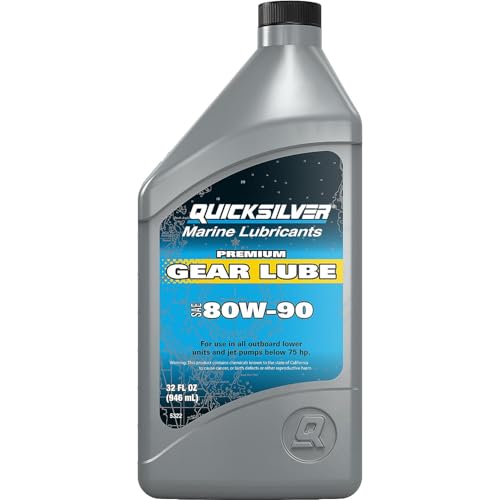
Best for Mercury-inclined systems or direct replacement scenarios, this gear lube is formulated to deliver maximum protection against wear, corrosion, and pitting in marine gear cases. It contains additives designed to guard gears if water enters the gear case or lower unit, making it reliable in less-than-perfect seal conditions. Best for boaters with Mercury/Mercury-compatible sterndrive setups who want OEM-aligned performance. Limitations include being optimized as a direct Mercury replacement; consider alternatives if your engine requires a broader brand compatibility profile.
Lucas Oil 10652 Marine Gear Oil 75W-90 M8

Best for boaters who follow manufacturer maintenance manuals and seek a synthetic SAW 75W-90 option. It aligns with typical marine gear lubrication requirements and emphasizes manufacturer-recommended intervals. Choose this if your outboard or stern drive manual specifically endorses 75W-90 synthetic gear oil. A potential limitation is that performance hinges on following your engine’s manual, and the product line may require verification for some older or nonstandard gear housings.
STAR BRITE Star Tron Synthetic Blend 80W-90 Unit Gear Lube
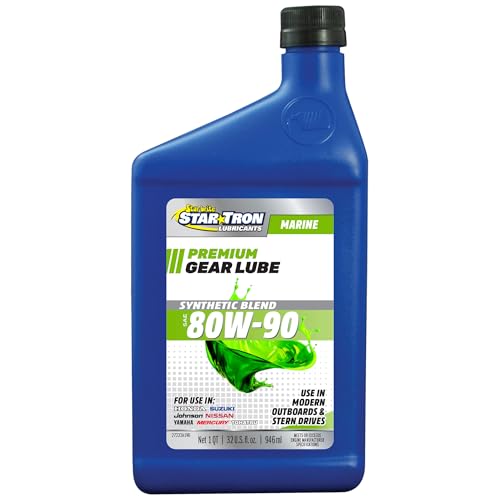
Best for engines over 100 hp needing an 80W-90 oil with long-term protection. This synthetic blend delivers high-viscosity performance and meets API GL-5, API MT-1, SAE J2360, and Mack GO-J specs. It’s a versatile option for various brands, offering robust anti-wear and anti-corrosion properties. Consider this when you want a single formulation across multiple outboard or stern drive brands. Avoid if your engine manufacturer requires an OEM-specific lubricant or a different viscosity.
Mercury Marine OEM High Performance Gear Lube

Best for extreme conditions, high-speed, and high-horsepower Mercury sterndrive applications. This is a genuine OEM formulation engineered to extend gear life under demanding marine operations. It provides extreme-pressure synthetic additives to protect gears from metal-to-metal contact. Ideal for Mercury-powered boats or when OEM compatibility is a priority. A limitation is that it is most suitable for Mercury systems, so cross-brand use should be verified.
Yamaha Yamalube Marine Lower Unit Gearcase Lube
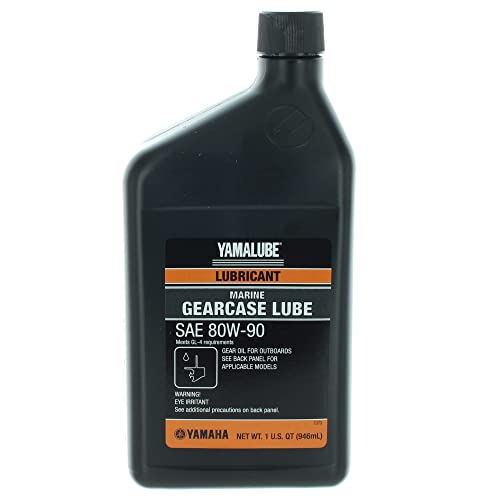
Best for Yamaha and multi-brand compatibility in smaller to mid-size marine applications. This 32-ounce gear lube is designed for 80W-90 weight and provides dependable performance with a known flash point (161°C). It’s a solid choice when you want a brand-aligned solution that is readily available for a wide range of outboard gear units. Limitations include variation in viscosity impact on older gear designs, so confirm your unit’s requirements before use.
Buying Guide
What to consider when choosing marine gear oil:
- Viscosity and specs: Most 80W-90 gear oils meet API GL-5 and SAE J2360. Check your engine manual for exact requirements.
- OEM compatibility: Some boats perform best with OEM-labeled lubricants designed for specific gear housings or sterndrives.
- Blend vs. synthetic: Synthetic or synthetic-blend formulas offer better oxidation resistance and temperature stability in harsh marine environments.
- Water resistance: Marine gear oils often include additives to protect against water intrusion and corrosion.
- Brand reach: If you operate a Mercury-dominant fleet, OEM or Quicksilver options may simplify maintenance across boats.
- Application range: For mixed brands, choose a universal or high-compatibility formulation that covers multiple brands.
- Availability: Stock and supply consistency matter for regular maintenance cycles aboard.
Frequently Asked Questions
- What weight of gear oil is standard for most marine gear cases?
Most marine gear cases use 80W-90 lubricants, with exact specifications available in the engine manual. - Can I use automotive gear oil in a boat?
Automotive gear oil can be similar, but marine formulations include anti-corrosion and water-intrusion protections tailored for water exposure. - Is OEM gear oil always the best choice?
OEM gear oil is a safe choice for compatibility, but many universal options work well across brands if specs match. - How often should I change marine gear oil?
Follow manufacturer recommendations; many boats perform annual or multi-season changes, especially in saltwater use. - What are signs I need to change gear oil soon?
Look for milky coloration indicating water intrusion, metallic debris, or a strong burnt smell from the oil. - Can I mix different gear oils?
Mixing is not recommended; if you must top off, use the same weight and type and fully replace during service intervals.