Best Marine Gel Battery Charger Options for 12v/24v Systems
If you need a reliable marine gel battery charger, you’re looking for a device that protects, maintains, and revives batteries on boats, docks, or floating living spaces. This guide highlights five top options that are well-suited for marine gel, AGM, and other lead-acid or LiFePO4 batteries. It explains who each charger is best for, with clear pros and a practical caution to consider before buying. A quick summary table below helps compare key details at a glance.
| Product | Best For | Key Benefit |
|---|---|---|
| YONHAN 20A 12V/24V | Users needing a fast, versatile maintainer for various chemistries | 7-stage charging with repair mode |
| NOCO Genius1 | Small boats and shore power setups needing precision at 6V/12V | Temperature-compensated precision charging |
| NOCO Genius GEN5X2 | Two-battery marine systems with independent banks | Two-bank onboard charging with multiple modes |
| FirstPower Pro 2 Bank 10A | IP68-rated, 2-bank reliability for 24/7 marine use | Independent bank operation with mode selection |
| NOCO Genius GEN2D | Under-hood installations needing direct-mount maintenance | Direct-mount onboard charging with desulfator |
YONHAN Battery Charger 20A 12V/24V

- 18–20A capable charger for 12V and 24V systems; supports LiFePO4, AGM, GEL, deep-cycle, and other lead-acid types.
- 7-stage charging with winter mode and smart control for temperature adaptation.
- Includes repair mode to help recover idle batteries and extend life; cannot revive a totally dead battery.
Best for: Boat owners who need a robust, all-around maintainer that covers multiple battery chemistries and seasonal conditions. Choose this if you want a fast, multi-chemistry charger with built-in repair support and strong safety protections. Caution: Not a jump starter; must be plugged into an outlet.
NOCO GENIUS1: 1A 6V/12V Smart Charger

- Compact, all-in-one charger, maintainer, trickle charger, and desulfator for 6V/12V lead-acid and LiFePO4 batteries.
- Integrated thermal sensor dynamically adjusts charging with ambient temperature.
- Protected against overcharge with temperature compensation; ideal for small boats and shore setups.
Best for: Small vessels or storage setups where space is at a premium but reliable, precise charging is required. Better for: single-battery systems that still need advanced features. Limitation: 1A output may be slow for larger or deeply depleted packs.
NOCO GEN5X2: 2-Bank 10A Onboard Charger
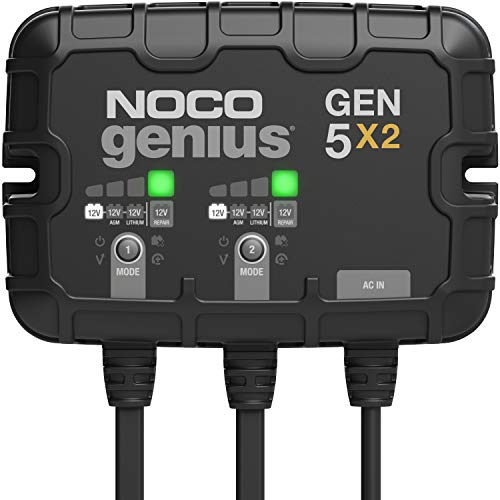
- Two independent 5A banks for 12V batteries; suitable for marine, boat, starter, and deep-cycle systems.
- Modes include 12V, 12V AGM, 12V Lithium, and 12V Repair; high durability for harsh marine environments.
- Compact yet powerful; supports simultaneous charging with bank separation.
Best for: Boats with two battery banks needing separate, reliable charging. Choose this if you want independent bank control and straightforward maintenance. Limitation: Requires correct bank mode selection to avoid cross-bank interaction.
FirstPower Pro 2 Bank 10A Marine Charger

- 2-bank, 5A per bank; IP68 waterproof rating for 24/7 onboard charging.
- Independent modes per battery: 12V SLA/AGM, 12V Lithium, 12V Calcium; Force Mode for dead batteries.
- Designed to maintain batteries during long trips or storage with reliable protection.
Best for: Marine applications requiring rugged, fully sealed hardware and the ability to wake up weak batteries. Better for: users who need a dedicated force-mode to bring nearly dead batteries back to life. Caution: Some batteries near complete discharge may need longer conditioning times.
NOCO GEN2D: 2A 12V Onboard Charger
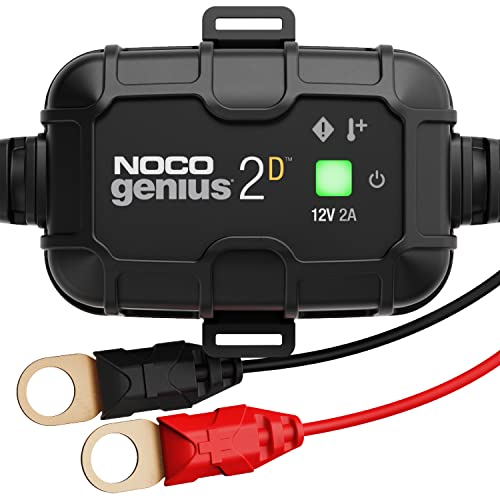
- Direct-mount onboard charger for under-the-hood battery charging; 12V lead-acid and LiFePO4 compatibility.
- Single bank, 5A, with a stable, corrosion-resistant installation approach.
- Modes include 12V, 12V AGM, 12V Lithium, and 12V Repair for precise maintenance.
Best for: Smaller boats or vehicles needing a compact, direct-mount charger. Choose this if you want an easy install near the battery with reliable performance. Limitation: Limited to a single bank and 5A output, which may not be ideal for larger, multi-battery systems.
NOCO GEN5X3: 3-Bank 15A Onboard Charger
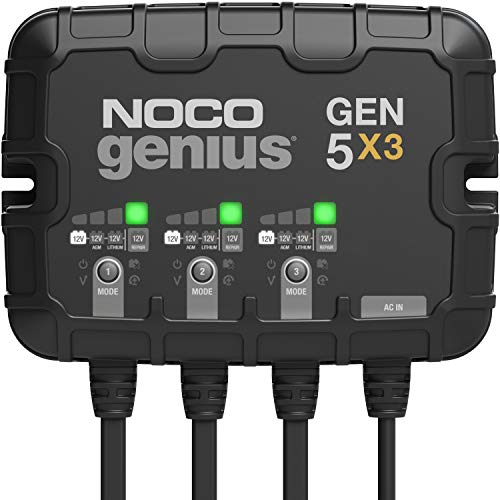
- Three-bank onboard charger with total 15A; 5A per bank for independent charging of marine batteries.
- Selectable modes per bank: 12V, 12V AGM, 12V Lithium, and 12V Repair; designed to handle diverse battery types.
- Engineered for resilience in harsh marine environments, with balanced maintenance across banks.
Best for: Boats with three battery zones needing separate, reliable charging. Choose this if you require multi-bank management with precise mode control. Limitation: Higher power and price may be overkill for small, single-bank systems.
Buying Guide: Key Considerations For Marine Gel Battery Chargers
- Battery types and compatibility: Ensure the charger supports gel, AGM, flooded, lead-acid, and LiFePO4 as needed. Marine use often requires versatile chemistries.
- Bank configuration: Decide between single-bank and multi-bank chargers. Multi-bank units simplify simultaneous charging of multiple batteries.
- Waterproofing and ruggedness: IP68 or higher ratings are preferable for dockside or open-water use; consider environmental exposure and vibration.
- Temperature compensation: Chargers with thermal sensors prevent overcharge in heat and undercharge in cold environments.
- Repair and desulfation modes: Pulse or desulfator features can extend life for idle or older batteries, but note limitations for totally dead cells.
- Installation considerations: Some units are direct-mount, others require space and wiring adjustments; ensure mounting hardware and cable routing fit your setup.
- Safety protections: Look for reverse polarity, overcurrent, short-circuit, and fireproof materials for added safety on boats and docks.
- Maintenance cycle needs: Consider the expected standby period; longer layups benefit from trickle and float maintenance features.
FAQ
- What is the difference between a trickle charger and a maintainer? A trickle charger supplies a low current to top off a battery, while a maintainer regularly monitors and maintains the battery to prevent self-discharge and sulfation.
- Can these chargers revive a dead battery? Some models offer repair or desulfation modes, but most cannot revive a completely dead 0V battery.
- Are marine chargers waterproof? Many marine chargers are IP68-rated or better; confirm the rating for your specific installation environment.
- Is multi-bank charging better than a single-bank charger? For boats with multiple auxiliary batteries, multi-bank chargers provide independent control and can improve charge balance.
- Do chargers require professional installation? Depending on the boat setup and wiring, a professional or experienced installer may be recommended for direct-mount or 24V configurations.
- Should I choose a charger with temperature compensation? Yes, it helps prevent overcharging in heat and undercharging in cold conditions, extending battery life.