Best Marine Fuse Block With Negative Bus for 12v/24v Systems
When building or upgrading a boat’s electrical system, a marine fuse block with a negative bus provides organized circuit protection and a common ground. This guide highlights five reliable options, explains who they’re best for, and helps you compare key features like total capacity, per‑circuit current, and protective covers. Ideal buyers include boat owners, RV travelers, and anyone maintaining 12V/24V DC systems who wants clear labeling and durable construction.
| Product | |||
|---|---|---|---|
| Blue Sea Systems ST Blade 6‑Way | 6 | 100 A | Integrated negative bus with protective cover |
| Blue Sea Systems ST Blade 12‑Circuit | 12 | 100 A | Larger circuit count with ground bus and cover |
| tutooper 6‑Circuit | 6 | Not specified per‑circuit total | LED indicator for blown fuses |
| ELECTOP 6‑Way | 6 | Up to 75 A panel, 32V DC | Clear labeling and protective cover |
| Nilight 6‑Way | 6 | Not specified per panel | Waterproof design and easy installation |
Blue Sea Systems ST Blade 6 Way With Negative Bus
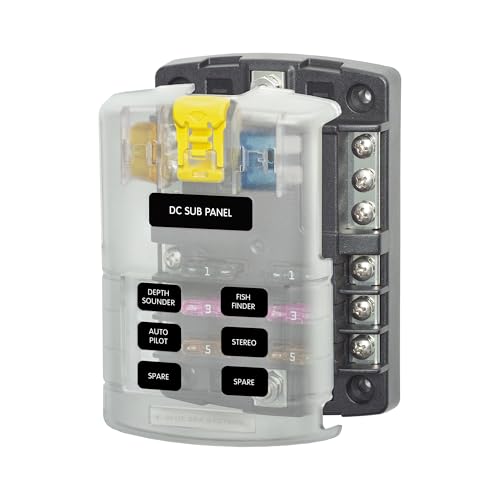
This 6‑circuit block integrates a negative bus and a clear insulating cover. It supports up to 100 amps total capacity and works with standard ATO/ATC fuses up to 30 amps per circuit, making it suitable for higher‑demand DC systems. The cover has a push‑button latch for secure operation and includes recessed label areas for easy circuit identification. Best for mid‑sized marine electrical systems that require a compact, all‑in‑one solution.
Who it’s best for: boat owners needing a compact, robust fuse block with a built‑in negative bus for reliable ground distribution. Why selected: proven Blue Sea engineering with a secure cover and integrated labeling aids maintenance. Caution: per‑circuit limits may require pairing with smaller fuses if total draw tends to exceed 100 A.
Blue Sea Systems ST Blade 12 Circuit With Ground

This 12‑circuit fuse block extends the same ground‑bus concept to a larger panel. With integrated negative bus and a clear cover, it accommodates more devices while maintaining neat wiring. Total capacity remains up to 100 amps, with recommended loads up to 30 amps per circuit when using standard blade fuses. Best for larger or expanding marine electrical systems that need more branch circuits in one enclosure.
Who it’s best for: owners planning future additions or higher electrical demand aboard. Why selected: higher circuit count preserves organization and reduces switch‑by‑switch wiring. Caution: installation may require extra space and careful labeling to prevent confusion across multiple circuits.
tutooper 6‑Circuit With Negative Bus

This 6‑circuit fuse block is designed for 12–24V systems and includes a built‑in LED indicator to show blown fuses. It supports a negative bus and aims for user‑friendly troubleshooting. Constructed for durable service in cars, marine vessels, RVs, and trucks. Best for those who want quick fuse diagnostics straight from the unit itself. Caution: LED indicators require proper wiring to avoid misinterpretation of fault status.
ELECTOP 6 Way Blade Fuse Block
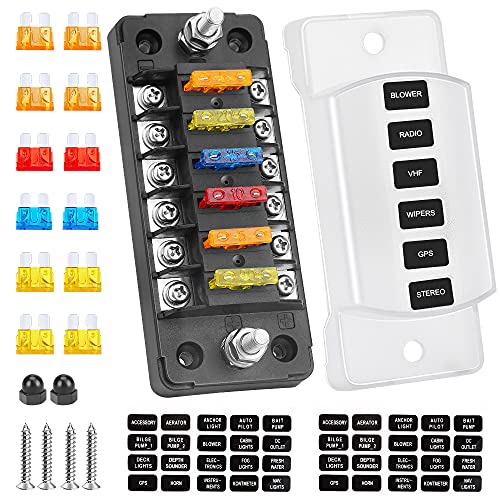
This 6‑way blade fuse block includes a negative bus and a clear protective cover. It supports up to 32V DC with a per‑circuit limit around 20A and up to 75A per panel. The design emphasizes safety with flame‑resistant PBT material and included pre‑printed DIY stickers for circuit labeling. Best for users needing straightforward circuit protection with visible labeling. Caution: per‑circuit limits may require careful planning for high‑draw devices on a single panel.
Nilight 6 Way With Ground

Nilight’s 6‑way fuse block features an integrated ground and a protective housing. The design is suitable for automotive, marine, and RV applications where a compact, waterproof solution is needed. It emphasizes ease of installation and straightforward wiring, suitable for users who value a simple, dependable upgrade to their electrical system.
Best for: small vessels or vehicles needing a reliable, all‑in‑one fuse block with a basic ground path. Limitation: specific per‑circuit amperage details vary by model; confirm fuse ratings before use on high‑demand circuits.
Buying Guide: Key Considerations For The Right Marine Fuse Block
- Total and per‑circuit capacity: Match the block’s total amperage and the expected draw of each circuit to prevent overloads.
- Negative bus integration: A built‑in negative bus simplifies grounding and reduces wiring clutter on small boats.
- Cover and labeling: A clear protective cover plus recessed label areas helps with maintenance and quick fault finding.
- Material and durability: Flame‑retardant plastics and corrosion‑resistant bus bars extend life in marine environments.
- Voltage range: Ensure compatibility with your system’s voltage (commonly 12V or 24V in marine use).
- Indicator features: LED indicators or fault lights can speed up diagnostics but require correct wiring to avoid confusion.
- Ease of installation: Look for blocks with universal blade fuses, integrated ground, and straightforward terminal arrangements.
- Expansion potential: If you plan to add circuits, consider a higher‑count block or one designed for future growth.
Frequently Asked Questions
- What is a negative bus and why do I need it?
– A negative bus provides a common ground for all circuits, improving fault isolation and wiring organization on marine DC systems. - Can I use standard ATO/ATC fuses with these blocks?
– Yes, most blocks in this category are designed for standard ATO/ATC blade fuses, with per‑circuit limits typically around 20–30 amps. - Is a clear cover necessary?
– A clear cover protects fuses from dust and moisture while letting you see the circuits at a glance, which is helpful at sea. - How many circuits should I start with?
– For small boats or RVs, 6 circuits is common; for expanding needs, 12 circuits may prevent future upgrades. - Are these blocks waterproof?
– Many units offer splash‑proof or weather‑resistant designs, but verify IP ratings if exposure is high or direct water contact is possible. - What should I consider for 12V vs 24V systems?
– Ensure the block’s voltage rating and labelings match your system; most marine fuse blocks target 12V, with 24V variants available.