Best Marine Fuel Treatment for Water: Clean, Protect, and Improve Your Boat’s Fuel System
If you’re looking to protect a marine engine from water contamination, gum, varnish, and ethanol-related damage, this guide helps you pick reliable fuel treatments. The selections below are positioned for boat owners and captains who want smoother starts, better fuel economy, and longer engine life. Each product is chosen for distinct marine-use strengths, from ethanol protection to injector cleaning. A quick buying table follows to compare core details at a glance.
Quick Comparison Table
| Product | Best For | Key Benefit |
|---|---|---|
| K-100 32oz Marine Grade Gasoline Fuel Treatment | All-around engine care | Dissolves gums/varnishes; clean burn |
| STA-BIL 360 Marine Fuel System Treatment 32 oz | Water removal and corrosion protection | Removes water; prevents ethanol damage |
| STA-BIL 360 Marine Ethanol Treatment | Ethanol-fueled engines | Prevents ethanol-related damage; cleaner fuel system |
| Star Tron Enzyme Fuel Treatment 32 oz | Fuel system cleaning and longevity | Enzyme technology; reduces deposits |
| Sea Foam Marine PRO MP20 | Marine-specific cleaning and lubrication | cleans injectors/carb jets; anti-corrosion |
K-100 32oz Marine Grade Gasoline Fuel Treatment

Brand: K-100
What it does: Improves overall engine efficiency, dissolves gums and varnishes, burns cleanly and completely with no ash deposits.
Best for: Boats requiring a general-purpose fuel treatment to keep the fuel system clean and combustion efficient. This product is well-suited for regular maintenance to prevent buildup and promote smoother operation.
Why selected: It focuses on gum/varnish removal and clean combustion, which helps high-use marine engines run reliably between services.
Limitations: Specific formulation details and test data aren’t provided here; consider pairing with a corrosion-focused treatment for ethanol-heavy fuels in some regions.
STA-BIL 360 Marine Fuel System Treatment 32 oz
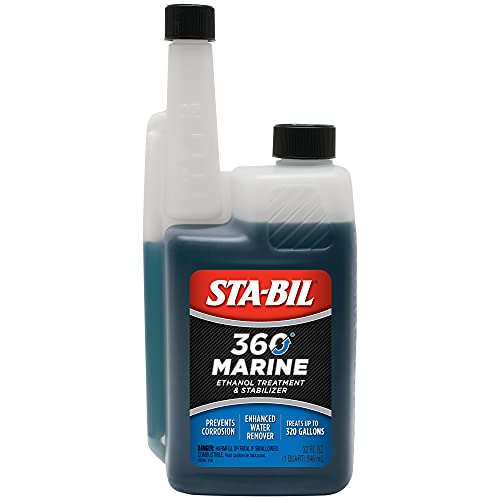
Brand: STA-BIL
What it does: Cleans the entire fuel system using PEA additives; removes water; prevents corrosion; improves overall fuel system performance.
Best for: Boat owners using ethanol-containing fuels who want water management and corrosion protection in one bottle.
Why selected: The 32 oz size treats up to 320 gallons, making it a practical option for mid-season refits and larger tanks while delivering broad cleaning and protection.
Limitations: Some users may prefer a higher-spec product for extreme fuel systems; efficacy depends on correct dosing and fuel consistency.
STA-BIL 360 Marine Fuel System Treatment, 10 oz

Brand: STA-BIL
What it does: Treats up to 100 gallons; fuel system cleaner and injector cleaner; removes water; prevents ethanol damage.
Best for: Small to mid-sized boats needing a compact treatment kit for regular maintenance and water removal.
Why selected: The product provides a focused approach to water removal and injector cleaning in a compact size for easy top-offs.
Limitations: Smaller volume means fewer gallons treated per bottle compared with 32 oz options; plan refills accordingly.
STA-BIL Marine Tune-Up Fuel Treatment

Brand: STA-BIL
What it does: Cleans carburetors and injectors; helps fix rough running engines; eliminates water; treats up to 20 gallons.
Best for: Small boats or engines that experience rough idle or minor fuel delivery issues due to deposits.
Why selected: It targets carburetors and injectors specifically, offering a focused tune-up option for engines showing fuel delivery symptoms.
Limitations: Limited treatment capacity (up to 20 gallons) makes it more suitable for smaller tanks or as a supplementary treatment in larger systems.
STAR BRITE Star Tron Enzyme Fuel Treatment

Brand: STAR BRITE
What it does: Uses enzyme technology to help engines start more reliably and run cleaner; helps prevent ethanol-related problems; aims to maximize fuel economy by reducing gum and varnish buildup.
Best for: Boat owners seeking a long-term fuel system health strategy that reduces deposits and supports smooth operation after storage or periods of inactivity.
Why selected: Enzyme-based treatment is a different mechanism compared with solvent cleaners, offering ongoing cleanliness and improved combustion efficiency.
Limitations: Enzyme products may require consistent dosing to maintain benefits; outcomes can vary with fuel quality and engine type.
Sea Foam Marine PRO MP20

Brand: Sea Foam
What it does: A complete marine fuel system treatment that cleans fuel injectors and carburetor jets; cleans and lubricates critical upper engine areas; helps prevent corrosion from ethanol and water.
Best for: Boats needing comprehensive fuel system maintenance with proven injector/jet cleaning and lubrication benefits.
Why selected: Sea Foam Marine PRO emphasizes cleaning and lubrication for marine environments with ethanol risks, offering broad protection.
Limitations: Pack size can vary; users should confirm dosing for their tank size to avoid over- or under-treatment.
Buying Guide: Key Purchase Considerations
What should I look for in a marine fuel treatment?
Focus on corrosion protection, water removal, and deposit cleaning. Ethanol-related issues are common in coastal areas; choose products that explicitly address ethanol damage if you operate on E10 or greater fuels.
How to choose by boat type and fuel system?
For small boats with simple fuel systems, compact 8–10 oz bottles can be convenient, but larger boats or frequent long trips benefit from 32 oz or multi-pack options. Diesel and gasoline require different additives; ensure the product matches your engine type.
How important is enzyme versus solvent chemistry?
Enzyme-based treatments (like Star Tron) work differently from solvent cleaners. Enzymes support ongoing cleanliness and can be effective after storage. Solvent cleaners quickly dissolve gums and varnishes but may need more frequent dosing in ethanol-rich fuels.
What about storage and usage during off-season?
For extended storage, use stabilizers and cleaners designed for winterization. Some products help prevent corrosion during inactivity, while others focus on moisture removal to protect fuel systems.
How to apply and measure dosing?
Read label directions for gallons treated per bottle. Inconsistent dosing can reduce effectiveness. Always use as part of a regular maintenance routine rather than a one-time fix.
FAQ
- Q: Do fuel treatments prevent rust in marine engines?
A: Many treatments include corrosion inhibitors designed to protect metal components from saltwater and ethanol-related corrosion. - Q: Can I use these treatments with ethanol-free gasoline?
A: Yes, but ethanol-focused formulations may not be necessary; select products that match your fuel type and engine needs. - Q: How often should I run a fuel system cleaner?
A: Follow the product label; typically at-season use or during regular maintenance cycles is recommended for best results. - Q: Will these treatments improve fuel economy?
A: Some products claim improved performance and mileage by cleaning the fuel system and optimizing combustion, but results vary by engine and usage. - Q: Are enzyme-based treatments safer for engines?
A: Enzyme treatments are generally considered low-risk and aim to reduce deposits; verify compatibility with your engine type. - Q: Should I mix different brands?
A: It’s best to stick to one brand per fueling cycle to avoid conflicting additives, unless explicitly advised by manufacturers.