Best Marine Fuel Tank Cleaners for Smoother Starts and Cleaner Gasoline
If you’re facing rough running engines, clogged fuel lines, or varnish buildup in your boat’s fuel system, selecting the right marine fuel tank cleaner is essential. This guide highlights five top products that are well-suited for boaters, anglers, and anyone maintaining a marine fuel system. Each option targets sludge, varnish, water separation, or ethanol-related issues, and is chosen for its clear benefits and practical use in saltwater or freshwater environments. Read on to compare how these cleaners perform and who should choose each one.
Product snapshot table
| Product | Use Case | Best For |
|---|---|---|
| STAR BRITE Star Tron Fuel Tank Cleaner | Sludge and varnish removal; old fuel rejuvenation | Boaters with stagnant tanks or aged fuel needing revitalization |
| STA-BIL 360 Marine Fuel System Treatment (32 oz) | Fuel system cleaning and water removal | Boats facing water in fuel and varnish buildup |
| STA-BIL 360 Marine Fuel System Treatment (1 gallon) | Comprehensive fuel system cleaning and protection | Large tanks or frequent use vessels |
| Chevron Techron Protection Plus Marine Fuel System Treatment (10 oz) | Alcohol-free fuel system protection | Preventing ethanol-related issues and water uptake |
| STAR BRITE Star Tron Enzyme Fuel Treatment (32 oz) | Enzyme-based fuel cleaning and stabilization | Preventing buildup and maintaining long-term fuel health |
Star BRITE Star Tron Fuel Tank Cleaner
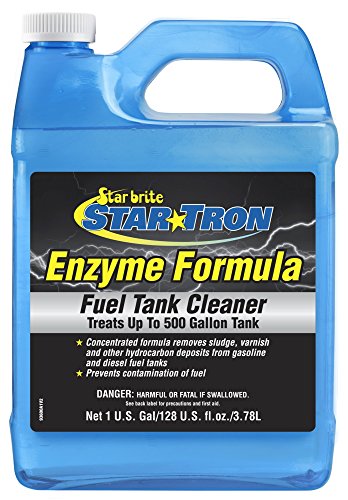
Key features: Dissolves sludge and gum; rejuvenates old fuel to unclog fuel lines; chemical-free formula free from strippers, alcohol, and detergents to protect all engine types. This product is best for boaters with stored or aged fuel that needs sludge removal and fuel-line clearing. A limitation is that results depend on the degree of varnish buildup and tank condition, so extreme deposits may require multiple treatments.
STA-BIL 360 Marine Fuel System Treatment (32 oz)

Key features: Cleans the entire fuel system using PEA additives; removes water, gum, and varnish; provides corrosion protection; designed to improve fuel performance. Best for boats with ethanol-related concerns and moisture issues in fuel. A potential limitation is that performance claims are product-use dependent; follow directions for dosage to maximize benefits.
STA-BIL 360 Marine Fuel System Treatment (1 Gallon)

Key features: Cleanses the entire fuel system; removes water, gum, and varnish; provides corrosion protection; designed to protect internal fuel system parts and improve engine life. Best for larger boats or frequent-use vessels with sizable tanks. Limitation: larger volumes require careful dosing based on tank capacity and usage to avoid over-treating.
Chevron Techron Protection Plus Marine Fuel System Treatment (10 oz)

Key features: Alcohol-free, emulsifier-free formulation that does not contribute to water uptake; protects the entire fuel system in fresh and saltwater environments; stabilizes fuel for up to two years in storage. Best for boaters seeking ethanol-damage prevention and long-term fuel stability. Limitation: smaller bottle size may require more frequent treatments for larger tanks.
STAR BRITE Star Tron Enzyme Fuel Treatment (32 Fl. Oz)

Key features: Enzyme technology helps engines start more reliably and run cleaner after periods of inactivity; reduces gum and varnish buildup by maintaining clean fuel delivery systems. Best for engines stored for long periods or run infrequently. Limitation: Enzyme-based formulas can require consistent use to maintain benefits; check compatibility with specific fuel types.
Buying Guide: How To Choose The Right Marine Fuel Tank Cleaner
What should you consider before buying? Here are practical questions and answers to guide your choice.
- What problem are you solving? If you have visible sludge or varnish, choose a cleaner that targets deposits (Star Tron Tank Cleaner, Enzyme Treatment). If you need ongoing protection and water removal, select a comprehensive system cleaner (STA-BIL 360). For ethanol-related issues, Techron Protection Plus offers a targeted approach.
- Tank size and usage: Larger boats or frequent trip vessels benefit from gallon-sized cleansers. For occasional use or small tanks, 8–32 oz options can suffice.
- Water in fuel: If moisture in fuel is a concern, prioritize formulas that remove water and prevent corrosion (STA-BIL 360, Techron).
- Ethanol-related problems: Ethanol can cause phase separation and deposits. Ethanol-focused products like STA-BIL and Techron are designed to minimize these effects.
- Storage and longevity: If you store your boat for long periods, fuel stabilization and up to two-year storage protection are valuable features (Techron).
- Application frequency: Some products are best for one-time rejuvenation (sludge dissolution), while others are designed for ongoing maintenance (regular treatment schedules).
Frequently Asked Questions
- How often should I treat my fuel system? It depends on usage and tank condition. Follow product directions and consider a baseline treatment at the start of the boating season, with maintenance applications as needed.
- Can these cleaners damage engines? Reputable cleaners are formulated to be safe for typical marine engines when used as directed. Always read the label and use the correct dosage for your tank size.
- Will treatments affect ethanol blends? Some cleaners specifically address ethanol-related issues; choose an option that explicitly states ethanol compatibility or protection.
- Is storing fuel with cleaners safe? Many products stabilize fuel for storage, but always follow storage guidelines and consider a dedicated stabilizer if you store fuel for extended periods.
- Do I need to drain or flush my tank before use? Most cleaners are designed for in-tank use without draining, but severe contamination or old varnish may require partial draining and professional inspection in some cases.
- What results should I expect? Expect improved starting reliability, fewer rough-idle symptoms, and cleaner fuel systems over time, especially when used as part of a regular maintenance plan.