Best Marine Fuel Filters and Water Separators for Boats
If you rely on a clean fuel supply for reliable engine performance, a marine fuel filter water separator is essential. This guide highlights five top options, suitable for a range of engines from outboards to sterndrive systems. Best for: anglers needing dependable filtration; boaters seeking easier maintenance; and sailors aiming to protect fuel systems from water and debris. Below is a quick Buying Table to compare the featured products.
| Product | Best For | Key Feature |
|---|---|---|
| Quicksilver 802893Q01 | Mercury/Mariner engines | 25 micron filtration with OEM-spec protection |
| Attwood 11840-7 | Universal 2- and 4-stroke engines | 10-micron filtration; includes bracket and fittings |
| CARMOCAR Marine Filter | Universal outboards | 3/8″ NPT ports; 10 micron filtration; water trapping |
| Sierra 18-7866 | Inboard/sterndrive systems | 10 micron, high capacity; emulsified water removal |
| Yamaha MAR-10MEL-00-00 | Yamaha outboards | 90 GPH at 10 micron; genuine Yamaha part |
Note: Each product section explains who benefits most, why it was selected, and any practical caveats to consider before purchase.
Quicksilver 802893Q01 Water Separating Fuel Filter
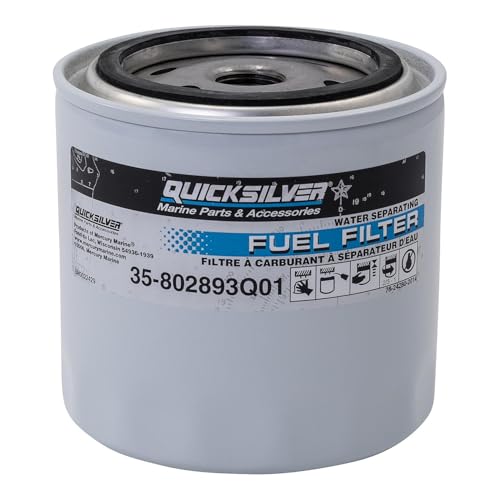
Best for: Mercury and MerCruiser engine setups that require OEM-style protection. The 25 micron filtering element targets fuel-borne contaminants that can harm performance. It combines a polyester/cellulose/glass fiber medium with a phenolic binder, coated with silicon for durability. This choice is ideal for boats using Mercury/MerCruiser components, delivering reliable filtration aligned with original equipment specifications.
Why selected: OEM compatibility and a proven filtration approach help maintain fuel integrity and engine protection. Limitation: 25 micron filtration may be less effective against very fine particles compared to 10 micron options in some scenarios.
Attwood Universal 10-Micron Kit
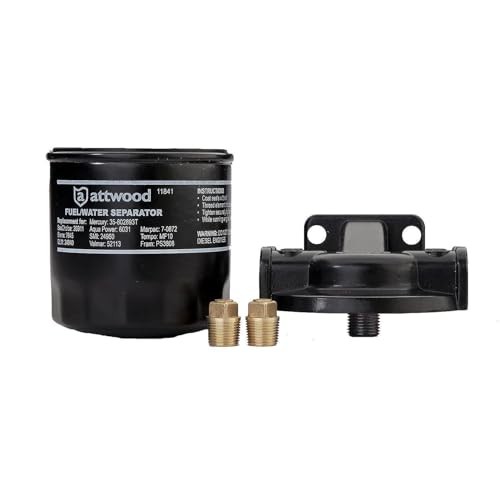
Best for: Boats with 2- and 4-stroke engines who want a complete, ready-to-install kit. It includes a 10-micron filter, corrosion-resistant mounting bracket, and brass plugs. Its universal 3/8″ NPT ports fit a wide range of marine motors and configurations, promoting clean fuel and water removal for improved efficiency.
Why selected: All-in-one package reduces extra shopping and installation time. Caution: The universal fit requires correct port alignment on your specific engine model to ensure a snug seal.
CARMOCAR Fuel Water Separator (Mercury & Yamaha Ready)

Best for: Universal marine applications needing 3/8″ NPT ports with strong filtration. It supports multiple Mercury and Yamaha models and provides 10-micron filtration to trap fine particles and emulsified water. The design emphasizes compatibility across different engine families.
Why selected: The versatile part numbers and cross-compatibility simplify replacements across brands. Limitation: Some installations may require adapters to match specific port configurations on older systems.
S3213 Fuel Water Separator Marine Kit

Best for: Broad compatibility with Yamaha, Mercury, Racor, Sierra, and Suzuki outboards. The kit uses 3/8″ NPT ports and a 10-micron filter to balance filtration with fuel flow, protecting fuel systems while maintaining efficiency. It also features a clear bowl for quick visual checks.
Why selected: Clear bowl and wide compatibility simplify maintenance across brands. Caution: With diverse fitments, verify exact port sizes on your engine before purchasing to avoid mismatches.
Sierra 18-7866 10-Micron Filter
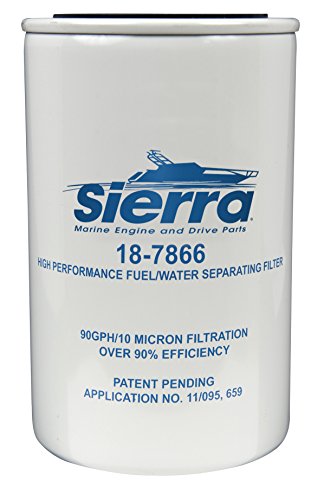
Best for: Inboard, sterndrive, and outboard systems requiring high-capacity filtration. Sierra’s 10-micron filter targets emulsified water and fine particles, supporting reliable fuel delivery and engine protection in a variety of marine setups.
Why selected: High filtration efficiency and universal fit make it a solid all-around option. Limitation: Sierra units vary in compatibility; confirm your engine model matches the filter’s mounting and port pattern.
ATRACYPART S3213 Replacement Kit
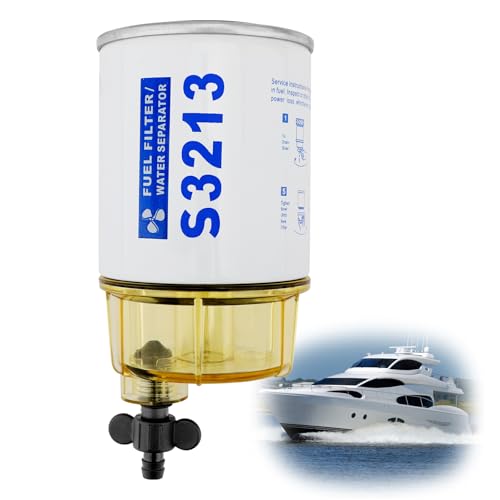
Best for: Budget-conscious buyers seeking a compatible 10-micron filter with a clear bowl and robust anti-leak design. It replaces several Mercury/Sierra Yamaha parts, offering broad compatibility in a single kit.
Why selected: Emphasizes filtration efficiency and reliability with multi-layer sealing. Caution: While affordable, ensure the exact part numbers and port sizes match your engine to prevent installation issues.
Buying Guide
What to consider when choosing a marine fuel filter water separator
- Filtration micron rating: 10 microns typically removes finer particles and water; higher micron ratings capture larger debris but may allow smaller contaminants.
- Port size and compatibility: Most marine filters use 3/8″ NPT or 1/4″ NPT fittings. Check your engine’s manual for port specifications.
- Flow rate versus filtration: A higher flow rate is beneficial for high-demand engines; ensure the unit maintains adequate fuel velocity while filtering.
- Maintenance and access: Look for clear bowls, drain valves, and straightforward replacement filter cartridges to minimize downtime.
- Build quality and materials: Durable housings and corrosion-resistant brackets extend service life in saltwater environments.
- Brand compatibility: Some engines require OEM parts for warranty and reliability; consider OEM-style filters if you operate factory equipment.
Installation and replacement tips
- Follow the engine manufacturer’s guidance for mounting orientation and orientation indicators on bowls.
- Replace gaskets and seals when changing filters to prevent leaks.
- Inspect fuel lines for cracks or stiffness during filter replacement to avoid future failures.
Maintenance planning
- Record replacement intervals based on operating conditions and fuel quality.
- Inspect water-trapping bowls for moisture accumulation and drain regularly.
- Keep spare filters on board to minimize downtime during trips.
FAQ
- What is the difference between a fuel filter and a water separator?
– A fuel filter removes solid contaminants; a water separator targets both water and fine particles to protect the fuel system. - Why is a 10-micron filter common in marine applications?
– It balances particulate filtration with fuel flow, helping prevent injector clogging and maintaining performance. - Can I mix filters from different brands?
– Mixing brands is not recommended unless port sizes and sealing surfaces match precisely; mismatches can cause leaks or poor filtration. - How do I know when to replace the filter?
– Replace according to the engine’s maintenance schedule or when you notice reduced fuel flow or engine performance issues. - Will these filters protect fuel pumps from water damage?
– Yes, by removing water and contaminants early, they reduce the risk of damage to pumps and injectors. - Are OEM parts always necessary?
– OEM parts are designed for exact compatibility; non-OEM options can work but verify fit and warranty implications.