Best Marine Fresh Water Pump Options for RVs, Boats, and Campers
When selecting a marine fresh water pump, look for reliable self-priming diaphragm pumps that deliver steady flow, adequate pressure, and quiet operation. This guide highlights five solid choices, each suited to different systems and use cases—from compact RV rigs to off-grid boats. The top picks cater to buyers seeking reliability, ease of installation, and consistent water delivery for showers, sinks, and galley fixtures.
| Product | Brand | Flow | Pressure | Power | Best For |
|---|---|---|---|---|---|
| WASSERMANN RV Pump | Wassermann | 4.0 GPM | 45 PSI | 12V DC | RV or marine installs needing steady pressure |
| ECO-WORTHY 33-Series | ECO-WORTHY | 4.0 GPM | 50 PSI | 110V AC | Off-grid or shore power setups |
| SEAFLO 55 Series | SEAFLO | 5.5 GPM | 60 PSI | 12V DC | Heavy-use freshwater systems |
| Gidrox 12V RV Water Pump (4.0 GPM) | Gidrox | 4.0 GPM | 45 PSI | 12V DC | Quiet, off-grid travel |
| [Upgraded] MRGVFLO 12V RV Pump | MRGVFLO | 7.0 GPM | 70 PSI | 12V DC | Higher-demand showers and multiple fixtures |
WASSERMANN RV Pump, 12V Self-priming 4.0GPM 45PSI

The Wassermann 12V RV Water Pump delivers up to 4 GPM at 45 PSI, with a complete kit that includes hose adaptors, a debris filter, and a user manual. It is a compact, self-priming diaphragm pump designed for RVs, campers, yachts, and boats that need reliable fresh water pressure. The single-voltage setup can be powered by a 12V battery or a cigarette lighter socket in the vehicle. Best for small to mid-size RVs where space is limited and easy installation matters. A potential limitation is that it relies on a 12V source and may require proper wiring for long runs.
ECO-WORTHY 33-Series 110V Diaphragm Pump
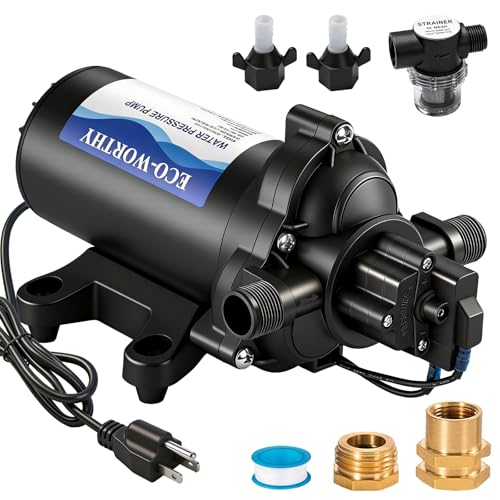
The ECO-WORTHY 33-Series is a 110V AC diaphragm pump that provides 4.0 GPM at 50 PSI for off-grid or shore-powered systems. It uses a smart pressure switch to turn on as water demand rises and off when fixtures close, helping conserve energy. Best for boats or RVs connected to an AC power source, especially where battery checks are a concern. Cautions include ensuring the pump never experiences inlet pressure beyond its specifications and acknowledging its reliance on mains power rather than a vehicle battery.
SEAFLO 55 Series 12V Water Pump

SEAFLO’s 55 Series offers 5.5 GPM at 60 PSI with a built-in bypass and a robust 12V motor. It features NSF/UL standard compliance for potable water, making it a strong choice for RVs, boats, cabins, and off-grid installations where reliable water delivery is essential. The 4-year warranty signals durability, though it consumes more power than smaller pumps and may require proper wiring and surge protection to avoid voltage spikes.
Gidrox 12V RV Water Pump, 4.0 GPM 45 PSI

The Gidrox 4.0 GPM pump emphasizes worry-free off-grid travel with overheating protection and a low-noise design, using a vortex noise reduction system and a vibration-damping base. It provides 10 ft of self-priming capability and 100 ft head pressure, suitable for RVs, boats, and campers. Best for quiet operation in compact installations; consider higher head requirements if the system uses long runs of tubing or multiple fixtures, as maximum head is lower than some higher-end models.
[Upgraded Version] MRGVFLO 12V RV Pump, 7GPM 70PSI
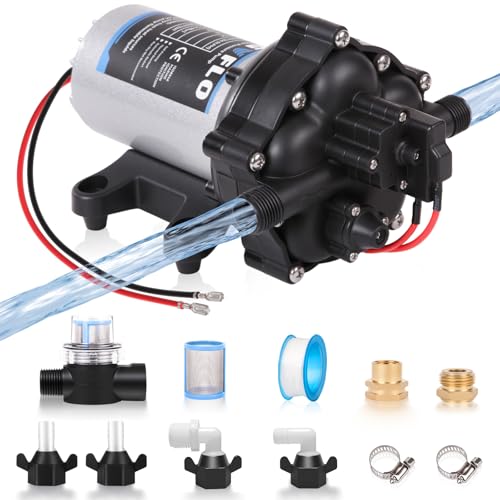
The MRGVFLO upgraded pump delivers 7 GPM at up to 70 PSI, making it ideal for RVs or yachts with higher water-speed demands—such as multiple showers or larger galley setups. It features a five-chamber diaphragm design, a smart pressure switch, and quiet operation. Choose this if your system requires stronger flow and you can accommodate higher electrical load. A potential limitation is its higher power draw and need for secure wiring and fuse sizing in smaller installations.
Buying Guide: Key Considerations for Marine Fresh Water Pumps
- Flow rate vs. pressure: Match GPM to expected usage (showers, sinks, sprayers). Higher GPM is beneficial for multiple outlets, but weigh against power consumption.
- Power source: 12V DC pumps run on batteries, ideal for off-grid use; 110V AC pumps require shore power or an inverter. Consider wiring, fusing, and battery life when choosing.
- Self-priming capability: Essential for marine or RV installations where priming can be difficult. Check maximum lift and priming distance.
- Materials and safety: Look for potable-water-safe components (NSF/UL standards where applicable) and corrosion-resistant materials for longevity in marine environments.
- Noise and vibration: Pumps with noise-damping features are preferable in cabins and quiet nights when docked or moored.
- Compatibility: Verify inlet/outlet sizes (commonly 1/2″ MNPT) and included fittings to minimize extra parts or adapters.
- Maintenance: Availability of replacement diaphragms, filters, and spare parts can extend pump life and simplify repairs.
FAQ
- What is the typical duty cycle for marine fresh water pumps?
Most pumps are designed for continuous or near-continuous use in RVs and boats, with occasional off cycles depending on faucet use. Always follow the manufacturer’s guidelines for duty cycles and rest periods to prevent overheating.
- Can I run a 12V pump directly from a car battery?
Yes, but ensure proper wiring, fuse sizing, and charging system compatibility to prevent voltage drops or battery damage during extended use.
- Is a higher PSI pump better for boats and RVs?
Higher PSI provides stronger water pressure for showers and multiple fixtures, but may increase power consumption and stress the system if not matched with plumbing layout and demand.
- What maintenance steps keep a marine water pump reliable?
Regularly check for leaks, clean intake screens, replace filters as needed, and inspect diaphragms for wear. Ensure the pump is primed correctly and protected from overpressure scenarios.
- Are all marine pumps suitable for drinking water?
Not all pumps are certified for potable water. Prefer models with NSF/UL or equivalent certifications if the system feeds drinking fixtures or galley taps.