Best Marine Engine Oil Extractors for Quick, Clean Oil Changes
Answer: For boat owners and marine technicians, a dedicated marine oil extractor speeds up oil changes while keeping work areas clean. The top picks below are selected for compatibility with OMC/Mercruiser and other common marine dipstick tubes, ease of use, and reliable drainage performance. The buyers best served include DIY boat owners, small-chassis service crews, and anyone seeking portable, fast oil removal on engines in tight spaces. The table lists five representative options with core specs for quick comparison.
| Product | Best For | Key Benefit | Approx. Drain Rate |
|---|---|---|---|
| Ulreon 34060-0130 | Boat owners needing simple hand-pump drainage | Brass construction and universal 3/4″ fitting | Up to 1 gallon per minute |
| FAITIO Oil Pump 12V 100W | Vehicles and marine gear, powered extraction | Pure copper motor for fast suction | High, depending on flow setup |
| EWK 6.5L Pneumatic/Manual | DIYers needing dual-mode extraction | Two modes; no external power needed | Up to 1.8 L/min |
| Amarine Made 12V 60W | Portable oil changes on boats, trailers, RVs | Compact 12V transfer pump | 0.8–1.0 L/min |
| Harpy Eagle Electric 12/24V | Mobile service for cars, boats, and trucks | 100W motor with long hoses | Up to 1 quart per minute |
Ulreon 34060-0130 Marine Engine Oil Drain Hand Pump

Best for: Boat owners needing a no-frills, durable hand pump. The brass body resists corrosion and fits 3/4″ threaded fittings on commonly used dipstick tubes. Use this when you want a simple, reliable hand-operated drain for routine oil changes on OMC/Mercruiser engines. Limitations to consider: manual effort is required, and very large oil volumes may be slower than powered options.
FAITIO Oil Pump 12V 100W

Best for: Vehicles and marine gear where powered extraction saves time. Features a pure copper motor for strong suction and faster transfer, plus practical guidance to warm oil for better flow. Choose this if you need a compact, battery-powered unit with straightforward setup. Caution: not intended for gasoline, diesel, or water; use with appropriate fluids only.
EWK 6.5L Pneumatic/Manual Oil Extractor
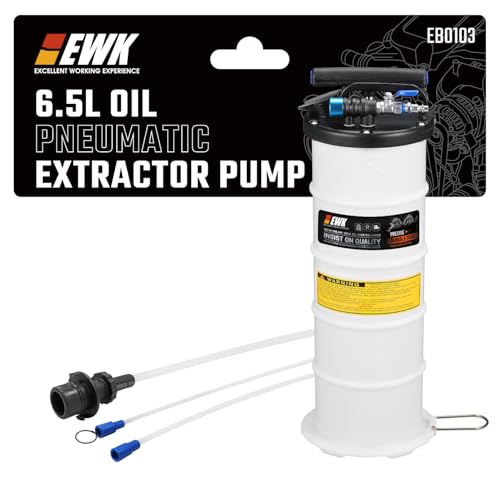
Best for: DIYers who want flexible extraction modes. This unit can operate manually or with a pneumatic boost, delivering up to 1.8 L/min. Best when a shop-style speed is desired without relying solely on electrical power. Limitation: ensure oil is within the device’s compatible range and do not use with water or fuels.
Amarine Made Oil Pump 12V 60W

Best for: Portable, on-move oil changes on boats, RVs, or ATVs. A compact 12V transfer pump with a modest flow rate, suitable for limited space applications. Better for smaller engine pans or quick swaps where a full shop setup isn’t available. Caution: not designed for gasoline or flammable liquids; use only compatible fluids.
E-cowlboy Premium Brass Marine Oil Pump

Best for: Marine engines requiring fast drainage with robust brass construction. Drains 1 gallon (4 liters) per minute and fits OMC/Mercruiser dipstick tubes. Choose this if you need quick turnover and durable material for corrosion resistance. Limitation: ensure oil temperature stays under 140°F (60°C) for safe operation.
Harpy Eagle Electric Oil Change Extractor Pump

Best for: Mobile service or garage setups needing plug-and-play operation. A 100W motor delivers up to about 1 quart per minute with extended hoses for larger engines. Suitable for cars, boats, and motorcycles. Caution: ensure correct hose connections and avoid pumping fuel or incompatible fluids.
Buying Guide
What should you consider when choosing a marine oil extractor?
- Compatibility: Ensure the unit fits your dipstick tube size (most marine engines use 3/4″ threads). Look for models marketed as compatible with OMC/Mercruiser or universal adapters.
- Power source: Decide between manual, battery (12V), or pneumatic. Manual is dependable but slower; powered units speed up frequent or multiple engines.
- Flow rate: Higher gallons per minute means faster changes but may require a bigger container or secure setup to prevent spills.
- Durability: Brass or corrosion-resistant housings extend life in salt air environments. Check seals to prevent leaks.
- Ease of use: Long hoses, quick-connects, and simple operation reduce mess and time in confined spaces on a boat.
- Safety: Temperature limits (often around 140°F) prevent damage and burns. Never use with gasoline or water unless specified.
How to choose by scenario
- Dockside maintenance: Choose a lightweight manual or 12V unit with long hoses for tight spaces.
- Workshop or marina service: Pneumatic or high-flow 12V units help service multiple engines quickly.
- Space-constrained boats: Favor compact pumps with easy hose routing and one-handed operation.
Tips for better results
- Warm the oil slightly to improve flow, but stay within safe temperature limits.
- Use a filter when pumping oil with impurities to prevent clogging the pump.
- Always verify that the inlet and outlet connections align with hoses and power leads before starting.
FAQ
- Q: Do marine oil extractors work with all boat engines? A: Most are designed for common dipstick tubes on OMC/Mercruiser and similar marine engines, but verify compatibility before purchase.
- Q: Is 12V power sufficient for large engines? A: Many 12V pumps handle routine changes well, but very large engine oil pans may require higher flow or pneumatic options.
- Q: Can I pump other fluids? A: Most units are intended for engine oil only. Do not use with gasoline, diesel, water, or incompatible fluids unless specified.
- Q: Are manual pumps reliable for marine use? A: Yes, manual pumps are durable and do not depend on electrical power, making them reliable on boats.
- Q: What maintenance is needed after pumping oil? A: Clean the hoses and fittings, inspect seals, and store in a dry place to prevent corrosion.
- Q: Should I drain oil warm or cold? A: Warmer oil flows more easily, aiding faster drainage; avoid overheating beyond safe limits.