Best Marine Dual Battery Switches for Reliable Boat Power Management
Answering the need for dependable, simple-to-use battery control, these marine dual battery switches help you prioritize starting power, run essential electronics, and prevent unwanted drain. They’re best for boaters who want quick, secure isolation or smart combining of two batteries. The top picks below are suited for anglers, weekend cruisers, and professional captains who demand reliability in tight spaces, easy installation, and clear switching options. A quick summary table of the featured products follows to aid your side-by-side comparison.
| Product | Best For | Key Benefit |
|---|---|---|
| Blue Sea Systems 4‑Position Mini Selector (6007 m‑Series) | Compact spaces, emergency combine | Three mounting methods, combines batteries during starting |
| Blue Sea Systems e-Series 4‑Position Selector (9001e) | Tight installs with ignition protection | Surface or rear mounting, engine room suitability |
| Seachoice Battery Select Switch | Two-battery systems with parallel option | Easy starting/charging selection, UL listed |
| Nilight 1-2-Both-Off 600A | Rugged, heavy-duty 2-battery boats | 4-position, high amperage, clear isolation |
| Blue Sea Systems e-Series Dual Circuit Plus (5511e) | Dual circuit with compact design | Mounting options, ignition protected |
Blue Sea Systems 4‑Position Mini Selector Battery Switch

The 6007 m-Series model emphasizes a compact footprint for installations with limited mounting space. Best for boaters who need an emergency combine to draw power from both batteries during engine starting or radio use, ensuring power availability when one battery is low. It offers three mounting methods—surface, flush, or rear—so you can tailor installation to your panel design. Use this when you value a straightforward, space-conscious switch with an emergency power boost capability. A potential limitation is that combined power may draw from both batteries, which can affect load management if not monitored.
Blue Sea Systems e-Series Battery Switch Selector 4 Position, 9001e
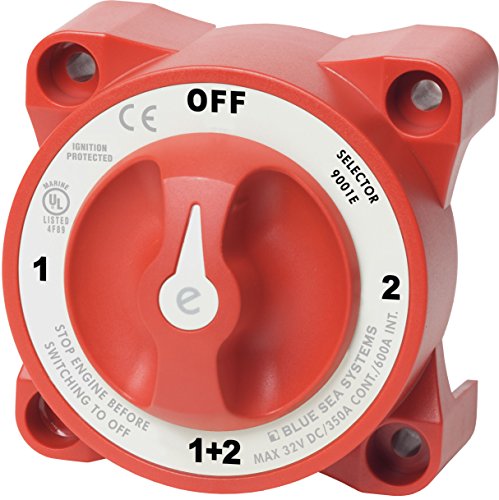
The 9001e model is a compact, ignition-protected selector that fits tight engine-room or cabinet spaces. It supports surface or rear mounting, making it ideal for gasoline-powered boats with space constraints. Best for owners who want ignition protection and flexible installation options. Limitations include a possible need for careful routing around heat sources in engine compartments and ensuring compatibility with your vessel’s electrical layout.
Seachoice Battery Select Switch

This dual 12–50V selector lets you switch between batteries for starting, charging, or operation in parallel. It is UL listed and CE approved, which helps with compliance expectations on larger marine vessels. Best for boaters who want a straightforward, utility-focused switch with clear two-battery operation. A possible limitation is its standard 12–50V range, which may require careful voltage assessment on unique power systems.
Nilight Battery Switch 1-2-Both-Off 12V-48V

Nilight’s heavy-duty switch supports 12V, 24V, and 48V systems with four positions: battery 1, battery 2, both, and off. It’s designed for vehicles, boats, and RVs, providing up to 600A continuous current at 12V and strong intermittent ratings. Best for users needing a robust, four-position disconnect with flexible voltage support. A limitation is that higher current drains during crank may require larger wiring and proper heat management to avoid overheating.
Blue Sea Systems e-Series Battery Switch Dual Circuit Plus
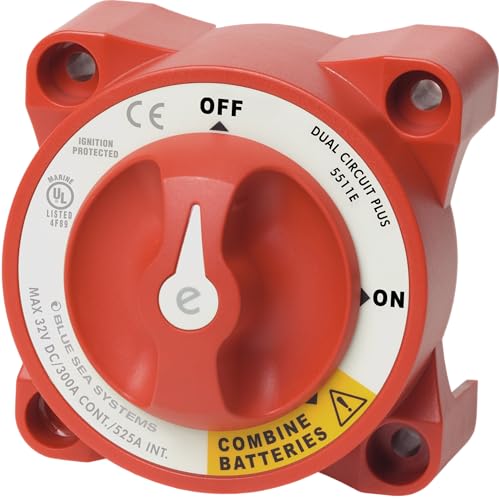
This dual-circuit e-Series switch combines two independent circuits in a compact form, with mounting options for surface or rear installation. It’s ignition protected, making it a strong choice for engine rooms of gasoline-powered boats. Best for vessels needing separate control of two electrical circuits while maintaining a compact footprint. A potential limitation is that setup may be more complex than single-circuit models, requiring careful wiring to avoid misconfiguration.
Buying Guide
What should I look for in a marine dual battery switch?
Key factors include current rating (amps), voltage compatibility (12V, 24V, 32V), mounting options (surface, flush, rear), ignition protection, and whether you need an emergency combine or parallel operation. Consider the available space on your panel and the ease of future maintenance.
Single vs. dual circuit – which is right for me?
Single-circuit switches control one battery or a combined path. Dual-circuit switches allow independent control of two circuits, beneficial for isolating critical loads (engine, electronics) from house systems. Choose based on whether you need separate containment of different loads or a simple starting system.
Is ignition protection important?
Ignition-protected switches limit sparks in dangerous environments like engine rooms. If your boat stores in or operates near fuel sources, ignition protection adds a safety margin worth considering.
What about installation flexibility?
Many models offer multiple mounting methods. If space is tight or you anticipate reconfiguring panels, prioritize models with surface and rear mounting options for future adaptability.
How to choose based on battery maintenance?
Look for switches with a clear on/off or both position to minimize battery drain. If you plan on long storage, choose a model that can completely disconnect or isolate unused systems to prevent parasitic loads.
Maintenance tips for longevity
Regularly inspect terminals for corrosion, ensure proper torque on studs, and use dielectric grease where appropriate. Keep cables routed away from heat sources and sharp edges to prevent wear.
FAQs
- Q: Can a dual battery switch protect both batteries from discharge?
- A: Yes, many switches offer off or isolation positions to prevent parasitic discharge when not in use.
- Q: Do these switches require a professional installation?
- A: Not always; many boaters install themselves if they follow wiring diagrams and safety practices, but consult a professional for complex systems.
- Q: Will these switches work with AGM or flooded batteries?
- A: Most marine switches are voltage- and chemistry-agnostic within the 12–48V ranges listed; verify compatibility with your battery types.
- Q: Do any of these have built-in fuses?
- A: Some models provide integrated protection features, but many rely on separate fusing in the electrical system; check product specs.