Best Marine Diesel Fuel Stabilizers for Clear, Reliable Performance
Need to keep diesel fuel fresh and your marine engine running smoothly? This guide highlights top diesel fuel stabilizers that are well-suited for boats, yachts, and other off-road marine equipment. Each product is analyzed for fuel system cleaning, corrosion protection, and long-term storage stability. The selections target boaters who want reliability, easier starts, and cleaner fuel systems, from casual weekend sailors to charter operators. Below is a quick summary table of the featured products to compare at a glance.
| Product | Best For | Approx. Treats |
|---|---|---|
| STA-BIL Diesel Fuel Stabilizer And Performance Improver (320 Gallons, 32 oz) | Boats with moderate to heavy diesel use; long storage periods | Up to 320 gallons per bottle |
| STA-BIL Diesel Fuel Stabilizer And Performance Improver (1280 Gallons, 1 Gallon) | Large marine fleets or multiple engines | Up to 1,280 gallons per bottle |
| STA-BIL 360 Marine Ethanol Treatment & Fuel Stabilizer (320 Gallons, 32 oz) | In-season fuel system cleaning and corrosion protection | Up to 320 gallons per bottle |
| Star Tron Enzyme Fuel Treatment – Concentrated Diesel Formula | General engine health; all engines and fuels | Treats up to 128 gallons |
| Ethanol Shield Marine Fuel Stabilizer & Preservative (2 pack) | Year-round protection for all engines; ethanol blends | Two 24 oz bottles; treats multiple tanks |
STA-BIL Diesel Fuel Stabilizer And Performance Improver (320 Gallons)
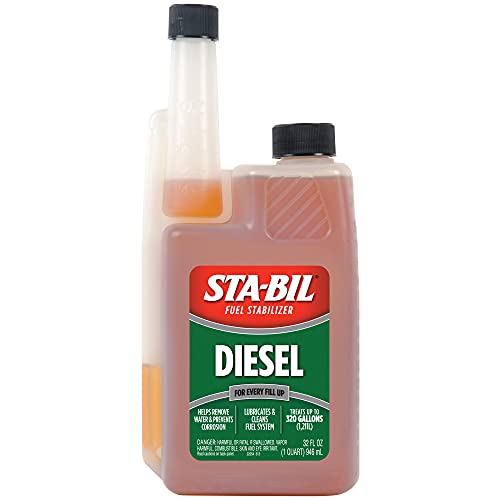
Product overview: This diesel fuel additive is designed to prevent sludge and sediment formation while cleaning and lubricating the entire fuel system, including injectors, pumps, and tanks. It also contains STA-BILizers to guard against corrosion, supporting long-lasting fuel integrity. Best for boaters who need a practical, low-maintenance stabilizer for diesel engines and long storage periods. Limitation: For smaller storage needs, this bottle may provide more capacity than necessary.
STA-BIL Diesel Fuel Stabilizer And Performance Improver (1280 Gallons)

Product overview: A larger capacity diesel stabilizer that cleans, lubricates, and protects the entire fuel system with corrosion inhibitors. It is suited for larger vessels or fleets with multiple diesel-powered components. Best for commercial or frequent-use marine applications where maintaining fuel quality across many gallons is critical. Limitation: Higher upfront quantity may be more than needed for a single small boat.
STA-BIL 360 Marine Ethanol Treatment & Fuel Stabilizer (320 Gallons)
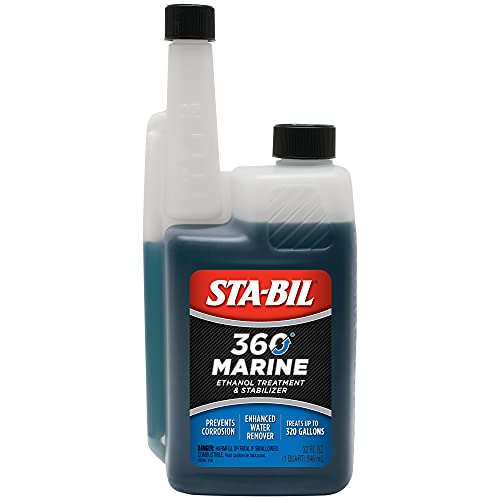
Product overview: This stabilizer focuses on fuel system cleaning and corrosion protection using PEA additives. It helps remove water, gum, and varnish, supporting in-season performance. Best for boaters seeking in-season cleaning alongside corrosion resistance. Caution: It is designed to protect the fuel system rather than perform heavy-duty engine tuning.
STA-BIL Diesel Fuel Stabilizer & Performance Improver (Pack of 4)

Product overview: This pack provides multiple bottles for ongoing diesel fuel stabilization. Benefits include sludge prevention, fuel system cleaning and lubrication, and corrosion protection. Best for boat owners with several tanks or engines and who prefer value-friendly multi-pack options. Limitation: Each bottle supports a substantial volume, which may be more than needed for a small vessel.
Star Tron Enzyme Fuel Treatment – Concentrated Diesel Formula

Product overview: Star Tron Enzyme Fuel Treatment stabilizes diesel fuel and supports engine performance by breaking down deposits and improving combustion. It is marketed as a universal solution for all engines and fuels, including diesel. Best for engine builders or owners who want an enzyme-based treatment that complements traditional stabilizers. Limitation: It is a general treatment and may be used in conjunction with other stabilizers for optimized results.
Ethanol Shield Marine Fuel Stabilizer & Preservative
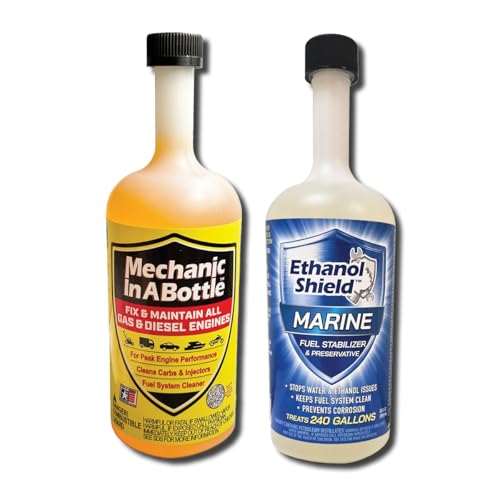
Product overview: This two-pack provides year-round protection for all engines and fuels, including gasoline and diesel, with added detergent to keep carburetors and injectors clean. Best for boat owners who operate in varying conditions and want a cost-effective, year-round stabilizer. Caution: Designed for mixed-use engines; verify compatibility with your specific diesel equipment when using enzyme-based or additive-heavy products.
Buying Guide
Key considerations when choosing a marine diesel fuel stabilizer:
- Storage duration vs. usage pattern: If you store fuel for long periods, prioritize additives with strong sludge prevention and corrosion protection for diesel.
- Fuel system scope: For engines with multiple injectors or tanks, larger-volume stabilizers may reduce replacement frequency, but ensure compatibility with your fuel type and system.
- In-season performance: If you require ongoing cleaning and protection, look for products that remove water and varnish and protect against rust.
- Enzyme-based vs. chemical formulations: Enzyme treatments (Star Tron) offer a different mechanism of action; consider layering with traditional stabilizers if needed for maximum protection.
- Compatibility with ethanol blends: Ethanol-containing fuels can benefit from dedicated ethanol treatments to prevent corrosion and varnish buildup.
FAQ
- What does a diesel fuel stabilizer do? It prevents sludge, cleans the fuel system, and protects against corrosion to extend engine life and improve reliability.
- How often should I treat marine diesel fuel? Follow the product’s guidelines, typically when filling tanks or preparing for storage or long trips; some products cover multiple gallons per bottle.
- Can I mix enzyme treatments with traditional stabilizers? In many cases yes, but verify compatibility with your specific engine and follow manufacturer directions.
- Is ethanol treatment necessary for all boats? Only if your fuel contains ethanol; ethanol-focused stabilizers help prevent water buildup and varnish in ethanol blends.
- Which product is best for large vessels? Large-volume stabilizers (gallon or higher) are typically better for fleets or boats with multiple diesel tanks.
- Are there downsides to using stabilizers? Some formulations may be more aggressive or more expensive; choose based on vessel size, storage duration, and engine type.