Best Marine Carry-on Air Conditioners for Boats and Small Vessels
If you need compact cooling for a boat, a marine carry-on air conditioner can deliver reliable comfort in tight spaces. This guide focuses on compact, self-contained units that work well on smaller vessels and bring quiet, efficient cooling to cabins, deck houses, and wheelhouses. The top picks here are best for boaters who want energy efficiency, corrosion resistance, and straightforward installation. Each option targets specific boat sizes and use cases, from small skiffs to mid-sized sailboats.
Buyer profile snapshot:
– Best for new boat owners seeking easy install and quiet operation.
– Best for sailors needing corrosion resistance and durable components.
– Best for weekend boaters who want portable cooling with simple setup.
– Best for RV- or camper-turned-boat environments where multi-use units are valued.
Product Comparison Overview
- MarinAire 16,000 Btu/h Self Contained Marine A/C: High cooling capacity for larger cabins and long-duty use; best for bigger boats requiring strong cooling.
- MarinAire 6,000 Btu/h Self Contained Marine A/C: Compact option for smaller cabins or boats with limited space; best for smaller layouts.
- FOGATTI InstaCool 16,000 BTU Ducted RV/Marine Unit (Ducted): Flexible roof or interior installation; best for boats needing ducting and quiet, powerful cooling.
- FOGATTI InstaCool 16,000 BTU Non-Ducted RV Unit: Simpler roof installation with standalone cooling; best for open cabins or flush-mount setups on boats.
- BougeRV 3,500 BTU Portable Camping A/C: Ultra-portable option for tents, small cabins, or deck spaces; best for very small boats or temporary cooling needs.
MarinAire 16,000 Btu/h Self Contained Marine A/C

Key features include a sound cover that reduces noise by up to 60%, corrosion-resistant titanium coil, and energy-efficient performance aided by R410A refrigerant. This model is best for larger boats where a quiet, robust cooling system is essential and space permits a higher-capacity unit. The titanium coil is designed to endure marine conditions when bonded to a sacrificial anode, offering long-lasting performance in harsh environments.
Best for: boatowners needing strong cooling for larger cabins and a quiet presence. Choose this if you have the space for a 16,000 BTU unit and want durable corrosion resistance. Caution: installation requires proper bonding to an anode for corrosion protection.
MarinAire 6,000 Btu/h Self Contained Marine A/C

This compact unit emphasizes a rotatable blower, a sound shield, and high efficiency in a smaller footprint. It’s an excellent match for tighter boat layouts where space is at a premium but cooling is still needed. The integrated design supports straightforward maintenance and a smoother overall fit within compact engine rooms or fore cabins.
Best for: smaller cabins or boats with limited space that still require reliable air conditioning. Better for: tight spaces where a compact, efficient marine A/C is advantageous. Limitation: lower BTU capacity means less cooling power for larger spaces.
TOSOT 16000 BTU GO Cool RV Air Conditioner

With 16,000 BTU cooling and a 12,500 BTU heat pump, this unit targets year-round comfort from 23°F to 115°F. It’s designed for RVs and camper trailers but can adapt to boats with proper installation. The built-in heat pump adds seasonal flexibility, making it a strong all-season option for boaters living aboard or using the cabin year-round.
Best for: boats or mobile living spaces needing all-season climate control with a built-in heat pump. Better for: environments where shoulder-season cooling and heating are important. Caution: compatibility with marine electrical systems and ducting should be verified before purchase.
FOGATTI InstaCool 16000 BTU Ducted Unit

Note: This ducted unit requires 115V AC power and 12V DC power connections. It delivers rapid cooling with dual high-efficiency compressors and uses eco-friendly R32 refrigerant. Its ducted design makes it well-suited for boats with multiple rooms or cabins that can benefit from dedicated air distribution. The unit’s quiet operation and robust HIPS shell offer reliable performance in marine settings.
Best for: larger boats or cabins where a ducted system is feasible and quiet, powerful cooling is needed. Choose this if you want centralized airflow to several compartments. Limitation: requires more complex installation and separate power connections.
FOGATTI InstaCool 16000 BTU Non-Ducted RV Unit

This non-ducted rooftop unit offers robust cooling with 16,000 BTU and a straightforward installation path suitable for boats with flat ceilings or open cabins. It’s an easy option for boaters who want significant cooling without the complexity of a full duct system. The unit features a rugged HIPS shell to resist impact and UV exposure in marine environments.
Best for: boaters who need strong, standalone cooling without ducting. Better for: deck houses or cabins where a single, high-capacity unit suffices. Caution: ensure the roof thickness and mounting surface can support the unit’s weight and size.
BougeRV PC35 Portable Air Conditioner 3500BTU
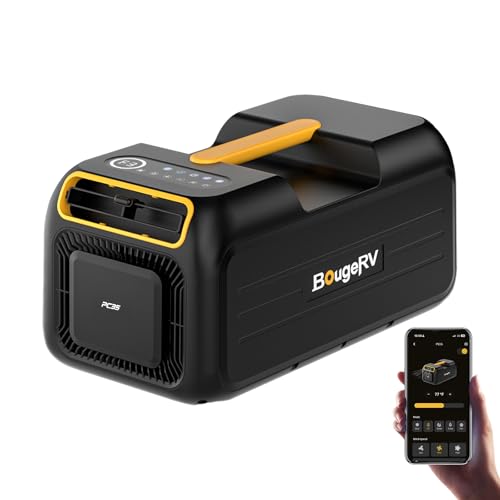
Portable and lightweight, this 3,500 BTU unit targets small spaces up to about 64 square feet. It uses app control for convenient management from your seat and is suited for tents, small cabins, or deck spaces where a full marine unit would be excessive. It offers rapid cooling in compact form and can be moved as needed on a boat or shore setup.
Best for: very small boats, compact cabins, or temporary cooling needs. Choose this if you want portability and simple control. Limitation: limited cooling capacity relative to dedicated marine A/C units.
Buying Guide
What should you consider when choosing a marine carry-on air conditioner?
- Boat size and space: Larger boats benefit from higher BTU units; smaller boats do better with compact or portable units.
- Power availability: Check whether your vessel has the appropriate AC voltage and the ability to run 115V AC power and optional 12V DC connections if required by the unit.
- Installation type: Ducted systems distribute air to multiple spaces, while non-ducted units are easier to install but may cooling fewer compartments.
- Corrosion resistance: Marine environments demand corrosion-resistant components; consider titanium or other corrosion-resistant coils and protective housings.
- Noise level: Quiet operation improves comfort on long passages and overnight use; look for sound shields or units designed for low dB output.
- Energy efficiency: Energy-efficient refrigerants and components help reduce running costs, especially on vessels with limited power supply.
- Maintenance and service: Accessibility for filter changes and component checks is important for reliable operation at sea.
- Portability vs. permanence: Portable units offer flexibility for deck spaces or temporary setups, while built-in or semi-permanent units provide consistent cooling with fewer space constraints.
Quick Compare: Key Points
- Best overall cooling for mid-to-large boats: MarinAire 16,000 BTU with titanium coil and noise-reducing cover.
- Better for tight spaces: MarinAire 6,000 BTU with compact footprint and rotatable blower.
- Best for ducted configurations: FOGATTI InstaCool 16,000 BTU Ducted Unit.
- Best for simple roof installations: FOGATTI InstaCool 16,000 BTU Non-Ducted Unit.
- Best portable option for very small boats or temporary cooling: BougeRV 3,500 BTU.
FAQ
- What size marine A/C should I choose for a 20-foot boat? A 6,000–8,000 BTU unit is often suitable for small cabins; larger boats may require 12,000–16,000 BTU units depending on space and insulation.
- Can I install a non-ducted unit on a boat with multiple rooms? It’s possible but air distribution may be uneven; a ducted system is better for even cooling across cabins.
- Do marine A/C units require special electrical considerations? Some units need 115V AC with possible 12V DC support; verify your vessel’s electrical setup and any required transformers or inverters.
- Are titanium coils worth it on boats? Yes, titanium coils offer superior corrosion resistance in harsh marine environments, extending unit life when bonded properly.
- Is portable cooling enough for a big cabin? Portable units are convenient but may struggle to cool larger spaces; consider a fixed, higher-capacity option for consistent comfort.
- What maintenance steps are essential? Regular cleaning of filters, checking seals around installations, and periodic inspection of condenser and coil areas help maintain efficiency at sea.
Summary table of selected products (for quick reference):
| Product | Best For | BTU | Notes |
|---|---|---|---|
| MarinAire 16,000 BTU Self Contained | Larger boats with ample space | 16,000 | High cooling, titanium coil, quiet cover |
| MarinAire 6,000 BTU Self Contained | Smaller cabins | 6,000 | Compact, rotatable blower |
| FOGATTI InstaCool 16,000 BTU Ducted | Multi-room cabins | 16,000 | Requires ducting, quiet operation |
| FOGATTI InstaCool 16,000 BTU Non-Ducted | Open cabins | 16,000 | Easy install, single-unit cooling |
| BougeRV 3,500 BTU Portable | Very small spaces or temporary cooling | 3,500 | Portable, app-controlled |