Best Marine Boat Bottom Paint Options for 2026: Durable Antifouling Solutions
Answering the common question, these marine bottom paints are designed to prevent barnacles, algae, and other fouling from attaching to hulls. They suit frequent sailors, commercial work boats, and recreational power or sailboats alike. Below are five well-suited options with clear guidance on who benefits most from each pick. A quick summary table follows to compare core details at a glance.
| Product | Best For | Type | Key Benefit |
|---|---|---|---|
| TotalBoat Underdog Marine Antifouling Bottom Paint (Blue, Gallon) | Frequent saltwater users; sail and power boats | Ablative / Copper-based | Single-season protection with easy reapplication next season |
| TotalBoat JD Select Ablative Antifouling Bottom Paint (Black, Gallon) | Boats needing low odor and easy cleanup | Ablative / Water-based | Self-polishing film; low VOCs; easy marina use |
| TotalBoat JD Select Ablative Antifouling Bottom Paint (Black, Quart) | Smaller boats or touch-ups | Ablative / Water-based | Same benefits in a smaller package; easy touch-ups |
| TotalBoat Spartan Antifouling Bottom Paint (Black, Gallon) | High-fouling environments; long season use | Ablative / Copper-rich | High copper content for maximum protection; scalable gloss |
| Interlux BottomKote NT (Black, Gal.) | Marina environments with restrictions | Bottomkote NT / Copper-based | Low odor; suitable for low-VOC marinas |
TotalBoat Underdog Antifouling Bottom Paint — Blue
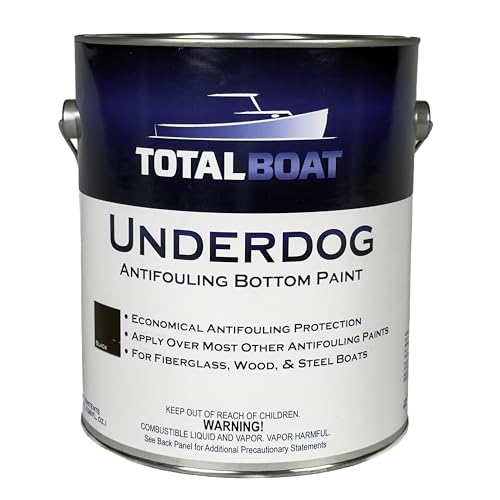
Best for boats used frequently in saltwater. This economical copper-based paint provides single-season protection and helps prevent barnacles and mussels from clinging to hulls. The ablative formula wears away during the season, reducing buildup and simplifying next-season prep. Recommended for properly prepared fiberglass, wood, steel, and iron boat bottoms. Caution: can require more frequent reapplication if operating in high foul zones.
TotalBoat JD Select Ablative Antifouling Bottom Paint — Black (Gallon)

Best for boats seeking low odor and easy cleanup. This low-VOC, water-based antifouling paint self-polishes as the boat moves, reducing paint buildup and making sanding easier next season. Suitable for fiberglass, wood, and steel in both salt and fresh water. Best for marinas with environmental restrictions. Caution: some environments may require re-coating sooner due to ongoing wear.
TotalBoat JD Select Ablative Antifouling Bottom Paint — Black (Quart)

Best for smaller boats or touch-ups. Shares the same ablation and low-VOC features as the gallon version, providing flexibility for varied boat sizes and maintenance schedules. Best for those who want a compact, easy-to-handle package. Caution: quart size may require more frequent applications on larger hulls.
TotalBoat Spartan Antifouling Bottom Paint — Black (Gallon)

Best for high fouling conditions with multi-season protection. It contains a higher copper content for maximum antifouling performance on sail and power boats in fresh, salt, and brackish waters. The advanced copolymer ablative formula reduces paint buildup and can be burnished for a smoother racing finish. Caution: higher copper content may require careful disposal in sensitive areas.
Interlux YBB379G Bottomkote NT — Black (Gal.)

Best for marina environments with environmental restrictions. This antifouling paint offers a straightforward, low-odor option suitable for fiberglass, wood, and steel hulls. It is designed to behave well in various water conditions, providing reliable protection while keeping application and cleanup manageable. Caution: verify marina rules about copper-based coatings in your area.
Buying Guide: Key Purchase Considerations
- Water type and fouling level: For high-fouling or mixed water, consider copper-rich or multi-season formulas like Spartan. For lower-maintenance needs, ablative, self-polishing coatings work well.
- Boat usage pattern: Frequent boaters benefit from single-season or multi-season bottom paints; occasional users may prefer smaller packs or touch-ups.
- Environmental constraints: If you operate in a low-VOC marina, prioritize low-VOC or water-based options such as JD Select products.
- Material compatibility: Most coatings are formulated for fiberglass, wood, and steel. Confirm that your hull material is compatible with the selected paint.
- Application and maintenance: Ablative paints wear away with use, reducing buildup but requiring reapplication. Non-ablative options stay thicker but may demand more sanding over time.
FAQ
- Q: What is the main difference between ablative and traditional bottom paints? A: Ablative paints wear away as the boat moves, reducing buildup and reapplication effort, while traditional paints stay thicker longer but may require more sanding.
- Q: Are low-VOC paints suitable for all marinas? A: They are preferred where marinas restrict fumes, but always check local regulations and hull materials compatibility.
- Q: Can I use these paints on aluminum hulls? A: Some formulations are certified for steel, fiberglass, and wood; check product specifications for aluminum compatibility before use.
- Q: How often should I reapply antifouling paint? A: It depends on usage and water conditions; high-fouling or frequent launches typically require annual reapplication, while low-activity boats may stretch to multiple seasons.
- Q: Do these paints require special disposal? A: Copper-based paints may require proper disposal per local regulations; avoid environmental contamination and follow marina guidelines.
- Q: Is cleaning up after painting difficult? A: Water-based, low-VOC options typically cleanup with soap and water; traditional solvent-based paints may require stronger cleaners.