Best Marine Biology Kits for Kids: Hands-on Ocean Science Fun
Discover engaging, kid-friendly marine biology kits that foster curiosity and practical learning. This guide highlights five top options ideal for budding scientists, ages 6 and up, with clear explanations of who each kit suits best and why. Perfect for homeschoolers, classroom activities, and family science nights.
The following summary helps compare the key choices at a glance:
| Product | Best For | Why It Stands Out |
|---|---|---|
| Dissect-It Super Shark Lab | Kits for hands-on anatomy exploration | 40-piece shark skeleton, reusable tools, safe gel anatomy |
| PIBEX Ocean Fossil Dig Kit | Paleontology meets marine biology | 20+ real shells, safety gear, gypsum digging materials |
| PIBEX Under-The-Sea Dig Kit | Craft and discovery combo | Shell fossils, amber beads, necklace crafts, multiple play modes |
| Discovery 4D Shark Anatomy Kit | Structured anatomy learning | 19-piece 4D model with transparent view of organs |
| Genius Games Ecosystem: Coral Reef | Family-friendly educational game | Card-based ecosystem builder aligned with habitats and food chains |
Dissect-It Super Shark Lab Dissection Kit

The Dissect-It kit is best for kids who want a tactile anatomy experience without real specimens. It includes a 40-piece synthetic shark skeleton and lifelike organs, all made from safe, firm gelatin for repeated use. A dissection table, five plastic tools, a gel refill, and a full-color guide with shark facts round out the set, enabling repeatable, education-focused exploration. This kit is ideal for curious learners who enjoy step-by-step discovery and hands-on science.
Best for: elementary to early middle school students who want a realistic-sounding anatomy activity with reusable materials. Limitations: some learners may prefer real-feel textures beyond synthetic gel representations; cleanup is minimal but still requires workspace organization.
PIBEX Ocean Fossil Dig Kit

This kit suits learners who enjoy digging and collecting real-looking specimens. It features more than 20 ocean fossils, including sea snails and starfish, plus a jumbo coral-shaped dig brick. A safety spray bottle and goggles are included for safe, hands-on excavation using non-toxic gypsum materials. It encourages observation of sea life, habitats, and ecosystems while offering hours of investigative play.
Best for: curious kids who like archaeology-style discovery and habitat-based learning. Limitation: the materials are gypsum-based, which may require careful handling during setup and storage to prevent breakage.
PIBEX Under-The-Sea Dig Kit
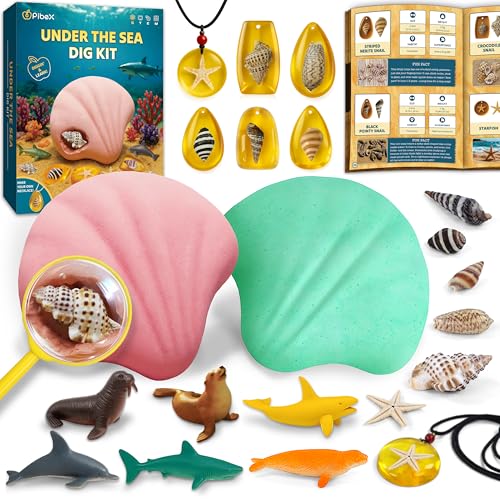
This kit blends excavation with craft, offering 18 real shell fossils plus amber resin charms and sea animal figures. A kid-sized hammer, chisel, brush, magnifying glass, and a dig mat enable realistic digs. A necklace craft activity lets children wear their discoveries, adding a creative, social dimension to science play. It works well for hands-on learners who enjoy multitasking activities and storytelling through science.
Best for: kids who appreciate both excavation and arts-and-crafts integration. Limitation: the necklace-making component may require adult supervision for younger children to ensure safe stringing and finishing.
Discovery 4D Shark Anatomy Kit

Best for structured, visual learners, this kit lets kids build a 19-piece 4D shark figure with squishy internal organs and an exposed anatomy view. A transparent display option reveals organs in place, making it easy to compare anatomy layers. It’s aligned with STEM learning and designed for beginner to intermediate skill levels, making it a strong choice for classroom-style or family study sessions without overwhelming complexity.
Best for: learners who thrive on layered visualization and step-by-step construction. Limitation: the model focuses on a single species; broader ocean biology context requires supplementary materials for diverse ecosystems.
Genius Games Ecosystem: Coral Reef

This card-based ecosystem game invites players to align ocean life with habitats and food sources to score points. Based on real-world reef ecosystems, it teaches the relationships among predators, prey, and producers. The game is suitable for family play and classroom settings, promoting strategic thinking and collaborative planning while reinforcing marine biology concepts in an enjoyable format.
Best for: families and classrooms seeking a quick, repeatable educational activity that blends biology with strategy. Limitation: as a board game, it emphasizes concepts over tactile lab experiments.
Buying Guide: How To Choose The Right Marine Biology Kit
What age is appropriate for each kit?
Most kits target ages 6 and up. For younger children, prefer kits with larger pieces and safer materials that emphasize exploration over precision. Older kids can handle more complex assemblies, such as anatomy models or multi-step excavation activities.
Do you want hands-on dissection vs. observation?
Dissection-focused kits (like the Dissect-It and Discovery 4D Shark Anatomy) deliver tactile learning and anatomy insight. Observation-based kits (fossil digs and coral reef card games) emphasize ecological relationships and observation skills without dissection.
Is there an emphasis on crafts or just science?
Some kits blend crafts (PIBEX Under-The-Sea Dig Kit) with science, offering a creative end product. Others center on pure science exploration (Dissect-It, Discovery 4D). Choose based on your child’s interest in DIY projects and storytelling.
What about safety and materials?
Look for non-toxic materials, especially with younger children. Safety gear like goggles is a plus in digging kits. Reusable components add value for longer-term learning, while disposable or single-use parts may suit short-term projects.
How easy is setup and cleanup?
Simple, all-in-one sets with a guide and included tools minimize prep time. More elaborate kits may require more space and post-activity cleanup. Consider your available workspace and willingness to supervise.
How does the product support a broader learning plan?
Education-focused kits that tie to ecosystems, habitats, and food chains (like the Coral Reef game) complement science curricula. Kits with anatomy components provide deeper dives into body systems, useful for science fairs or deeper study units.
Frequently Asked Questions
What makes marine biology kits good for kids?
They provide hands-on exploration of ocean life, habitats, and biology concepts, fostering curiosity, critical thinking, and practical science skills in an age-appropriate format.
Are these kits safe for younger children?
Yes, when you select age-appropriate options that use non-toxic materials and avoid real dissection. Always supervise recommended age ranges and follow included safety guidelines.
Can these kits be used for classroom learning?
Many are suitable for classroom or group activities, offering structured steps, repeatable experiments, and accessible explanations ideal for foundational science education.
Do these kits align with science standards?
Many options align with general biology or earth science concepts. They are designed to support inquiry, observation, and basic anatomy or ecology ideas commonly covered in elementary and middle school curricula.
Which kit offers the best balance of play and learning?
Consider the Genius Games Coral Reef for a balanced, family-friendly gameplay approach, or the PIBEX Ocean Fossil Dig Kit for hands-on exploration with an educational narrative. Your choice depends on whether you value hands-on digging, anatomy study, or ecological modeling.
These selections provide diverse pathways into marine biology, from anatomy and fossils to ecosystems and interactive play. Each kit supports science learning through engaging activities that fit different learning styles and classroom or home environments.