Best Marine Battery Monitoring Systems for Reliable Power on Board
If you’re shopping for a marine battery monitoring system, you want accuracy, ease of use, and reliable alerts to protect your battery bank. This guide highlights five top options suited to boat owners, sailors, and RV enthusiasts who rely on 12V–48V systems and a mix of lead-acid and lithium batteries. Each pick is evaluated for best use cases, with practical pros and limitations to help you choose confidently. A quick summary table of the selected products follows to assist side-by-side comparisons.
| Product | Best For | Key Benefit |
|---|---|---|
| Renogy 500A Battery Monitor with Shunt | Users needing high accuracy and wide voltage range | 1% accuracy and high/low alarms |
| SUPNOVA IPX7 Waterproof Battery Monitor | Outdoor or wet environments | IPX7 waterproofing and broad 7–100V range |
| ANCEL BM300 Pro Battery Monitor | Multi-vehicle setups and Bluetooth monitoring | 4-battery monitoring with Bluetooth 5.3 |
| Victron Energy Smart Battery Shunt | Smartphone-centric, detailed insights | All-in-one smart monitor with app insights |
| LiTime 500A Smart Shunt | App-based monitoring for RV/marine systems | Real-time SOC, alarms, and history |
Renogy 500A Battery Monitor With Shunt
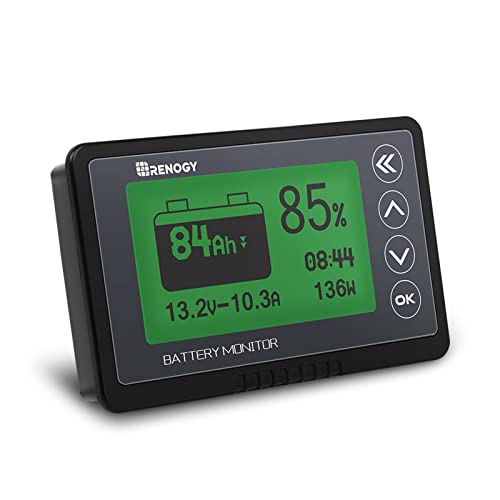
The Renogy unit emphasizes precise measurements with a shunt-type design delivering real-time voltage and current readings to 1% accuracy. It features high and low capacity alarms that flash the backlight and voltage value to prevent over-discharging. It supports multiple battery chemistries: Lead Acid (AGM, GEL), Lithium Iron Phosphate, Lithium-ion, and Nickel-metal hybrids, including 12V, 24V, and 48V systems. Best for boaters who want tight monitoring across mixed battery banks and a clear alert system. Caution: the setup requires correct wiring of the shunt to achieve full accuracy across voltages; improper installation may skew readings.
SUPNOVA IPX7 Waterproof Battery Monitor

The SUPNOVA monitor is designed for exposed installations. It covers 7–100V, including 12V, 24V, 36V, 48V, up to 60V/72V configurations, and provides a digital display of remaining capacity with a buzzer alarm. It’s well suited for marine, RVs, boats, and outdoor equipment where weather protection is a must. Best for users needing IPX7 protection and a straightforward capacity readout. Limitation: the device may rely on a default 12V lead-acid setting unless configured for higher voltages.
ANCEL BM300 Pro Battery Monitor
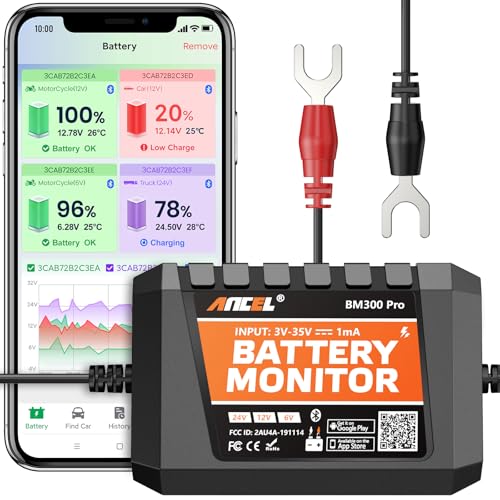
The BM300 Pro is designed for versatility across 6V–24V systems and automatically adapts to common battery types, including Lead-Acid and Lithium-Ion. It can monitor up to four batteries simultaneously and sends instant alerts via a Bluetooth connection. This makes it ideal for RVs, boats, and dual-battery trucks. Best for multi-battery setups and users who want remote monitoring via smartphone. Caution: the Bluetooth range can vary with interference or extreme conditions, which may affect notifications.
Victron Energy Smart Battery Shunt

The Victron SmartShunt provides an all-in-one solution that wires into your system and transmits data to the VictronConnect app. It offers detailed insights into State of Charge, time remaining, voltage, current, amp-hours, charge cycles, and voltage extremes. This makes it a strong fit for users who value continuous, app-based monitoring and seamless integration with other Victron devices. Best for app-driven, long-term system optimization. Caution: installation may require planning to integrate with existing Victron components and wiring conventions.
LiTime 500A Smart Shunt

The LiTime smart shunt focuses on Bluetooth app monitoring with a 500A shunt and broad voltage range. It provides SOC, alarms, and history records, making it practical for RVs, marine systems, and home storage. Best for users who prefer app access to historical data and customizable alerts. Limitation: the app might require regular connectivity to deliver real-time updates, and initial pairing can vary by device.
Buying Guide
What should you look for in a marine battery monitor? Consider compatibility with your battery types and system voltage, accuracy of readings, alarm clarity, and the ability to monitor multiple batteries. A waterproof or weather-resistant enclosure is essential for exposed mounts on boats. Bluetooth or app-based monitoring can simplify long-term maintenance, while shunt-based monitors typically offer higher accuracy for real-time current flow. If you operate mixed chemistries, prioritize devices that explicitly list compatibility with Lead-Acid, AGM, Gel, Lithium, and LiFePO4 batteries. For larger or multi-battery boats, models that support multiple batteries or four-battery monitoring provide better value. Finally, ensure the install process aligns with your electrical layout and safety standards on board.
Key Buying Considerations
- Voltage and current range: Ensure the monitor covers your system’s voltage (12V, 24V, 48V, etc.) and current needs.
- Battery chemistry support: Look for compatibility with Lead-Acid, AGM, Gel, LiFePO4, and Li-Ion.
- Alarm types: Choose models with high/low alarms, temperature monitoring, and alert notifications.
- Connectivity: Bluetooth or app-enabled monitors offer remote access but consider range and weather impact.
- Durability: For marine use, IP rating (IPX7 or better) and rugged housings help withstand moisture and salt exposure.
FAQs
- What is a battery monitor shunt, and why use one? – A shunt provides precise current measurement by creating a known resistance, improving reading accuracy for voltage, current, and state of charge.
- Can these monitors work with both lithium and lead-acid batteries? – Yes, most units listed support multiple chemistries, including LiFePO4, Li-Ion, AGM, Gel, and Flooded.
- Do I need Bluetooth on a marine installation? – Bluetooth can simplify setup and monitoring, but ensure you have reliable connectivity for remote alerts on the water.
- Is IP rating important for outdoor use? – Yes. An IPX7 rating helps protect the monitor from water immersion and spray common on boats.
- Can I monitor multiple batteries with one device? – Some models support up to four batteries or whole banks; verify the product’s battery count before purchasing.
- Will these monitors affect my battery life? – Most monitors are low-power, but always check standby consumption and ensure it fits your energy budget.