Best Marine Battery Monitoring System Picks for Safe, Reliable Power on the Water
If you rely on marine electronics or cabin comforts while at sea, a marine battery monitoring system helps protect your battery bank and ensures you won’t be left in the dark. The top picks below are best for boaters needing accurate voltage and current readings, alerts, and easy app or Bluetooth access. The buyers most served here include cruisers, anglers, live-aboards, and those who store boats off-season and want proactive battery management.
Summary table of chosen products
| Product | Best For | Key Benefit | Notes |
|---|---|---|---|
| Renogy 500A Battery Monitor | Boat owners with 12V–48V systems | High accuracy with shunt, alarms | Supports multiple chemistries |
| SUPNOVA IPX7 Waterproof Battery Monitor | Outdoor marine environments | IPX7 protection, broad voltage range | Weather-resistant housing |
| ANCEL BM300 Pro Battery Monitor | Varying system voltages on boats | 4-battery monitoring, Bluetooth 5.3 | Reinforced shell for harsh environments |
| Victron Energy Smart Battery Shunt | Integrated, app-driven systems | In-depth app insights | Premium solution for multi-battery banks |
| LiTime 500A Smart Shunt | RV, marine, off-grid storage | App monitoring, customizable alerts | Great value for lithium banks |
Renogy 500A Battery Monitor With Shunt
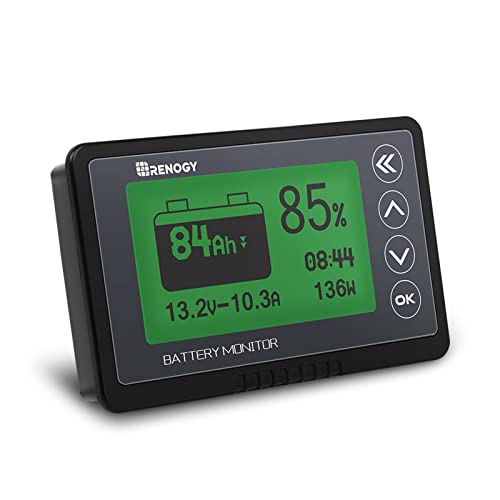
Best for boat owners seeking precise, real-time readings across multiple battery chemistries. The Renogy monitor uses a shunt design for accuracy and includes high/low voltage alarms to prevent over-discharge. It supports Lead Acid variants (AGM, GEL), Lithium Iron Phosphate, and general 12V systems up to 48V. It’s ideal for vessels with a mixed battery setup and where accurate current measurement matters for inverters and solar charging.
Who it’s for: sailors running a mixed battery bank and who need reliable alarms and precise data to manage daily power draws. Why chosen: high measurement accuracy and broad compatibility with common marine batteries, plus protective alerts to extend battery life.
Caution: installation requires proper shunt wiring and calibration; miswiring can affect readings.
IPX7 Waterproof Battery Monitor With Bracket

This monitor is built for marine environments where water exposure is a concern. It supports 7–100V systems (including 12V, 24V, 36V, up to 100V) and offers a percentage remaining readout alongside a temperature readout and buzzer alarm. It’s a good fit for boats with diversified electrical systems, shore power, and off-grid solar setups. Best for outdoor installations where IPX7 protection matters.
Who it’s for: boaters needing a rugged, outdoor-ready monitor that can handle a wide voltage range. Why chosen: waterproof enclosure and direct battery capacity percentage readouts help simplify decisions under wet conditions.
Caution: some users may require additional wiring adapters for exact voltage ranges in complex systems.
ANCEL BM300 Pro Battery Monitor
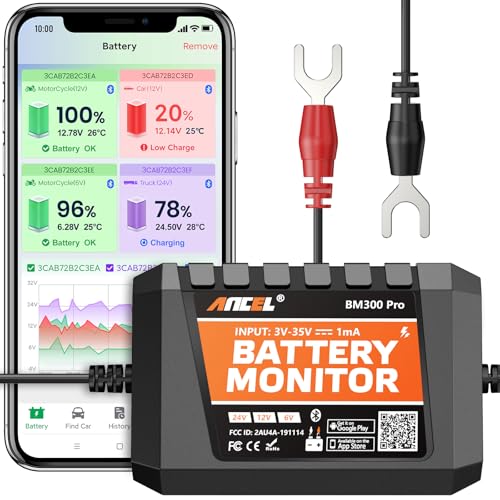
The BM300 Pro is designed for versatile, multi-vehicle and multi-battery applications, including marine setups. It auto-detects and adapts to 6V, 12V, and 24V systems and can monitor up to four batteries simultaneously. The Bluetooth 5.3 capability provides instant alerts for voltage drops, charging issues, or weak cranking. It’s robust enough for roving boat use and easier to manage with a smartphone.
Best for: boaters who require a single, expandable monitoring solution for diverse battery configurations. Why chosen: four-battery monitoring and strong data connectivity boost proactive maintenance. Caution: while 6V monitoring is limited for SOC, it’s not a full charging/cranking tester at 6V.
Victron Energy Smart Battery Shunt

The Victron SmartShunt is an all-in-one solution for detailed battery monitoring via the VictronConnect app. It wires into your system to deliver precise State of Charge, Time Remaining, Voltage, Current, Amp Hours, and cycle data. It’s particularly strong for integrated marine systems where live data feeds to other Victron devices optimize charging strategies and energy management.
Best for: boaters with a Victron ecosystem or those who want deep in-app insights. Why chosen: comprehensive data and seamless integration with other Victron gear. Caution: upgrade costs can be higher for those not already in the Victron ecosystem.
LiTime 500A Smart Shunt

The LiTime monitor pairs a 500A shunt with a Bluetooth app for real-time data on voltage, current, power, and State of Charge. It’s suitable for lithium, AGM, and gel batteries and is especially helpful for RVs and marine storage where long-term data helps plan charging cycles and energy usage. It provides historical data and alerts for abnormal operation.
Best for: users wanting app-based visibility and historical data for lithium or mixed chemistries. Why chosen: strong app integration and customizable alerts, with broad battery compatibility. Caution: ensure the app privacy and data access meet your needs; some users may want more ecosystem-specific features.
Buying Guide: Key Considerations For Marine Battery Monitors
- Voltage and battery type compatibility: Ensure the monitor supports your system voltage (12V, 24V, 36V, or 48V) and chemistries (AGM, Gel, LiFePO4, lithium-ion).
- Measurement accuracy: Look for shunt-based designs for precise current readings and voltage stability, especially when running inverters or high-draw electronics.
- Alarms and alerts: Choose devices with audible alerts or app-based notifications for low capacity, high/low voltage, temperature, and charging faults to prevent unexpected failures.
- Housing and protection: IP ratings or waterproofing are important for exposed marine installations. Consider models with robust shells or waterproof enclosures.
- App and connectivity: Bluetooth or Wi-Fi app support helps you monitor remotely, view history, and receive real-time alerts. Check compatibility with your device ecosystem.
- Multi-battery monitoring: If you have more than two batteries, select monitors that support multiple batteries simultaneously or expandable configurations.
- Ease of installation: Some units require professional wiring, while others offer plug-and-play options. Consider your comfort with wiring, shunts, and fuse placements.
- Data history and analytics: For power budgeting, choose devices that store historical data on discharge cycles, voltage highs/lows, and charge events for trend analysis.
- Protection features: Look for reverse polarity protection, over-discharge alarms, temperature sensing, and anti-spark designs to protect battery banks and electronics.
Frequently Asked Questions
- What is a marine battery monitor and what does it do?
It measures voltage, current, and sometimes temperature or state of charge to help you manage a boat’s battery bank and prevent unexpected outages. Many models offer alarms and app-based monitoring for real-time awareness.
- Do I need Bluetooth or an app for a marine monitor?
Bluetooth or app connectivity is convenient for remote monitoring and historical data. It’s especially helpful in larger boats with multiple batteries or solar charging setups.
- Can these monitors handle different battery chemistries?
Yes, many units support lead-acid, AGM, Gel, LiFePO4, and lithium-ion batteries. Verify compatibility with your specific battery types before purchasing.
- Is IP rating important for marine use?
IP ratings (like IPX7) indicate protection against water exposure. For exposed areas or open decks, a waterproof or rugged enclosure is highly beneficial.
- Will a higher-cost monitor always be better for my boat?
Not always. The best choice balances system voltage, battery count, app needs, and budget. Premium monitors excel in multi-battery setups and ecosystems, while simpler boats may do well with a single, reliable shunt-based monitor.
- How many batteries can a monitor handle?
Some monitors track one battery, while others monitor up to four or more. If you have a large bank, select a monitor designed for multi-battery configurations or plan to expand later.