Best Marine Battery Fuse Block Options for Safe DC Power Systems
When wiring a boat, RV, or other marine DC system, a reliable fuse block is essential to protect batteries, wiring, and equipment. This guide highlights five top options suited for up to 58V DC and varying amperage needs. Best for installations that require compact, high-amp protection or straightforward terminal mounting, these choices balance durability, ease of installation, and clear circuit protection. The top picks cater to open cockpit boats, trailers, and general marine electrical setups. A quick comparison table is provided to help you choose.
| Product | Max Voltage | Max Per-Block | Best For |
|---|---|---|---|
| Blue Sea Systems 5191 Fuse Block | 58V | 300A | DC main lines, inverters, windlasses |
| Joinfworld MRBF Terminal Fuse Block | 58V | 300A | Compact main battery protection |
| WUPP 12V Fuse Block | 32V | 30A per circuit | General 12V/24V boat wiring |
| Blue Sea Systems ST Blade 4‑Way 100A | 100A total | 4 circuits | Direct battery terminal mounting |
| Blue Sea Systems ST Blade 12‑Circuit | 100A | 12 circuits | High‑density DC systems |
Blue Sea Systems 5191 Fuse Block Terminal 30-300 AMP

Voltage max operating: 58V DC; Amps max operating: 300A per block; 30A–300A terminal fuses. Terminal stud size: 5/16″-18 (8mm). Mounting hole: 3/8″ (5mm). This compact, high‑amp fuse block suits DC main circuits, inverters, windlasses, and bow thruster protection. Weatherproof design makes it apt for small open‑cockpit boats and harsh environments. Best for: boaters needing a robust main‑circuit fuse block with weather resistance. Caution: ensure correct wiring gauge to avoid heat at high currents.
Joinfworld MRBF Terminal Fuse Block 300A

Product type: fuse rated current 300A; maximum rated voltage 58V DC; stud size 5/16″ (M8); mounting hole 3/8″ (M10). Made with PPS thermoplastic, stainless steel studs and nuts for heat resistance and conductivity. Easy to install via safe fuse connections; compact design saves installation space. Best for: users needing a rugged, space‑saving main fuse block with corrosion‑resistant hardware. Caution: verify terminal stud alignment before securing to battery posts to prevent cross‑threading.
WUPP 12 Volt Fuse Block with LED Indicator
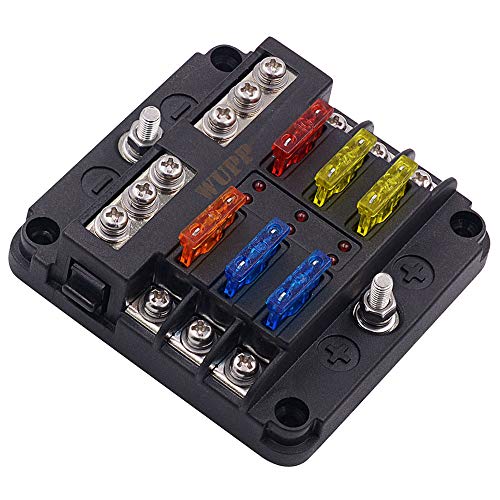
Features LED warning indicators for blown fuses, six circuits, and a universal 12–24V DC input with a 32V input rating. Each circuit supports up to 30A. Bus bars and fuse pieces are nickel‑plated copper for corrosion resistance and conductivity. Best for: installations requiring clear fault indication and neat wiring in a compact 6‑circuit block. Caution: LED indicators may reuse the block’s lighting circuit; some residual voltage can exist even when a fuse blows.
Blue Sea Systems ST Blade 12‑Circuit with Ground and Cover

Includes twelve fused circuits with an integrated negative bus and a 100A maximum capacity. The insulating cover has a secure latch, spare fuse storage, and recessed label areas for circuit identification. Best for: high‑demand DC systems needing multiple fused branches with organized labeling. Caution: ensure each circuit uses compatible blade fuses (ATC/ATO) up to 30A per circuit for optimal protection.
Blue Sea Systems ST Blade 4‑Way 100 Amps, 5023

Four fused circuits, battery terminal mount, 100 A capacity, and supports up to 30 A per circuit. Installs directly to the battery with a compact footprint, making it suitable for smaller rigs or tight engine bays. Best for: users needing a simple, direct battery terminal fuse block with moderate circuit count. Caution: ensure the mounting area has a clean, flat surface for secure attachment.
Buying Guide: Key Considerations for Marine Battery Fuse Blocks
- Voltage and current compatibility: Match the fuse block’s max voltage and per‑circuit current to your system’s needs. Higher amperage blocks are ideal for inverters and main feeds; lower rating suits accessory circuits.
- Mounting method: Terminal blocks that mount to battery studs save space and simplify wiring, but require careful torque and fit. Consider weatherproof or IP rated options for exposed locations.
- Number of circuits: Evaluate how many outputs you need now and plan for future expansion. Blocks range from 4 to 12 circuits; select a model with room to grow.
- Indication and troubleshooting: LED indicators or clear labeling help identify blown fuses quickly. However, be aware of any voltage present on circuits when fuses are blown.
- Material and durability: Look for corrosion‑resistant metals, thermoplastics, and protective covers to endure marine environments and temperature variations.
- Ease of installation: Simpler assemblies with included terminals, fuses, and accessories reduce setup time and error risk.
- Maintenance and replacement: Choose blocks with standard fuse types (ATO/ATC) or widely available fuses to simplify ongoing maintenance.
Frequently Asked Questions
- What is the difference between blade fuses and terminal fuse blocks?
Blade fuse blocks accept ATO/ATC blade fuses and typically mount to battery terminals, while terminal fuse blocks use stud connections for main feeds and bus bars. - Can I install a higher amperage fuse block than my wiring supports?
No. Always size the fuse block to protect the smallest gauge wiring in the circuit to prevent overheating and fire risk. - Do I need a weatherproof fuse block for an open‑tiller boat?
Yes. For exposed locations, pick a water‑proof or weatherproof model to resist corrosion and moisture ingress. - Is it better to mount the fuse block near the battery or closer to the loads?
Mount near the battery for shortest supply runs and easier fault isolation; however, consider accessibility for maintenance and serviceability. - What maintenance is required for marine fuse blocks?
Inspect for corrosion, loose connections, and signs of overheating. Replace blown fuses promptly and verify proper circuit labeling.
These selections provide a range of configurations to suit different marine electrical setups. Use the buying guide to align your system’s protection strategy with the specific demands of your boat, RV, or vehicle, while prioritizing safety and reliability in harsh environments.