Best Marine Air Conditioners for Boats: Quiet, Efficient Cooling on the Water
Finding the right air conditioning for a boat means balancing space, power supply, and durability in a marine environment. This guide highlights five top options that are well-suited for boat use, ranging from compact self-contained units to robust systems designed for harsh conditions. Each selection targets different boat sizes and power setups, helping you pick the best match for your needs. The products below are organized to help you compare cooling capacity, energy efficiency, noise levels, and installation considerations.
| Product | BTU / Capacity | Power | Best For | Notes |
|---|---|---|---|---|
| MarinAire 16,000 BTU Self-Contained | 16,000 BTU/h | 110-120V | Medium-to-large boats; cabin or salon cooling | Quiet with titanium coil, energy-efficient refrigerant |
| MarinAire 11,000 BTU Self-Contained | 11,000 BTU/h | 110-120V | Moderate-sized boats; main living area | Quiet operation; durable build |
| MarinAire 16,000 BTU Self-Contained (208–230V) | 16,000 BTU/h | 208–230V | Larger boats; heavy-duty installation | Same quiet and corrosion-resistant features at higher voltage |
| Dometic ECD Self-Contained 16,000 BTU | 16,000 BTU | 230V | RV, boat, or trailer where compact design matters | Energy-efficient, compact, easy digital control |
| Dometic ECD Retrofit Kit ECD10/2-1171-410A | Kit for retrofit; compatible with ECD | Voltage varies by system | Upgrade or retrofit projects | Environmentally friendly refrigerant with flexible blower options |
MarinAire 16,000 BTU Self-Contained Marine AC

Best for: Medium-to-large boats with a 110-120V power supply. This self-contained unit delivers robust cooling for salons or cabins where quiet operation matters. It also features a corrosion-resistant titanium coil and a lightweight design for easier installation and long-term reliability.
Key reasons for selection: The unit emphasizes a quieter experience through an effective sound cover that reduces noise significantly. Its titanium coil resists marine corrosion, and it runs efficiently with R410A refrigerant to minimize energy use without sacrificing performance.
Limitations to consider: Requires a compatible sacrificial anode bonding for optimal corrosion resistance. Installation may require space with adequate ventilation and a properly bonded anode setup.
MarinAire 6,000 BTU Self-Contained Marine AC

Best for: Small boats or compact cabins where space is at a premium. Although compact, this unit still offers good efficiency and a dedicated blower system for reliable cooling in tight spaces.
Why chosen: It emphasizes a compact footprint with a rotatable blower and sound shield to improve comfort and reduce noise on quieter boats or overnight stays. Its high-efficiency design helps keep energy use manageable on smaller vessels.
Caution: Its smaller capacity means it may not adequately cool very large or open-plan cabins in very hot climates. Consider backup ventilation or targeted cooling for large areas.
MarinAire 11,000 BTU Self-Contained Marine AC

Best for: Medium-sized boats where a balance of cooling power and energy efficiency is needed. This unit’s quiet operation and titanium coil support reliable performance in salt air environments.
Why chosen: It uses a quiet sound cover to minimize noise while delivering substantial cooling capacity. The titanium coil’s corrosion resistance aligns with typical marine conditions, helping longevity and low maintenance.
Caution: Like other high-capacity units, proper bonding to sacrificial anodes is important for corrosion protection and compliance with marine installation practices.
Dometic ECD Self-Contained 16,000 BTU
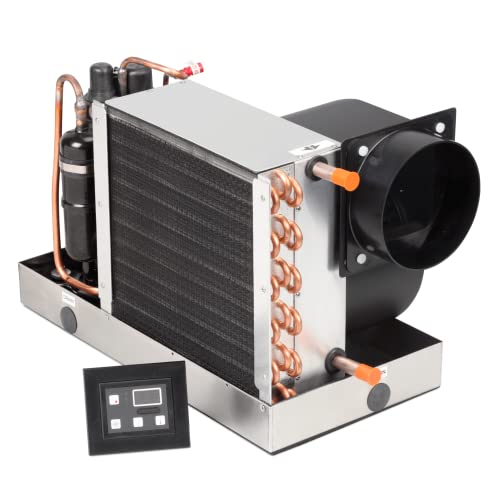
Best for: Boats and other outdoor-adjacent spaces where space is constrained but cooling demand is high. The compact design helps fit into tighter engine rooms or cabin corners while still delivering strong performance.
Why chosen: This model combines powerful cooling with an energy-efficient approach using R410A refrigerant. It’s also designed to be easy to install and operate, featuring a digital display and simple control interface for day-to-day use.
Caution: While compact, installation requires careful planning to ensure adequate ducting and mounting space, especially on smaller vessels. Always verify the available clearance before purchase.
Dometic ECD Retrofit Kit ECD10/2-1171-410A

Best for: Do-it-yourself installers upgrading older systems or retrofitting ECD modules onto existing marine setups.
Why chosen: The retrofit kit provides a flexible path to modernize cooling with an environmentally friendly refrigerant. It also includes a flexible blower option to adapt to various ducting configurations.
Caution: Retrofit projects require careful compatibility checks with existing rigging and electrical systems. Professional installation is recommended to ensure proper sealing and performance.
Buying Guide: Key Considerations For Marine A/C On Boats
How much cooling do you need? Start by calculating the square footage or volume of the space you want to cool. Larger cabins or multi-zone boats require higher BTU units or multiple units for even distribution.
What power is available? Self-contained 110–120V units are common for larger vessels with shore power. 208–230V options exist for boats with heavier electrical setups, offering higher capacity with efficient operation.
How will installation affect reliability? Marine environments are harsh—salt air, humidity, and temperature swings can affect components. Look for corrosion-resistant coils (like titanium) and robust housings designed for marine use.
Noise and comfort matter. Consider units with noise-reduction features and efficient blower systems. Quiet operation improves onboard comfort, especially in cabins and sleeping areas.
Energy efficiency and refrigerant. R410A is widely used for its efficiency and environmental profile. Energy-efficient designs reduce runtime and power draw, which is valuable on boats with limited electrical supply.
Installation flexibility. Some boats benefit from retrofit kits or compact units that fit tight spaces. Check mounting clearance, ducting options, and the need for sacrificial anode bonding for corrosion protection.
Frequently Asked Questions
What BTU is right for my boat space?
The right BTU depends on cabin size, insulation, and climate. For compact cabins, 6,000–11,000 BTU can suffice; larger spaces may require 16,000 BTU or higher, often with multiple units or higher-voltage options.
Is 230V or 120V better for marine A/C?
230V units generally provide higher cooling capacity and may be more energy-efficient for larger boats, but require a suitable power source. 120V units are common for smaller to mid-sized vessels with standard shore power.
Do marine A/C systems need professional installation?
Professional installation is recommended, especially for corrosion protection, proper bonding to sacrificial anodes, and correct ducting to ensure performance and longevity.
Can I retrofit an existing boat A/C with a new system?
Yes, retrofit kits exist to upgrade components and refrigerants. Verify compatibility with current wiring, mounting space, and ducting before proceeding.
Summary Of The Top Selections
- MarinAire 16,000 BTU Self-Contained Marine AC (110–120V): Quiet, corrosion-resistant, suitable for mid-to-large boats.
- MarinAire 11,000 BTU Self-Contained Marine AC (110–120V): Balanced power with strong efficiency for medium cabins.
- MarinAire 16,000 BTU Self-Contained Marine AC (208–230V): High-capacity option for boats with higher voltage systems.
- Dometic ECD Self-Contained 16,000 BTU: Compact, energy-efficient, good for boats needing a space-saving unit.
- Dometic ECD Retrofit Kit: Flexible upgrade path for existing systems with refrigerant and blower options.