Best Lithium Batteries for Kayak Fish Finders: Lightweight Power on the Water
If you kayak with a fish finder, you need a compact, reliable 12V lithium battery that lasts through long outings without weighing you down. The following five options balance lightweight design, deep-cycle life, and marine durability to keep your fish finder powered while you focus on the catch. They’re suited for solo paddlers, weekend anglers, or touring kayakers who want dependable, easy-to-carry power for electronics and accessories.
| Product | Best For | Key Benefit | Approx. Weight | Depth Of Discharge Insight |
|---|---|---|---|---|
| CYCLENBATT 12V 10Ah LiFePO4 | All-around kayak use | Long 10-year life, IP67 | ≈2.1 lb | 5,000+ cycles |
| ECOBOSS 12V 10Ah LiFePO4 | Lightweight, budget-conscious | 3x usable energy vs lead-acid | ≈2.1 lb | 5,000+ cycles |
| LiTime 12V 30Ah LiFePO4 | Extended trips | Built-in app monitoring | ≈? (compact form) | 4,000+ cycles |
Notes: All listed options are 12V LiFePO4 or similar chemistry designed for marine use. Selection emphasizes lightweight form factor, deep-cycle life, and compatibility with common fish finders. For kayaks, smaller packs reduce fatigue, while higher cycle counts extend battery life across seasons.
CYCLENBATT 12V 10Ah LiFePO4 Battery

The CYCLENBATT unit targets lead-acid replacements with higher energy density in the same footprint. It weighs about 2.1 pounds and matches standard 12V 7Ah SLA dimensions, making it easy to swap into existing kayak setups. The built-in 10A BMS protects against overcharge, discharge, overcurrent, and temperature extremes, while IP67 waterproofing adds marine reliability. Best for anglers seeking a long lifespan and minimal weight. A potential limitation is that users should verify exact capacity under cold-water conditions, as temperature can affect performance.
Who this is best for: Kayak anglers who want a lightweight, long-lasting replacement for lead-acid batteries and who value a robust BMS and IP67 protection.
Why selected: Combines lightweight design, long life, and solid protection for fish finders and small electronics.
FixOasis 12V Fish Finder Battery Kit

The FixOasis kit pairs a 12V rechargeable battery with a charger, designed for seamless use with Garmin, Raymarine, Lowrance, and GPS devices. It promises over 24 hours of continuous use and includes waterproof connectors and heat-shrink marine-grade components that reduce power leakage. This is a practical choice for kayakers who want an all-in-one solution with straightforward recharging. Caution: The kit is contingent on maintaining a reliable charging routine and may require monitoring for long, off-grid trips.
Who this is best for: Kayakers who prefer a complete, plug-and-play kit with included charging accessories.
Why selected: Easy setup, broad compatibility with common 12V electronics, and waterproof connectors help ensure steady power on the water.
ECOBOSS 12V 10Ah LiFePO4 Battery

The ECOBOSS unit emphasizes lightweight, compact form and a long operational life with over 5,000 cycles. It highlights 3x more usable energy than traditional lead-acid batteries and IP67 waterproofing for outdoor durability. Best for users who want a high balance of energy capacity in a very portable package. A caveat is that some users may want to confirm the exact dimensions to ensure a snug kayak fit in tighter storage bays.
Who this is best for: Kayak anglers seeking a reliable, high-cycle, compact battery for multi-day outings.
Why selected: Strong cycle life and excellent weight-to-capacity ratio for a fish finder and accessories.
LiTime 12V 30Ah LiFePO4 Battery

The LiTime 30Ah model is purpose-built for extended use with fish finders and kayak gear. It includes built-in BMS functions and low-temperature protection to safeguard operation in cold conditions. A standout feature is Bluetooth 5.0 monitoring, which lets you view real-time state of charge via a mobile app. This is ideal for paddlers who want proactive power management and longer trip endurance. Limitation: its larger capacity may be bulkier than some kayak-specific packs, so check your storage space.
Who this is best for: Kayakers planning longer trips or those who run multiple devices from a single battery.
Why selected: Extended capacity with smart monitoring supports advanced on-water planning.
NUOVEPE 12V 10Ah Portable Kit

The NUOVEPE kit features a 4-in-1 charging cable that supports USB‑C, Micro USB, and Lightning connectors, enabling charging of multiple devices alongside the battery. It uses an aluminum alloy structure for improved waterproofing and heat dissipation, which helps extend service life in marine environments. It is versatile for fish finders, GPS, depth sounders, and action cameras. Best for paddlers who want multi-device charging on the go. Limitation: Ensure the kit’s connectors are compatible with your specific devices and spares are kept dry.
Who this is best for: Kayakers who need a compact, all-in-one power kit with multi-device charging.
Why selected: Combines reliable 12V power with convenient charging flexibility and marine-grade construction.
NERMAK 2 Pack 12V 10Ah LiFePO4 Battery
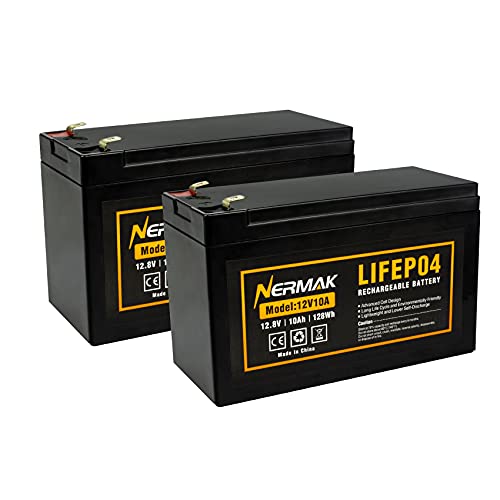
The NERMAK two-pack provides multiple batteries for longer trips or to power several devices, with built-in 10A BMS protection against overcharge, over-discharge, short circuit, and excessive self-discharge. It emphasizes safety and wide applicability, from fish finders to ham radios. Best for kayakers who want redundant power options or to run more than one device. A potential limitation is that a dual-pack setup can require more space and careful weight distribution on a small kayak.
Who this is best for: Kayakers who want extra power redundancy or to run additional gear simultaneously.
Why selected: High cycle life, built-in protection, and versatility across devices.
Buying Guide: Key Considerations For Kayak Fish Finder Batteries
What capacity do you actually need?
Capacity is measured in amp-hours (Ah). For short fishing trips, a 5–10Ah pack may suffice for one device. For longer days with multiple electronics, 10–30Ah can extend runtime, but watch for weight and size. Balance capacity with the kayak’s storage space and your comfort carrying a shoulder weight.
Why choose LiFePO4 for kayaks?
LiFePO4 chemistry offers stable voltage, long cycle life, and solid safety margins. They’re lighter than lead-acid equivalents and tolerate deep discharges better, which is helpful on the water where recharging can be sporadic.
Power management and protection
Look for a Battery Management System (BMS) that protects against overcharging, over-discharging, short circuits, and temperature fluctuations. Waterproofing, IP ratings, and thermal design matter in marine environments where splashes and heat can occur.
How will you recharge on the water?
Consider whether you’ll bring a charger, rely on shore power, or use solar. Kits with built-in charging options or compatibility with universal charging cables simplify recharging in remote locations.
Single vs. multi-device setups
If your kayak uses only a fish finder, a smaller 5–10Ah battery might be enough. For multiple devices (GPS, camera, radios), a larger pack or multiple batteries may be more practical, but ensure weight distribution remains balanced on the kayak.
FAQ
- Q: Can LiFePO4 batteries be used in cold weather on a kayak? A: Yes, but cold temperatures can affect performance. Some models include low-temperature protections or self-heating features to mitigate this.
- Q: How long will a 10Ah battery power a typical fish finder? A: Runtime depends on the fish finder’s power draw. A typical compact unit may run for many hours on a 10Ah pack, especially with low power settings.
- Q: Is a BMS necessary for kayak use? A: A BMS is strongly recommended to protect the battery during charging, discharging, and thermal events in marine environments.
- Q: Should I buy one big battery or multiple smaller packs? A: A larger pack reduces weight distribution complexity, but multiple smaller packs offer modularity and redundancy for longer trips.
- Q: Are these batteries waterproof without a case? A: Most claim IP67 water resistance, but it’s best to store them in a dry case or bag to avoid prolonged exposure to splashes and spray.
- Q: What about charging equipment on the water? A: Many kits include charging solutions or are compatible with standard chargers; consider a weatherproof charging method if you recharge onshore or via solar.