Best Leisure Batteries for Boats: Top Marine Power Solutions for 2026
Answering the common buyer question, these leisure batteries for boats balance starting power with deep-cycle endurance to run every coastal adventure, fishing trip, or weekend on the water. They’re best for boat owners who need reliable engine cranking plus energy reserves for trolling motors, fish finders, lights, pumps, and other accessories. Below are five top-rated options, each chosen for distinct needs—from traditional AGM dual-purpose units to high-performance LiFePO4 packs. A quick comparison table is included to help you pick quickly.
| Product | Cap. (Ah) | CCA | |
|---|---|---|---|
| Interstate Batteries Marine/RV Battery 12V 100Ah | AGM Dual-Purpose | 100 | 825 |
| Interstate Batteries Marine/RV Battery 12V 70Ah | AGM Dual-Purpose | 70 | 750 |
| UPLUS 92Ah Dual Purpose Marine Battery | AGM Dual-Purpose | 92 | 800 |
| LVGINE 12V 100Ah LiFePO4 | LiFePO4 Deep-Cycle | 100 | — |
| Mighty Max Battery MM-G24M 90Ah | AGM Dual-Purpose | 90 | 550 |
Interstate 12V 100Ah Dual-Purpose AGM Battery

This dual-purpose AGM battery is designed to start the motor and power trolling gear from a single unit. It’s described as “Interstate tough” for rugged conditions, offering extended service life compared with conventional lead-acid AGM batteries. Best for boaters who want a single, reliable solution for cranking and deep-cycle needs during long weekends on the water.
Best for: boaters who need a single, ready-to-use power source for both starting and trolling, plus frequent recharges. Why selected: combines high crank power with robust deep-cycle performance in one unit, simplifying maintenance and wiring.
Caution: the data emphasizes life extension over time but real-world cycle life varies with depth of discharge and charging practices. Ensure proper charging when using accessories drawing high current.
Interstate 12V 70Ah AGM Battery

This 70Ah dual-purpose AGM unit provides strong cranking while offering a solid storage reserve for deep-cycle use. It’s intended for smaller boats or setups where space or weight is a constraint, yet a reliable start-up power and trolling capability remains essential. Best for: saltwater or freshwater vessels with modest electrical demands. Why selected: a compact, dependable option that balances size and power for smaller boats.
Limitation: lower Ah rating means shorter deep-cycle endurance than larger packs; plan ahead for extended trolling or heavy-use electronics on longer trips.
UPLUS 92Ah Dual-Purpose AGM Marine Battery
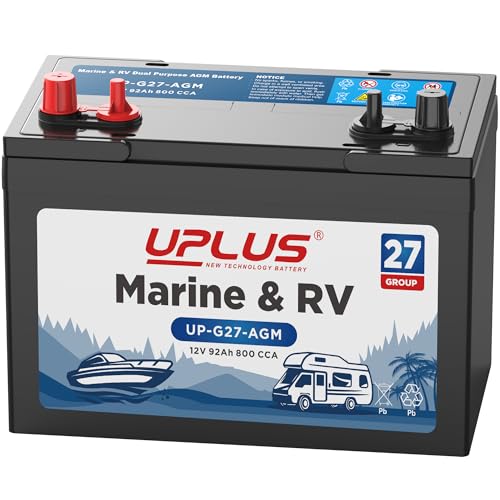
The UPLUS 92Ah unit merges starter power with deep-cycle endurance in a single package, freeing space and simplifying wiring on boats with compact electrical layouts. It’s designed to handle both engine starting and running marine devices like lights and electronics. Best for: boaters seeking a compact, space-saving dual-purpose option with solid 800CCA starting power. Why selected: high starting capability combined with practical deep-cycle performance suits many mid-sized boats.
Caution: verify compatibility with your boat’s battery compartment dimensions before ordering to avoid fit issues in tight bays.
LVGINE 12V 100Ah LiFePO4 Battery

This lithium-iron-phosphate battery is a high-efficiency, lightweight alternative to lead-acid packs. It includes a Battery Management System (BMS) for comprehensive protection, long cycle life, and deep discharge resilience. Best for: boaters prioritizing long life, weight reduction, and space savings with safe, high-performance power. Why selected: LiFePO4 chemistry offers extended cycles and reliable, predictable performance in marine environments.
Limitation: LiFePO4 batteries require compatible charging strategies and may have higher upfront costs; ensure your charger and battery management system are compatible.
Mighty Max Battery MM-G24M 90Ah AGM
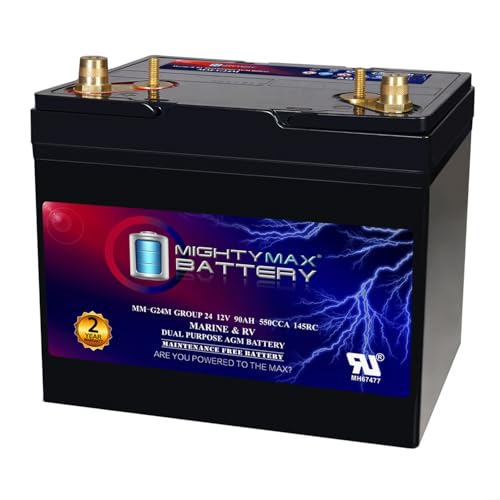
This 90Ah AGM unit is designed for dual-purpose use, offering solid cranking power (550 CCA) and adequate deep-cycle endurance for marine electronics and accessories. Best for: boats needing a reliable, maintenance-free AGM option with balanced starting and running power. Why selected: a proven practical choice for mid-range electrical loads and frequent engine starts in varied climates.
Note: As with all AGM batteries, avoid leaving the battery in a deeply discharged state for extended periods to maximize lifespan.
Buying Guide
What should you consider when choosing a marine leisure battery?
- Battery chemistry: AGM and LiFePO4 are the main options. AGM provides robust reliability and easy maintenance, while LiFePO4 offers longer life and reduced weight with careful charging compatibility.
- Cranking vs. deep-cycle balance: If you need both engine starting and long-duration electronics support, a dual-purpose unit is ideal. For only starting power, a high-CCA option may suffice; for full-house power, consider deep-cycle ratings.
- Capacity and CCA/MCA: Higher Ah supports longer use between charges; higher CCA/MCA ensures easier starts in cold weather. Match these figures to your boat’s engine size and climate.
- Physical fit and weight: Confirm dimensions fit your battery tray or compartment. LiFePO4 cells are typically lighter, helping with weight distribution and fuel economy.
- Charging system compatibility: Ensure your on-board charger, inverter, and distribution system are compatible with the chosen chemistry to avoid reduced life or safety risks.
How to pick between options?
- Best for space-saving, dual-function power: 92Ah–100Ah AGM dual-purpose units.
- Best for longest life and lightest weight: LiFePO4 100Ah packs with a proper BMS.
- Best for budget-conscious buyers needing solid all-around performance: 70–90Ah AGM dual-purpose batteries.
FAQ
- What is the difference between AGM and LiFePO4 for boats?
AGM offers rugged reliability and lower upfront cost. LiFePO4 provides longer cycle life, lighter weight, and better efficiency, but requires compatible charging and sometimes higher initial investment. - Can I run my trolling motor and electronics on a single battery?
Yes, with a dual-purpose AGM or LiFePO4 battery, you can power both starters and electronics, but verify the load and capacity to avoid premature discharge. - How do I choose the right capacity (Ah) for my boat?
Estimate total daily electrical draw (lights, devices, pumps) and multiply by expected hours of use. Choose Ah well above that total to maintain a healthy reserve for cranking and safety. - Is weight a concern on small boats?
Yes. LiFePO4 batteries are significantly lighter than AGM equivalents, which can improve handling and fuel efficiency on lighter vessels. - What maintenance is required for AGM batteries?
Keep terminals clean and dry, avoid deep discharges, and ensure proper charging to maximize lifespan.