Best Kayak Trolling Motor Battery Solutions for Reliable Power
Answering the question: what’s the best kayak trolling motor battery setup for dependable, maintenance-friendly power on the water? This guide highlights five top picks that balance weight, capacity, durability, and practicality for paddlers, anglers, and casual explorers. Each option suits a different use case—from lightweight day trips to extended outings with multiple electronics. Use the buying table below to compare key specs at a glance.
Summary table of chosen products
| Product | Type | Best For | Approximate Capacity | Notable Consideration |
|---|---|---|---|---|
| Newport 12V50Ah Deep Cycle AGM | Lead-Acid AGM | Lightweight kayaks, short trips | 12V 50Ah | Sealed, leak-proof; heavier than LiFePO4 equivalents |
| Newport Trolling Motor Smart Battery Box | Battery box power center | Organized power for small boats | Integrated 12V with ports | External connections you can mount |
| SUPER EMPOWER 12V 100Ah LiFePO4 | LiFePO4 Battery | Long days, high-demand electronics | 12V 100Ah | Long cycle life, built-in BMS |
| Renogy 12V 20Ah LiFePO4 | LiFePO4 Battery | Ultra-compact, lightweight setups | 12V 20Ah | Most portable; modest capacity |
| DC HOUSE 12V 100Ah LiFePO4 | LiFePO4 Battery | All-around serious trolling power | 12V 100Ah | Bluetooth monitoring, multiple ports |
Newport 12V50Ah Deep Cycle AGM Battery

The Newport 12V50Ah Deep Cycle AGM is a sealed, lead-acid battery designed for trolling motor use. It weighs about 32 pounds, which makes installation and transport manageable for many kayak setups. This battery is best for paddlers who want simple, maintenance-free operation without the need to manage a battery management system (BMS) beyond standard charging. It’s particularly suitable for shorter day trips where weight and space are important yet reliable power is essential. A potential limitation is lower energy density compared with LiFePO4 options, so longer trips or power-hungry electronics may require more frequent recharges.
Best for: kayakers who want a straightforward, sealed AGM option that is easy to install and maintain on small craft. It balances portability with dependable trolling motor power.
Why selected: This model prioritizes seaworthy reliability and a sealed design that minimizes leaks and corrosion, which matters on salt and freshwater boats alike.
Caution: AGM chemistry can be heavier per amp-hour than lithium alternatives, which may impact payload and handling on ultra-light kayaks.
Newport Trolling Motor Smart Battery Box Power Center
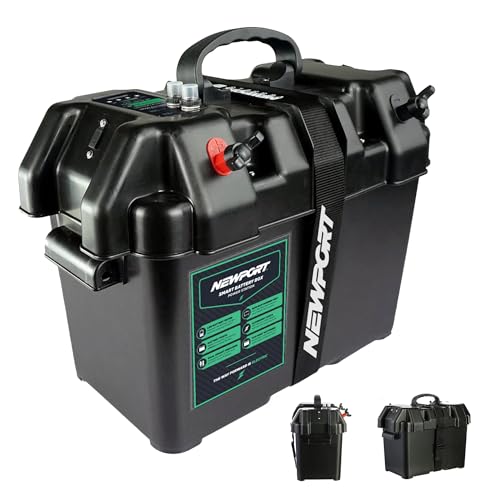
This compact power center is designed to simplify a clean power setup for small boats, including kayaks and jon boats. It features external battery terminals for quick connections to your trolling motor and electronics without exposing wiring or terminals. The unit acts as an all-in-one hub with built-in USB and 12V DC ports to power devices like phones, GPS units, and onboard accessories. It’s best for paddlers who prioritize a tidy, plug-and-play arrangement with minimal on-water wiring complexity. A limitation is that you still need a compatible 12V battery to pair with the box, so it’s not a standalone power source.
Best for: kayak anglers or hobbyists who want a neat, organized battery hub with accessible ports and straightforward setup.
Why selected: The external connections and integrated ports reduce on-water fumbling and make it easier to manage power for multiple electronics during day trips.
Caution: This is a battery box solution and relies on a separate compatible battery; ensure match with your trolling motor and devices for peak performance.
SUPER EMPOWER 12V 100Ah LiFePO4 Battery

This 12V 100Ah LiFePO4 battery is designed for deep-cycle power needs, including trolling motors, RVs, and marine electronics. It features a built-in BMS to guard against overcharge, over-discharge, overcurrent, short circuits, and temperature extremes. The system supports a substantial cycle life, with thousands of cycles expected under typical use, making it a strong choice for longer seasons on the water. It’s a drop-in replacement for lead-acid or AGM systems in many setups. It should not be used for engine starting or cranking applications, as it’s optimized for energy storage and steady power delivery rather than high-current starts.
Best for: paddlers seeking long-term power with high cycle life for trolling motors and onboard electronics without frequent battery changes.
Why selected: The built-in BMS and high cycle life help ensure consistent performance through many trips, reducing maintenance and replacement frequency.
Caution: If you require high starting power for engine cranking, this is not the preferred solution; consider a dedicated starting battery instead.
Renogy 12V 20Ah LiFePO4 Battery
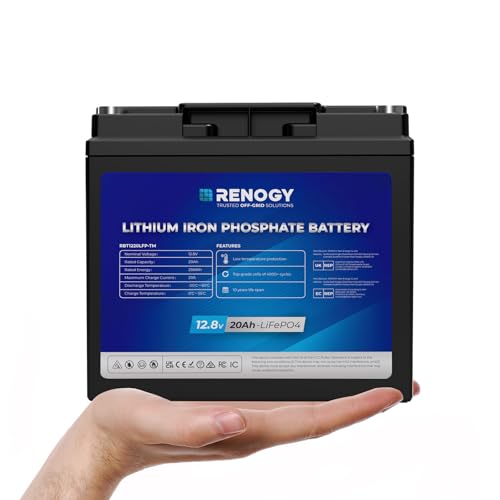
The Renogy 12V 20Ah LiFePO4 battery is a compact option weighing about 5.95 pounds, making it highly portable for kayaks or emergency kits. It is 50% lighter than similarly rated lead-acid packs and provides multi-protection with an integrated BMS. With 4000+ cycles at 80% DoD and low self-discharge, it offers substantial efficiency and longevity for outings where weight and space are critical. It’s best for short trips or for use as a supplementary power source for navigation lights or small electronics.
Best for: ultra-portable power on lightweight kayaks or as a backup power source for shorter trips where weight is a premium concern.
Why selected: Its compact size and strong cycle life make it ideal for riders who want LiFePO4 benefits without bulk or weight penalties.
Caution: The limited capacity means you’ll need to recharge more often if you run multiple devices for long periods.
DC HOUSE 12V 100Ah LiFePO4 Trolling Motor Battery

This DC HOUSE 12V 100Ah LiFePO4 battery includes Bluetooth monitoring and a low-temperature cut-off to protect cells in cold conditions. It features a built-in 100A BMS and supports charging via USB-A, USB-C, and DC ports, making it versatile for devices beyond the trolling motor. It’s a strong option for kayaks that spend time in cooler climates or for users who want smartphone access to battery metrics on the water. A limitation is that Bluetooth app reliability can vary by device and environment, which may affect real-time monitoring accuracy.
Best for: paddlers who want to monitor battery status on the fly and need multiple charging ports for devices and accessories.
Why selected: The combination of low-temperature protection, Bluetooth app monitoring, and a robust BMS supports reliable performance in variable weather and multi-device setups.
Caution: Ensure your watercraft electronics are compatible with the included ports and that the app remains functional on your phone model.
Buying Guide: Key Considerations for Kayak Trolling Motor Batteries
- Battery chemistry: LiFePO4 batteries offer the best weight-to-capacity ratio and longer life, but come at a higher upfront cost. AGM offers lower upfront cost with heavier weight and shorter cycle life.
- Capacity vs. weight: For kayaks, lighter is often better. If you run high-demand electronics or plan long trips, prioritize higher Ah with LiFePO4 to maintain balance.
- Size and fit: Measure your hatch dimensions and battery box space. LiFePO4 units can be compact yet powerful, while some larger lead-acid packs may not fit on smaller kayaks.
- BMS and safety: A built-in BMS helps protect the battery from overcharge, deep discharge, and temperature extremes, which is crucial for longevity on the water.
- Portability and mounting: Consider whether you want a dedicated battery box, a compact battery, or a full power hub. External terminals and USB/12V ports add convenience for accessories.
- Temperature considerations: Cold temps can affect performance. LiFePO4 cells generally perform better in cold conditions than lead-acid counterparts.
- Maintenance: Sealed AGM and LiFePO4 require minimal maintenance compared with flooded lead-acid batteries, which need water replenishment.
- Charging compatibility: Ensure your charger is appropriate for the battery chemistry (AGM vs LiFePO4) and the trolling motor’s input requirements.
Frequently Asked Questions
- What’s the best battery type for kayaks?
– LiFePO4 batteries are often the best balance of weight, lifespan, and performance for kayaks, followed by sealed AGM for a simpler, budget-friendly option. - Do I need a battery box or power center?
– A battery box or power center helps organize connections and protect terminals, especially for small boats with multiple electronics. - How many amp-hours do I need for a trolling motor on a kayak?
– It depends on motor draw, trip length, and electronics. Short trips with modest draw may get by with 20-50Ah; longer trips or power-hungry setups benefit from 100Ah or more, especially with LiFePO4. - Can I mix battery chemistries on the same boat?
– It’s not recommended to mix different chemistries in the same system due to charging and performance imbalances unless designed for it by the manufacturer. - Is Bluetooth monitoring worth it?
– For remote monitoring of SOC, voltage, and temperature, Bluetooth-enabled packs provide convenience, but ensure reliable app support for your device. - Can these batteries be used for starting engines?
– Most trolling motor and marine batteries are designed for deep-cycle use, not engine starting. Use a separate starting battery if needed.