Best Inflatable Single Person Kayaks for Solo Paddling and Easy Transport
Answering the needs of solo paddlers, this guide highlights five top inflatable, single-occupant kayaks that balance stability, durability, and portability. The listed models are best for casual lake days, mild rivers, and beginner-to-intermediate adventures. Each product section explains who it suits best and why it was chosen, with practical cautions where relevant. A quick buyer table follows the introduction to help compare core specs at a glance.
| Product | Weight Capacity | Best For | Notes |
|---|---|---|---|
| Intex Challenger K1 | 220 lb | Budget-friendly daily use | Low-profile, adjustable seat |
| Intex Excursion Pro K1 | 220 lb | Stability and maneuverability | Sturdy, high-pressure design |
| Nuwani 9ft Kayak | 220 lb | BeginnerSolo paddling | Lightweight with included oars |
| Festisoul Single-Rider | 450 lb | Fishing and extra gear | Drop-stitch floor for rigidity |
| OCEANBROAD V1-320 | 308 lb | All-around travel | Three-chamber design, durable |
INTEX Challenger K1 Inflatable Kayak Set
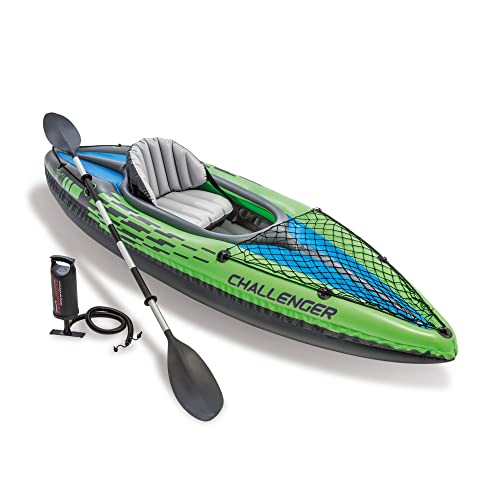
The Challenger K1 is a compact, single-person kayak designed for lakes and light rivers. It uses a robust PVC formulation and a low-profile tubelike hull for easier paddling. The cockpit accepts an adjustable, removable seat for leg room and comfort on longer sessions. This model is best for budget-conscious buyers who want portability without sacrificing basic performance.
Best for: casual solo paddlers who value portability and a comfortable riding position. Limitations: not ideal for rough water or extended expeditions due to its 220 lb capacity and simplified skeg setup.
INTEX Excursion Pro K1 Inflatable Kayak Set

The Excursion Pro K1 offers enhanced durability with a three-layer laminate and SuperStrong PVC. It supports high-pressure inflation for rigidity, improving stability and tracking. It includes dual removable skegs to adapt performance for deep or shallow waters. It’s well-suited for paddlers who want more predictable handling and extra space for gear.
Best for: paddlers seeking stronger construction and better maneuverability in varied water conditions. Caution: higher inflation pressure requires a pump capable of sustaining the load.
Nuwani 9-Foot Inflatable Kayak

The Nuwani 9-foot kayak comes as a complete set with aluminum oars, a high-output pump, an adjustable seat, and a cargo net. Its lighter weight (about 15 pounds) and stability-focused design make it appealing for first-time solo paddlers who want a straightforward, all-in-one kit for lakes and gentle rivers.
Best for: beginners who want a ready-to-use package with included paddles and pump. Caution: maximum load is 220 lb, which may limit gear-carrying capacity for longer trips.
Festisoul Single Person Drop Stitch Kayak

This one-person model emphasizes versatility and durability with a true drop-stitch floor. Rated for up to 450 pounds, it offers ample space for tackle, gear, or extra cargo. The complete accessory kit—including a detachable padded seat, adjustable paddle, and three fins—facilitates on-water setup without extra purchases.
Best for: solo anglers and travelers who want a robust, gear-friendly kayak. Caution: the heavier hull may be less convenient to transport than lighter options.
OCEANBROAD V1-320 Inflatable Sit-In Kayak

The V1-320 is a 3.2-meter, one-person kayak built with a drop-stitch floor for rigidity and three-chamber design for safety. It supports up to 308 pounds and includes Halkey-Roberts valves for reliable inflation. Its durable vinyl construction and included paddling setup make it a solid choice for travelers wanting a reliable solo setup.
Best for: paddlers who want a sturdy, travel-ready kayak with strong safety features. Caution: larger size may impact portability compared with ultra-compact models.
Buying Guide: Key Purchase Considerations
- Weight capacity vs. gear needs: Match the kayak’s weight limit to your body weight plus any gear or fishing equipment you plan to carry. Higher capacities allow more gear without compromising hull stability.
- Hull construction and rigidity: Look for drop-stitch floors or multiple air chambers if you expect rougher water or longer trips. These features improve tracking and reduce hull collapse under load.
- Inflation method and setup time: Manual pumps are common, but some sets include dual-action or electric pumps for faster setup. Consider your patience and storage space.
- Portability and storage: If you transport in a car trunk or small SUV, opt for lighter models and compact pack sizes. Included carrying bags help with transport.
- Included accessories: Sets that include paddles, seats, fins, and repair kits reduce extra purchases and simplify on-water use.
- Water type and environment: For calm lakes or gentle rivers, lighter, budget models can suffice. For extended trips or mixed water, a heavier-duty kayak with a rigid floor provides more stability.
- Maintenance and durability: PVC formulations and UV resistance affect longevity. Look for reinforced bottoms and abrasion-resistant fabrics for longer service life.
Frequently Asked Questions
- What is the best inflatable kayak for beginners? – A model with a wide hull, stable tracking, and included seat is ideal for beginners. The Nuwani 9ft kit is a practical starter due to its complete package and light weight.
- Are inflatable kayaks durable enough for lakes? – Yes, many adult models use reinforced PVC and drop-stitch floors to improve rigidity and puncture resistance for lake use.
- Do inflatable kayaks require special pumps? – Most come with a manual pump, and some include high-output or dual-action pumps for faster inflation.
- Can inflatable kayaks carry gear for fishing trips? – Some models support higher capacities (up to 450 lb) and include gear nets or fins to help with load distribution and tracking.
- Is a skeg important for tracking? – A removable skeg improves straight-line tracking in deeper water and can be beneficial for beginners learning paddling technique.
- How should I store an inflatable kayak between uses? – Keep it dry and away from sharp objects. Deflate, roll, and store in a cool, dry place inside its carry bag or a protective cover.