Best in Line Bilge Pump Solutions for Boats, RVs and Remote Jobs
In line bilge pumps are compact, versatile options for transferring water in tight spaces. This guide highlights five reliable inline or inline-submersible pumps, ideal for marine, RV, and utility use. Each pick suits different buyers—from boat owners needing quick bilge drainage to campers requiring portable water transfer. The table below provides quick references to how each product stacks up.
| Product | ||
|---|---|---|
| SEAFLO 280 GPH Submersible Inline Pump | Marine and RV transfers | Dual submersible/inline design with 23 ft head |
| Whale BP1552 Gulper 220 Pump | Graywater management | Virtually unblockable with continuous flow |
| Attwood Sahara MK2 S800 12V | Automatic bilge and quick installs | Air-lock elimination and 360° rotatable outlet |
| NovelBee 12V 8GPM | Self-priming bilge/transfer tasks | Thermal overload protection, 8 GPM max |
| Rule IL280P 12V 280 GPH | Inline and submersible versatility | Supports multiple liquids with flexible setup |
SEAFLO 280 GPH Submersible Inline Pump

The SEAFLO SFSP1-G280-02A is a 12V pump rated at 280 GPH with a 23 ft max head and a 16 ft wire lead. It operates as both a submersible unit and an inline pump, making it flexible for tight installations on boats or RVs. This model is best for users who need a compact, reliable transfer pump that can handle both fresh water and seawater in intermittent duty scenarios. A 4-year warranty adds long-term value, and the dual-function design supports varied layouts. Consider this option if you want a single pump to cover multiple installation styles and easy serviceability. Limitation: not designed for continuous heavy-duty use over long periods.
Whale BP1552 Gulper 220 Pump
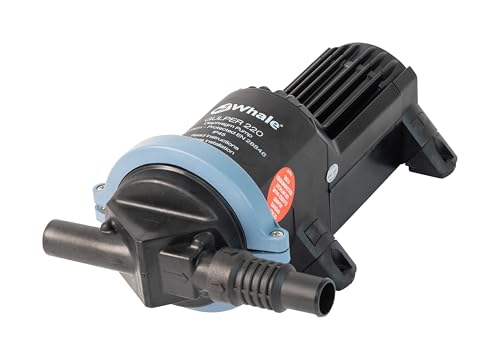
The Whale BP1552 Gulper 220 is a 12V DC pump designed for graywater handling, delivering about 3.5 GPM flow. It’s described as virtually unblockable with maintenance-free performance and a double outlet valve that supports continuous flow. This makes it especially suitable for showers and other areas where hair and gels can accumulate. Choose this if you need reliable graywater pumping with minimal clogging. Caution: practical flow is lower than higher-GPM marine pumps, so plan for slower transfers in larger volumes.
Attwood Sahara MK2 S800 12V Automatic Bilge Pump

The Attwood 5508-7 Sahara MK2 S800 is a 12V automatic bilge pump rated for up to 800 GPH. It features easy installation, an air-lock eliminating X-Air impeller, and a 360° rotatable outlet with included elbow and straight fittings. This pump is best for boats requiring a robust automatic bilge solution that can adapt to different mounting angles. Better for larger bilge spaces where consistent priming matters. Limitation: higher flow rate may be more than needed for very small bilge compartments.
NovelBee 12V 8GPM Self-priming Bilge Pump

The NovelBee pump is a 12V DC self-priming bilge pump with an 8 GPM capacity and a max open flow of 30 LPM. It includes thermal overload protection to prevent motor damage during bursts of high demand. This option is best for users needing a compact, straightforward transfer pump with self-priming capability for quick setup. Choose this if you want reliable priming in variable tank depths. Limitation: data suggests a higher current draw during peak flow, so battery capacity should be considered.
Rule IL280P 12 Volt 280 GPH Inline Pump

The Rule IL280P is a 280 GPH inline and submersible pump designed for versatile use across marine and RV applications. It handles fresh and marine water and can be employed in inline installations or as a submersible unit. This pump is best for those who want a compact, flexible option with straightforward installation and broad liquid compatibility. Caution: ensure correct orientation and adequate head loss considerations for your specific setup.
Buying Guide: Key Considerations For In-Line Bilge Pumps
- What flow rate do I need? Evaluate your transfer tasks. Higher GPH pumps move water faster but may consume more power and be overkill for small bilges or reservoirs.
- Inline vs. submersible: Do you need a pump that stays dry or one that can be submerged? Submersible units are protected from air intake but require waterproofing considerations.
- Head height and discharge: Check the maximum head (feet) the pump can push water. For tight spaces, a higher head may not be necessary, while taller bilges benefit from more head capacity.
- Material and compatibility: Marine-grade corrosion resistance matters on saltwater boats. Ensure the pump materials withstand your liquid media types (freshwater, seawater, graywater).
- Power and battery considerations: 12V systems are common on boats and RVs. Confirm amperage and battery capacity to avoid rapid drain.
- Installation flexibility: A 360° outlet or rotatable fittings can simplify mounting in awkward spaces. Include elbows and hose clamps where possible for custom layouts.
- Maintenance needs: Look for clog-resistant designs and ease of cleaning, especially for graywater or dirty transfer duties.
Design And Durability: What To Look For
- Warranty length can indicate confidence in durability; consider pumps with multi-year coverage for critical installations.
- Thermal protection and overload safeguards help prevent motor damage during peak loads.
- Quality seals and housing materials impact saltwater durability and overall longevity.
Installation Tips For Best Performance
- Use appropriate hoses and clamps to prevent leaks. Ensure correct hose ID to avoid flow restrictions.
- Avoid running pumps dry; many inline designs are not intended for continuous dry operation.
- Test the system with water before finalizing mounting to verify flow and alignment.
Frequently Asked Questions
What is the difference between inline and submersible bilge pumps?
Inline pumps are mounted in a pipe or hose run and push water through, while submersible pumps are designed to operate underwater. Some models do both, offering flexible installation options.
Can I use a bilge pump for graywater or bilge water?
Yes, many inline pumps can handle graywater or bilge water, but verify material compatibility and flow requirements for best results.
How do I choose the right head height?
Head height is the maximum vertical distance the pump can push water. Choose a pump with a head rated higher than your vertical lift requirement to ensure reliable operation.
Is a higher GPH pump always better?
No. Higher GPH increases flow but can consume more power and may be unnecessary if your space is small or capacity needs are modest.
What maintenance is required for inline bilge pumps?
Inspect hoses and fittings for leaks, clean any debris from intake paths, and check electrical connections periodically to prevent corrosion or loose connections.
Do these pumps require a separate float switch?
Some models include automatic activation or float switch features. If not, you may need a separate float switch or timer to automate operation.