Best Hydraulic Steering Kits for Boats for Smooth, Precise Control
Answering a common buyer question, these hydraulic steering kits are designed to deliver reliable, smooth steering for single-station, single-engine boats. The top picks span mid-range to high-performance setups, ideal for anglers, small-day cruisers, and pleasure craft where precise helm feel matters. This guide highlights five strong options, explaining who each is best for and why it suits different boats and engines. A quick comparison table follows to help you compare at a glance.
| Product | |||
|---|---|---|---|
| VEVOR Hydraulic Steering Kit (B0G4LX2GD1) | Mid-range single-engine boats | Up to 150 HP | High-pressure helm, compact cylinder |
| Camoo 200HP Hydraulic Steering Kit (B0FL2H2L8W) | Higher horsepower boats needing broader compatibility | Up to 200 HP | Includes wheel and full accessory set |
| VEVOR 150HP Hydraulic Outboard Kit (B0BVR2R2YV) | Single-station, moderate HP upgrades | Up to 150 HP | Built-in two-way lock cylinder |
| SEABOSHI 150HP Hydraulic Steering Kit (B0F23ZJ2MX) | Budget-friendly, corrosion-resistant option | Up to 150 HP | Aluminum alloy and stainless steel build |
| Winibo Inboard Hydraulic Steering Kit (B07DND68SC) | Inboard vessels needing versatile installation | Inboard compatibility varies | Side-mounted cylinder, ready to install |
VEVOR Hydraulic Steering Kit, 150 HP

This kit targets boats with single outboard engines up to 150 HP, offering a 5.5 turns lock-to-lock for precise control. The helm pump handles up to 6.9 MPa (1000 psi) and includes a check valve, fill port, stainless steel ORB fittings, and a replaceable shaft seal. The aluminum housing supports durability in marine conditions.
Best for: boaters with mid-range engines seeking responsive steering and a compact system that fits a variety of hull configurations.
Limitation: assembly requires correct hose routing and mounting clearance; ensure your transom area accommodates the cylinder and hoses.
Camoo 200HP Hydraulic Steering Kit

Designed for single outboard-powered boats up to 200 HP, this kit includes a steering wheel, balanced cylinder, low-friction helm, long hose lengths (26.8 ft each), and a fill kit. The maximum working pressure is 6.9 MPa (1000 psi). A replaceable shaft seal supports maintenance and reduces the risk of leaks in rough water.
Best for: boaters needing broad horsepower capability and an all-in-one package with wheels and hoses for straightforward installation.
Caution: check compatibility with your specific outboard brand and ensure hose routing can accommodate the long hose lengths without kinking.
VEVOR 150HP Hydraulic Outboard Kit

This kit features a built-in two-way lock cylinder, offering a locking mechanism that reduces rebound torque. It uses a 6.9 MPa (1000 psi) helm pump and includes two lengths of 20 ft hose, a balanced steering cylinder, and a fill kit. It’s suitable for upgrading aging steering on boats up to 150 HP.
Best for: boat owners looking to upgrade to a reliable two-way lock system with straightforward replacement parts.
Limitation: ensure your existing steering cylinder and mounting points align with the two-way locking cylinder’s specifications.
SEABOSHI Outboard 150HP Kit
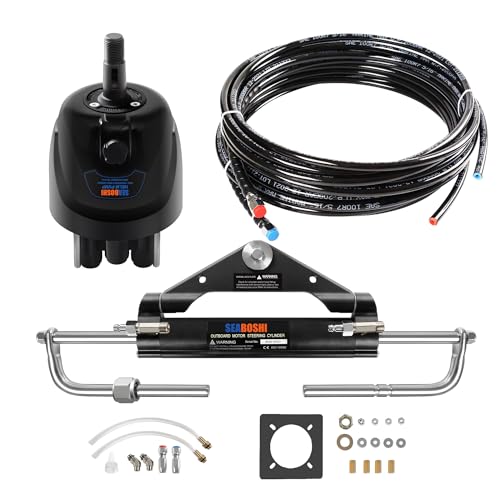
SEABOSHI’s system uses aluminum alloy and stainless steel to resist wear and corrosion. It comes with essential installation parts and high-strength reusable nylon hoses with quick-fit 1/4 inch pipe fittings. The kit is designed for simple installation and durability in marine environments.
Best for: budget-conscious buyers seeking corrosion-resistant components with straightforward installation and replaceable parts.
Limitation: the description emphasizes materials and basic parts; verify that the hose lengths fit your boat’s layout before purchase.
Winibo Inboard Hydraulic Steering Kit

The WQWJ kit is designed for inboard vessels up to 36 feet, featuring a side-mounted cylinder and a complete kit with cylinder, pump, and hose. It supports two-way valve operation to keep steering stable in choppy water and uses adjustable ORB fittings for flexible hose routing.
Best for: boaters with inboard engines who need a ready-to-install system with flexible fit options and robust valve control.
Limitation: inboard installations can require more precise mounting and line routing; confirm compatibility with your hull and engine layout.
Buying Guide
What should you consider when choosing a hydraulic steering kit?
- Engine horsepower compatibility: Choose a kit that supports the boat’s HP to ensure adequate steering effort and feedback.
- Helm pump pressure: Most kits use up to 1000 psi; confirm your boat’s steering requirements and ensure the pump can sustain long trips without heat buildup.
- Cylinder design: A two-way lock or a standard cylinder affects steering feel and rebound torque. A lock cylinder can improve stability during turns and rough water.
- Hose length and routing: Longer hoses provide flexibility but require careful routing to avoid kinks and wear. Check available space behind the dash and transom.
- Materials and corrosion resistance: Aluminum housings and stainless fittings extend life in saltwater environments.
- Installation effort: Some kits include wheels, fill kits, and hoses, while others are more basic. Consider whether you want an all-in-one package or to source components separately.
- Maintenance: Look for replaceable seals and easily serviceable components to reduce downtime and leaks.
Frequently Asked Questions
- What HP range should I look for in a hydraulic steering kit? – Match the kit to your engine’s horsepower, typically up to 150–200 HP for many recreational boats, though some kits support higher HP.
- Do I need a built-in lock cylinder? – A lock cylinder helps reduce rebound torque and improves stability, especially on rough water or when trailering.
- Are longer hoses better? – Longer hoses offer routing flexibility but can introduce lag if poorly routed or kinked. Plan routing carefully.
- Can these systems be installed on inboards and outboards? – Some kits are designed for inboards, others for outboards. Verify compatibility with your engine type and boat model.
- What maintenance is required? – Regular checks for leaks, replaceable shaft seals, and ensuring hose fittings remain secure help prevent steering issues.
- Is professional installation recommended? – For most hydraulic steering systems, a professional or experienced installer ensures correct hose routing, mounting, and bleeding of the system.