Best Heaters for Boat Cabins: Top Picks for Warm, Safe Boat Living
Choosing the right heater for a boat cabin helps protect engines, keep living spaces comfortable, and simplify winter storage. This guide reviews five top options designed for marine use, ranging from compact 400W models to higher‑output units. Each product is evaluated for warmth, reliability, and ease of installation on boats, RVs, and other small vessels. The selection represents a balance of price, efficiency, and practical features to help captains and crew stay warm and protected at sea or in storage.
| Product | Brand | Approx. Power (W) | Use Case |
|---|---|---|---|
| Boat Engine Compartment Heater | Xtreme Heaters | 400 | Boat cabins, bilges, storage |
| Therelmax Boat Engine Compartment Heater (White) | Therelmax | 500 | Boat bilges, cabins, wells |
| Therelmax Boat Engine Compartment Heater (Yellow) | Therelmax | 500 | Boat bilges, cabins, wells |
| Therelmax Boat Engine Compartment Heater (650W) | Therelmax | 650 | Boats with larger spaces |
| SEEKR by Caframo Stor-Dry | Caframo Limited | 70 | Boats and RVs, low power draw |
Boat Engine Compartment Heater 400W By Xtreme Heaters

The Xtreme Heaters model is a compact 400W boat engine compartment heater designed to fit tight spaces. It uses a self-regulating PTC element that turns on around 40°F and cycles off near 55°F, helping maintain a steady temperature in engine compartments and cabins. The anodized housing and sealed electronics provide durability in marine environments. The unit includes a waterproof fan with 58 CFM airflow and can be mounted in multiple orientations, including upside down, offering versatile installation on boats, greenhouses, or RVs.
Therelmax 500W Boat Engine Compartment Heater (Yellow)
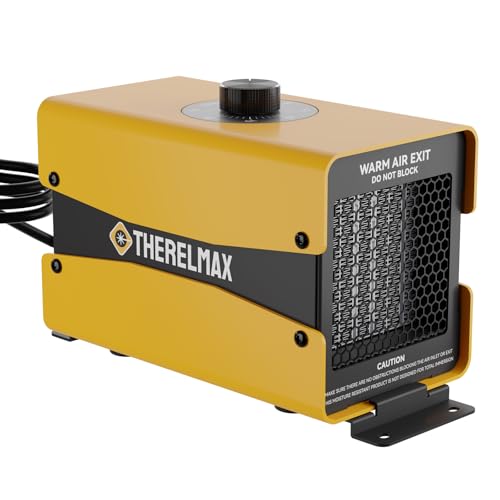
This 500W THERELMAX heater uses a safe PTC ceramic heating element with a built‑in adjustable thermostat. It is designed to keep bilges warm and dry, reducing winterizing costs for boats, RVs, greenhouses, and other spaces. The thermostat range supports 41°F–86°F recommendations, with the guidance to set around 46°F for boat heating. The unit provides rapid heating (3 seconds) and robust protection to engine components, helping prevent freezing in critical compartments.
Therelmax 500W Boat Engine Compartment Heater (White)
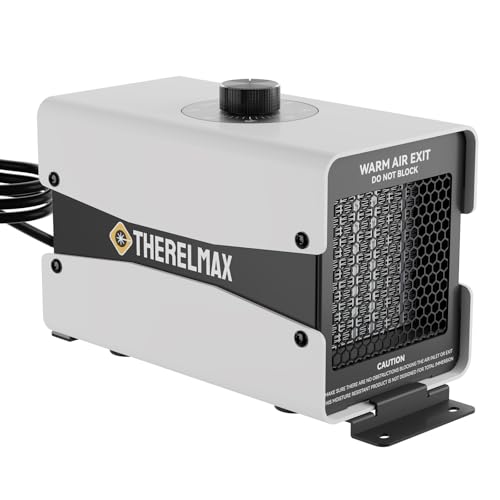
The white variant of the 500W THERELMAX unit offers the same benefits as its yellow counterpart with a different color option for installation aesthetics. It features a built‑in adjustable thermostat for flexible control and a 3-second fast heating cycle. This model is designed for boat bilges, RV bays, wellhouses, and similar spaces, offering consistent warmth while protecting plumbing and equipment from freezing temperatures.
Therelmax 650W Boat Engine Compartment Heater
The 650W THERELMAX unit increases heating capacity for larger cabins or bilges. It retains the built‑in adjustable thermostat and rapid heating features, enabling effective protection against freezing in more expansive boat spaces. Like other Therelmax models, it emphasizes durability with a PTC element and waterproof fan suitable for marine environments, helping maintain operational reliability across varied conditions.
Therelmax 800W Boat Engine Compartment Heater (White)
This 800W model by Therelmax provides substantial warmth for larger cabins or bilges. It features a safe PTC ceramic heating element and a waterproof fan, with an adjustable thermostat to tailor the temperature range (41°F–86°F typical usage). The unit is designed to extend boating seasons by maintaining heat in critical spaces while minimizing freezing risks to pumps and engines.
Buying Guide: Key Purchase Considerations For Boat Cabin Heaters
When selecting a heater for a boat cabin or bilge, consider space size, heat output, and environmental exposure. Marine heaters should be enclosed in corrosion‑resistant housings and use safe electrical components designed for humid, salt‑air conditions. A built‑in thermostat helps maintain stable temperatures, reducing fuel use and preventing freezing. Look for units with waterproof fans and the ability to mount in multiple orientations for flexible installation. Energy efficiency matters for battery or shore‑power setups, and a compact footprint is useful for tight engine compartments or under‑deck spaces. Compare models by wattage, thermostat range, and durability to ensure reliable performance during cold seasons or extended storage aboard.
Additional perspectives to consider include:
- Heat distribution: Higher wattage models move more air through bilges and cabins, but may draw more power. For small boats, 400–500W often suffices; for larger spaces, 650–800W may be needed.
- Installation location: Engine compartments require weatherproof, vibration‑resistant units; living cabins benefit from quieter operation and stable heat.
- Maintenance and durability: Anodized housings, sealed electronics, and waterproof fans reduce corrosion and failure risk in marine environments.
- Economy and winterizing: Efficient heaters lower total winterization costs by maintaining temperatures with less energy input and preventing damage to pumps and lines.
- Portability and versatility: Some models support upside‑down mounting or multi‑location use (boats, RVs, greenhouses), offering flexibility for seasonal storage or variable needs.