Best GPS Locator for Boats: Essential Personal Locator Beacons for Marine Safety
When you’re out on the water, a reliable GPS locator beacon is a critical safety tool. This guide highlights top boat-friendly personal locator beacons (PLBs) with GPS that are designed for marine environments, easy to deploy, and subscription-free where noted. The best choices are suited for boaters who want rapid distress signaling, precise location data, and clear visibility to rescuers. The following selections emphasize global coverage, Return Link Service (RLS), and AIS compatibility where available. Use this overview to compare features, battery life, and ease of use for your boating needs.
| Product | Best For | Key Benefit |
|---|---|---|
| ACR ResQLink View PLB 425 | Boaters and hikers needing buoyant, all-weather beacon | GPS distress signal + 406/121.5 MHz, lightweight and wearable |
| ACR ResQLink 400 | Budget-conscious outdoor enthusiasts | Subscription-free, strong visibility signals |
| ACR ResQLink View RLS | Those who want guaranteed distress acknowledgment | Digital display, Return Link Service, infrared strobe |
| ACR ResQLink 410 RLS | Global coverage seekers | GPS/Galileo/MEOSAR, RLS, long battery life |
| ACR RESQLINK AIS PLB-450 | Vessel-to-vessel coordination | AIS alerts to nearby vessels, RLS, NFC data access |
This introduction helps buyers identify the right beacon for their boat type and activity level. Each option below includes who it’s best for, why it stands out, and a practical limitation to consider before purchasing.
ACR ResQLink View PLB 425
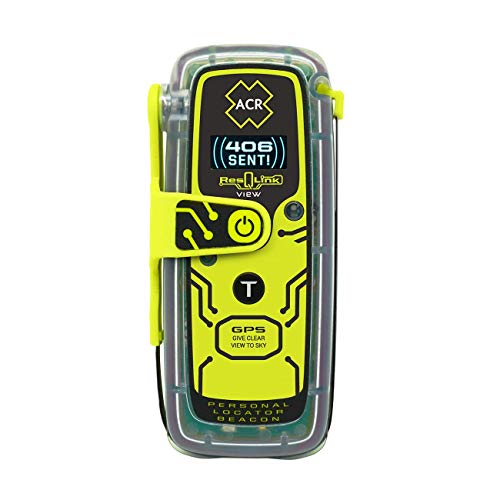
The ACR ResQLink View PLB 425 is a buoyant, rugged beacon designed for boating and outdoor adventures. It transmits a 406 MHz distress signal with GPS positioning and a 121.5 MHz homing signal. Best for boaters who want a compact, wearable device that remains accessible in water. It supports sending pre-canned messages to contacts via an optional testing subscription. A practical limitation is that some subscription features require the optional service, which may affect long-term communications planning.
ACR ResQLink 400

The ResQLink 400 offers no-subscription operation with robust 406 MHz distress and homing signals, plus LED and infrared strobes for nighttime visibility. It’s well-suited for hikers, hunters, and boaters who prefer a straightforward, no-fee beacon with strong signaling capabilities. Best for buyers who want strong, standalone SOS functionality without ongoing costs; however, it may provide fewer add-on messaging options than models with Return Link Service.
ACR ResQLink View RLS

The ResQLink View RLS adds Return Link Service, confirming that Search and Rescue has received the distress signal. It features a digital display and infrared strobe for clear visibility. Best for users who want explicit acknowledgment of rescue coordination and enhanced signal detection. A potential limitation is the need to manage RLS features, which may involve setup considerations for first-time users.
ACR ResQLink 410 RLS

The 410 RLS combines GPS, Galileo GNSS, MEOSAR compatibility, and RLS with a five-year battery life and 24+ hours of operational life. It is a strong choice for boaters who operate globally and require reliable, cross-system satellite coverage. Best for: long-range marine adventures. Caution: coverage depends on satellite availability, and RLS requires proper activation and service configuration for optimal performance.
ACR RESQLINK AIS PLB-450

The AIS PLB-450 adds Automatic Identification System (AIS) distress alerts that nearby vessels can observe. It also uses Return Link Service and NFC for quick data access on mobile. Best for boaters who want local AIS awareness alongside global SOS coverage. A limitation is that AIS visibility depends on nearby AIS-enabled vessels in the area, which may not be present in remote waters.
Buying Guide: Key Considerations For Marine GPS Beacons
- Global coverage: Look for devices with MEOSAR, Galileo, and global satellite compatibility to maximize rescue chances far from shore.
- Return Link Service (RLS): RLS confirms rescue personnel received your distress signal. Consider models with RLS if prompt confirmation is important to you.
- AIS integration: AIS-enabled beacons can alert nearby vessels. This is particularly useful in busy waterways but depends on other ships’ AIS reception.
- Battery life and durability: Five-year battery life is common; verify operational life and rugged design for saltwater exposure and cold conditions.
- Display and visibility: Digital displays and strobe lights improve signal visibility for rescuers, especially at night or in poor conditions.
- Subscription requirements: Some features require optional testing subscriptions. Weigh ongoing costs against added capabilities like messaging.
- Portability and wearability: Buoyant, compact beacons with clips or lanyards suit boaters who move between deck, cabin, and water.
Choosing For Your Use Case
- Out-and-back coastal trips: ACR ResQLink 400 or 425 offer strong core SOS with GPS and no mandatory service fees.
- Overseas or blue-water sailing: Choose models with MEOSAR/Galileo compatibility and RLS, like the 410 RLS.
- Vessel-to-vessel awareness: If nearby boats frequently assist, AIS PLB-450 can provide local alerts via AIS channels.
FAQ
- Do these beacons require a subscription? Some models offer subscription-based features for testing or enhanced messaging, but core SOS and GPS functions are generally subscription-free.
- What is RLS and why does it matter? Return Link Service confirms Rescue Coordinators received the distress signal, providing owner assurance during emergencies.
- Can AIS be used while at sea? AIS alerts are valuable in busy waterways where nearby vessels can respond, but rely on other vessels’ AIS equipment.
- How long do beacons last in the field? Battery life is typically several years; always check the manufacturer’s stated operating life and maintenance recommendations.
- Are these beacons waterproof and buoyant? Most marine-oriented PLBs are buoyant with rugged housings designed for water exposure and rough handling.
- Which beacon is best for global missions? The ResQLink 410 RLS is designed for global coverage with multiple GNSS systems and MEOSAR compatibility.