Best Gas Trolling Motor for Kayak: Power on Water for Every Kayaking Adventure
Finding the right gas trolling motor for a kayak means balancing power, reliability, and portability. This guide highlights five top options that suit anglers, explorers, and outdoor enthusiasts who need dependable thrust without sacrificing maneuverability. Each product is selected for ease of use, performance at kayak-friendly power levels, and suitability for small craft. Read on to compare core features, target users, and practical limitations so you can pick the best fit for your kayak trips, fishing days, or remote-water explorations.
Summary of selected products
| Product | Best For | Key Benefit | Limitations |
|---|---|---|---|
| Tiozuiu 52cc 2 Stroke Outboard | Budget-friendly power for larger kayaks | 2.3HP with up to 8500 rpm and 40-70 minutes run time | Two-stroke engine requires fuel mix and maintenance |
| YIYIBYUS 2.3HP 52CC | Reliable everyday use | 1.7kW/2.3HP, high efficiency, aluminum build | Fuel mix and noise considerations typical of 2-strokes |
| HinLIaDa 2-Stroke 2.3HP | Easy steering on inflatable kayaks | Strong 2.3HP, >120° steering angle | 2-stroke maintenance required |
| JooWing 2.3HP 52CC | Compact, portable option | 0.22Gal tank, up to 70 minutes runtime, ergonomic handle | Shorter run times on larger craft |
| Gosangom 3.5HP 52CC | Higher thrust for bigger loads | 3.5HP, robust build, lightweight | Fuel efficiency trade-off at higher power |
Tiozuiu 52cc Gas Outboard for Kayak

Best for budget-conscious paddlers who still want true motorized propulsion. The Tiozuiu model packs a 2-stroke, 2.3HP engine capable of speeds up to 8500 rpm, delivering reliable thrust for a solid day on the water. With a fuel-efficient run time of 40 to 70 minutes per tank, it’s suitable for short to moderate kayak trips, rescue training, or quick-water excursions. The built-in air cooling helps prevent overheating during extended use. The CDI ignition and hand-pull start simplify startup, making this a practical first gas motor for kayak anglers who value straightforward operation.
Who it’s best for: anglers and outdoor enthusiasts on compact watercraft who want quick propulsion without complex electronics. Choose this if you need a lightweight, easy-start motor with decent run time and a simple maintenance routine. Caution: two-stroke engines require proper fuel mixing and periodic maintenance to sustain performance.
YIYIBYUS 2.3HP 52CC Gas Outboard

The YIYIBYUS engine emphasizes durability and efficiency. With a maximum 2.3HP output and a broad operating speed range, it delivers solid thrust for kayaks, dinghies, and inflatable boats. The motor’s aluminum and PP construction resists corrosion, making it suitable for freshwater and light saltwater use. Its non-contact electronic ignition helps ensure reliable starts, though users should anticipate the usual maintenance associated with 2-stroke units. This model is best for frequent kayakers who value a steady power band and a tougher build for coastal trips.
Best for: kayakers who want a balanced mix of power, durability, and cost-efficiency. Better for frequent use on smaller craft where corrosion resistance matters, but avoid if you require ultra-quiet operation or lengthy run times on a single fill.
HinLIaDa 2-Stroke 2.3HP Outboard
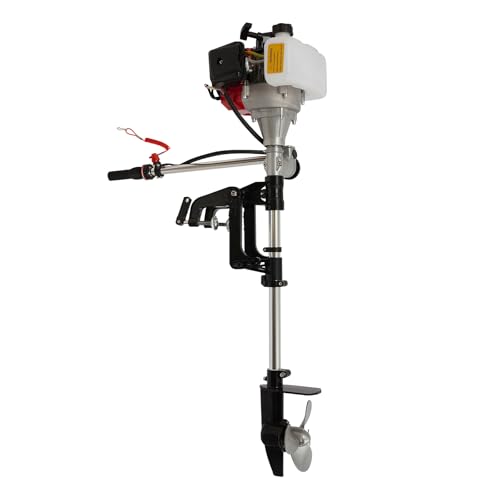
The HinLIaDa model centers on strength and simple handling. With the same 2.3HP output and a broad speed range, it emphasizes ease of steering, offering a steering angle greater than 120° for convenient maneuvering. The aluminum and PP construction provides durable performance across calm lakes and coastal estuaries. This option suits inflatable and light kayaks where precise steering matters more than extended cruise time. A potential limitation is routine maintenance typical of two-stroke engines, including fuel mixing and spark plug care.
Best for: inflatable or small kayaks needing nimble handling and straightforward operation. Choose this if easy steering and reliable starts are priorities; avoid if you plan long, uninterrupted runs without refueling.
JooWing 2.3HP 52CC Gas Outboard
The JooWing motor delivers 2.3HP with a 0.22-gallon fuel tank, offering up to 40-70 minutes of continuous running. It features fast heat dissipation through cooling holes and a compact, drag-friendly profile that suits inflatable boats and kayaks. An ergonomic rubber handle enhances grip, and a sturdy mounting bracket helps secure the engine to the hull. This motor is best for casual anglers and weekend adventurers who need a portable option with decent runtime. Limitation: shorter run time compared with larger tanks is a consideration for long trips.
Best for: kayakers seeking portability and quick refueling on shorter outings. Better for inflatable boats and light kayaks; avoid if you need maximum endurance from a single tank on longer journeys.
Gosangom 3.5HP Gas Outboard

For kayaks and small boats that demand extra thrust, Gosangom offers a 3.5HP gas motor with water-cooled CDI features. The unit is designed to be lightweight for easy handling while providing higher top speeds, aided by a 6.7-inch three-blade propeller that minimizes water resistance. It weighs around 22 pounds, aiding transport and quick setup. Practical use shows this option best for larger kayaks or sturdy inflatables that can handle greater thrust and fuel use. Caution: higher power means higher fuel consumption and louder operation than smaller engines.
Best for: users with larger or heavier kayaks needing extra acceleration and better hill-and-crest performance on the water. Choose this if you routinely paddle with gear or require stronger propulsive capability; avoid if fuel economy and quiet operation are top priorities.
Buying Guide: Gas Trolling Motors For Kayaks
- Engine type and power: 2-stroke engines are common for kayak motors, delivering high power-to-weight ratios but requiring fuel mixing and more maintenance. If you need longer run times, consider tanks with larger capacity or step up to higher horsepower models while staying within kayak weight limits.
- Weight and portability: many kayak motors weigh between 20-30 pounds. Check mounting systems and whether the motor includes a quick-release bracket for easy stowage in a small vehicle or on a rack.
- Fuel efficiency and runtime: run times of 40-70 minutes are typical for mid-range kayak motors; consider how you plan to use your motor—short hops or longer trips—and choose fuel tank size accordingly.
- Steering and control: look for models with ergonomic handles and broad steering angles to improve maneuverability in tight spots, especially near shorelines and under overhanging branches.
- Durability and materials: aluminum and high-strength plastics resist corrosion in freshwater and light saltwater. If you run in salt water, rinse after use to prevent corrosion and buildup.
- Maintenance: two-stroke engines require fuel mixing and regular spark plug checks. If you prefer low-maintenance operation, explore four-stroke options or electric alternatives, depending on your budget and water conditions.
FAQ
- What should I consider when choosing a gas trolling motor for kayak?
– Consider horsepower, weight, fuel capacity, steering range, and whether the kayak can safely support the motor’s thrust. - Are two-stroke gas motors suitable for all kayaks?
– They are common and powerful for small crafts, but require regular fuel mixing and maintenance. - How long can a kayak motor run on a full tank?
– Typical run times range from 40 to 70 minutes, depending on engine size and throttle use. - Is saltwater use a concern for these motors?
– Some models are designed for saltwater; rinse after use to reduce corrosion. - Can a kayak mounting bracket support larger motors?
– Always verify the weight rating and mounting compatibility with your kayak model. - What’s the best practice for starting a gas outboard on a kayak?
– Follow the CDI ignition and pull-start procedure; ensure fuel is mixed correctly for two-stroke engines.