Best Gas Tank Options for Jon Boats: Reliable Portable Fuel Solutions
If you’re outfitting a jon boat for reliable all-day launches, a portable gas tank can be the easiest way to keep you cruising. This guide highlights five top Amazon picks that are well-suited for outboard motors, deck boats, and small boats, helping you find the right capacity, build, and compatibility. Whether you need compact 3-gallon tanks for quick trips or larger 12–14 gallon tanks for longer runs, these options prioritize durability, leak prevention, and easy handling for common jon boat setups.
Buyer types at a glance:
– Lightweight, space-conscious anglers who want quick fuel swaps: AloneGoer 3 Gallon and PeakPursuit 3 Gallon.
– Southern coastal or salt spray environments where corrosion resistance matters: Scepter 6 Gallon and VEVOR 14.53 Gallon.
– Boaters who need high capacity and built-in gauge for longer trips: Scepter 12 Gallon and VEVOR 12/24 Gallon lines.
Use the following table to compare core specs at a glance.
| Product | Capacity | Key Benefit | Best For |
|---|---|---|---|
| AloneGoer 3 Gallon Portable Boat Fuel Tank | 3 gallons (12 L) | ||
| Scepter 12 Gallon Portable Marine Gas Can | 12 gallons | ||
| Scepter 6 Gallon Portable Marine Gas Can | 6 gallons | ||
| VEVOR Marine Tank, 14.53 Gallon | 14.53 gallons | ||
| PeakPursuit Marine Tank, 3 Gallon | 3 gallons |
AloneGoer 3 Gallon Portable Boat Fuel Tank
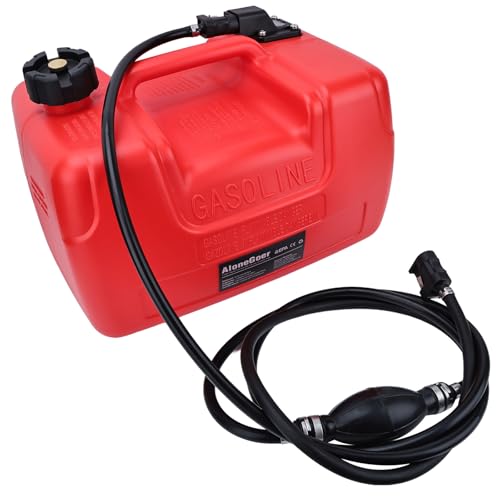
The AloneGoer 3 Gallon Gas Tank is designed for Yamaha outboards and other small- to mid-sized craft. It features a 12 L (3 gallon) capacity with a marine line connector compatible with common Yamaha fittings (6YL-24201-24-00). Its multi-layer barrier technology—HDPE-EVOH-HDPE—helps reduce fuel permeation and evaporation up to 98% versus standard tanks. The unit is UV-stabilized and salt-spray resistant, making it a practical choice for coastal or humid environments. Best for anglers or boaters who need a compact spare or primary tank on a small craft. Caution: verify connector compatibility with your engine model before purchase.
Why choose this if you want a compact, corrosion-resistant tank that minimizes fuel loss in the open water. It’s lighter, easier to store, and designed to withstand salt air. Choose this for small jon boats or inflatable crafts that require reliable, portable fuel.
Limitations include limited capacity and the need to confirm exact Yamaha connector fit for specific outboard models.
Scepter 12 Gallon Portable Marine Gas Can

This 12-gallon marine gas can provides ample capacity for extended runs. It features a two-way vented cap to relieve pressure during refueling and prevent vapor buildup, plus a built-in gauge for a quick fuel check. The can accommodates diesel or ethanol-blended fuels and accepts standard 1/4 NPT marine tank fittings, making it versatile for a range of outboard motors. Best for boats where long cruising time is needed between refuels. It’s a strong choice when you want a reliable, high-capacity tank under seats or in the stern storage.
Better for long trips or boats with higher fuel needs. Avoid this if you have very limited space or require smaller, lighter options for quick trips.
Scepter 6 Gallon Portable Marine Gas Can

The 6-gallon Scepter tank balances capacity with compact form. It includes a 2-way vented cap and a built-in fuel gauge, simplifying fuel management on small boats and under-seat storage. It supports diesel and ethanol-blended fuels and uses standard 1/4 NPT fittings. Best for boats that need a mid-range tank without sacrificing gauge readability. A potential limitation is mid-range capacity if you frequently run long distances between refuels.
Choose this for steady, mid-length trips where a larger tank isn’t practical. Use caution in extremely hot sunlight to avoid material aging and expansion over time.
VEVOR Marine Tank, 14.53 Gallon

The VEVOR 14.53-gallon tank offers one of the highest capacities among portable marine tanks in this guide. It uses high-density polyethylene and features a visible gauge, a long 9.8-foot hose, and a two-way vent cap. The design emphasizes durability and secure storage for longer trips on larger jon boats or deck boats. Best for boaters who want to maximize run time without frequent refueling. Note that prolonged sun exposure can age the plastic, so consider shade or storage away from direct sun when possible.
Best for long days on the water with limited fueling stops. If space is tight, you may prefer smaller units; this is a high-capacity option with more bulk to manage.
PeakPursuit Marine Tank, 3 Gallon

The PeakPursuit 3-gallon marine tank is designed with portability in mind. It features an ergonomic I-shaped handle for easy carrying, a fuel level indicator, and an integrated filter to help keep fuel clean. This tank is a straightforward choice for those who want a compact, easy-to-handle solution and frequent refueling on small craft. Best for casual boaters or anglers who prioritize mobility and quick top-offs. A limitation is its smaller capacity, which may require more frequent refueling on longer trips.
Choose this when convenience and compactness are paramount. It’s ideal for light-duty applications and quick, on-the-water refuels.
Buying Guide: Key Purchase Considerations
What capacity do you actually need? For short runs, a 3–6 gallon tank is often sufficient. For longer days or higher fuel consumption engines, a 12–14 gallon tank reduces refueling stops. Consider available storage space on your jon boat and whether you prefer under-seat storage or rear deck mounting.
What about fuel compatibility and fittings? Ensure the tank supports the fuels you use (gasoline, diesel, ethanol blends) and that the hose length and inlet/outlet fittings align with your engine’s connector type. Look for standard marine fittings (1/4 NPT) for broad compatibility.
Durability and environmental resistance are essential. UV stabilization and salt spray resistance improve longevity in harsh environments. Multi-layer barrier designs help minimize fuel evaporation, protecting both the fuel and your vessel.
Gauge visibility and venting matter. Built-in gauges simplify fuel management, while vented caps prevent dangerous vapor buildup during refueling. A secure seal minimizes spills during transport.
Portability vs. capacity trade-offs. A handle, light weight, and compact form factor improve handling, especially on smaller boats. If you routinely travel far from shore, prioritize higher capacity over ultra-lightweight options.
Frequently Asked Questions
- What capacity should I choose for a typical jon boat? A 3–6 gallon tank suits most casual days; 12–14 gallons suits longer trips or higher-speed motors.
- Do these tanks fit all outboard connectors? Most are designed for common marine fittings, but always verify connector type and hose length before purchase.
- Are there safety concerns with vented caps? Vented caps prevent pressure buildup during refueling but require proper handling to avoid spills when transporting.
- Will these tanks withstand saltwater use? Many models include corrosion-resistant materials and UV stabilization, but rinse and store away from direct sunlight when possible.
- Is a built-in gauge worth it? A gauge helps monitor fuel levels quickly, reducing the risk of running out at sea.
- What should I consider for storage on a small jon boat? Look for slim profiles, under-seat compatibility, and molded handles to facilitate easy stowing without clutter.