Best Gas Cans for Boats: Durable Options for Marine Fuel on the Water
When shopping for gas cans for boats, reliability, spill prevention, and marine-grade compatibility matter most. This guide highlights five top options that balance capacity, portability, and safety for American boaters. Ideal buyers include: long-run anglers needing larger tanks; casual boaters seeking under-seat storage; and offshore planners who want easy fuel transfers. Below is a quick comparison table of the chosen products to help you decide at a glance.
| Product | Capacity | Best For |
|---|---|---|
| Scepter 12 Gallon Portable Marine Gas Can | 12 gallons | Boats needing extended run time and built-in gauges |
| Scepter Duramax Flo ’N Go 14 Gallon | 14 gallons | Fueling at home, farm, or marine settings with a transfer pump |
| Scepter 6 Gallon Portable Marine Gas Can | 6 gallons | Under-seat storage and compact boats |
| LAUCO Portable Marine Fuel Tank – 6.34 Gallons | 6.34 gallons | Durable, portable for small to mid-size boats |
| PAMBEE 15 Gallon Gas Can | 15 gallons | High-capacity needs with wheels for mobility |
Scepter 12 Gallon Portable Marine Gas Can

The 12-gallon Scepter Marine Gas Can delivers ample capacity in a space-saving profile. It includes a built-in fuel gauge and a 2-way vented cap to ease refueling while preventing vapor buildup. Compatible with diesel and ethanol-blended fuels, it’s a suitable pick for outboard-powered boats that require longer running times. Best for boaters who prioritize a built-in gauge and straightforward refueling.
Best for: Boaters needing long run times without frequent refuels and a built-in gauge. Better for: stored fuel awareness on the water. Choose this if you value cap venting that moderates pressure and a compact, transport-friendly shape.
Caution: Ensure compatibility with your engine’s fuel requirements, and remember to purchase the necessary fuel line separately if needed.
Scepter Duramax Flo ’N Go 14 Gallon Gas Caddy

The Flo ’N Go 14-gallon gas caddy is a rugged portable tank on wheels with a built-in transfer capability. It features heavy-duty construction, large wheels, and dual fueling modes (gravity-flow and manual pump/siphon). This makes it versatile for marine, lawn, and farm fueling tasks. Best for: users who need easy transport and a hands-free flow option when elevated to the fill point.
Better for: locations with uneven terrain or where you’ll move fuel between vehicles. Choose this if you want a single fuel station that can serve multiple fueling needs beyond the boat. Limitation: flow rates depend on chosen mode and setup, so plan per-task expectations.
Scepter 6 Gallon Portable Marine Gas Can

The 6-gallon Scepter can is designed for under-seat storage with a slim profile and built-in fuel gauge. It also uses a 2-way vented cap and is compatible with diesel and ethanol blends. Best for: smaller boats or limited storage spaces where a compact, ready-to-go fuel option is needed.
Better for: under-seat mounting or tight bilge areas. Choose this if you want a lightweight, easy-to-maneuver option. Caution: smaller capacity means more frequent refueling on longer trips.
LAUCO Portable Marine Fuel Tank – 6.34 Gallons

The LAUCO tank offers a 6.34-gallon capacity with a dual-cap option (sealed or vented) and a long 9.8 ft hose. It is built from impact-resistant HDPE and designed to withstand marine environments. Best for: boaters seeking rugged, corrosion-resistant storage with flexible venting options.
Better for: stable, long-term storage on small-to-mid-size boats. Choose this if you value a longer hose and a cap design that minimizes leakage. Caution: avoid prolonged direct sunlight exposure to reduce aging and expansion risks.
PAMBEE 15 Gallon Gas Can
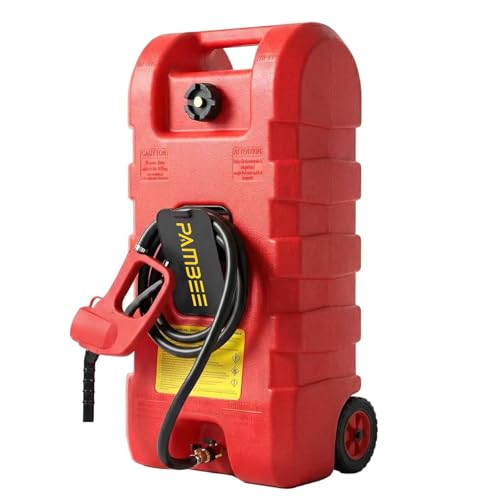
The PAMBEE 15-gallon gas can combines a large fuel capacity with a 10-foot hose and manual siphon capability for gravity or siphon refueling. It includes a hose holder for storage and weighs in as a versatile option for boats, ATVs, and trailers. Best for: boats with high fuel needs or remote fueling scenarios where frequent top-offs are expected.
Better for: long trips or workdays on the water where a larger, mobile fuel station reduces refueling stops. Limitation: siphon speed depends on pump pressure when using the siphon mode, so efficiency varies by operator technique.
Buying Guide: Key Considerations For Marine Fuel Cans
- Capacity vs. space: Match tank size to your boat’s storage space and typical trip duration. Larger cans reduce refueling stops but take up more space.
- Vent design: Vented caps help prevent vapor buildup during refueling. Ensure the cap is compatible with your fuel type and engine requirements.
- Built-in gauges: A sight gauge or fuel gauge saves time and reduces guesswork when planning trips.
- Portability: Wheels, handles, and overall weight affect how easily you can move fuel around docks, ramps, and berths.
- Materials and durability: Look for high-density polyethylene (HDPE) or other impact-resistant plastics that resist corrosion and cracking in marine environments.
- Fuel compatibility: Some cans are designed for diesel, ethanol blends, or gasoline only. Confirm compatibility with your engine and fuel system.
- Vent vs seal: Sealed caps prevent leaks but may require venting when expanding with heat. Dual-cap options can be advantageous on hot days.
- Transfer features: If you plan to transfer fuel, consider cans with built-in pumps or compatible siphons and long hoses for convenient reach.
Practical Quick-Check Questions
- How much fuel will you realistically need for a typical outing?
- Is under-seat storage a priority or is a wheeled fuel caddy more useful for your dock?
- Do you operate on ethanol-blended fuels, and is your engine compatible?
- Will you frequently refill at the water, or primarily on shore?
Frequently Asked Questions
- What’s the safest way to store marine fuel can on a boat? Store upright in a ventilated area away from heat sources and direct sunlight. Secure the can to prevent tipping.
- Are gas cans for boats different from car fuel cans? Marine cans often feature vented caps and gauges tailored for boat fueling, plus compatibility with marine fittings.
- Can I use a diesel fuel can for gasoline? Check the manufacturer’s fuel compatibility. Some cans tolerate multiple fuels, others are gasoline-only.
- How do I prevent spills when refueling on water? Use vented caps, keep a steady hand, and position the can to direct fuel toward the tank inlet. Consider a siphon with a controlled flow.
- What maintenance helps extend a marine fuel can’s life? Rinse out with clean water after use, store away from heat, and inspect caps and seals for wear.