Best Fuse Panel for Boat: Top 5 Marine-Grade Fuse Blocks for 12V Systems
Answering the search for a reliable boat fuse panel, this guide highlights five marine-grade fuse blocks that balance durability, ease of wiring, and clear fault indication. Each option targets a different boat setup—from compact fishing skiffs to larger RV‑style vessels—so you can pick the best fit for your electrical needs. The top picks emphasize waterproofing, LED fault indicators, and clean wiring. A quick table below compares the essentials to help you decide at a glance.
| Product | Circuit Count | Key Benefit |
|---|---|---|
| FASTSTORM 12 Way Fuse Block | 12 | Waterproof, LED fault alerts, complete kit |
| Blue Sea Systems ST Blade 12 Circuit | 12 | Integrated negative bus, high current |
| Cyrico 12 Circuit Fuse Block | 12 | Neat wiring design, LED indicators |
| WUPP 12V Fuse Block | 6 | Compact, damp-proof cover, clean wiring |
| DaierTek 12 Way Fuse Block | 12 | LED indicators, versatile use |
FASTSTORM 12 Way Fuse Block

This 12‑way fuse block is designed for 12V/24V automotive, boat, and marine systems. It includes 30A, 25A, 20A, 15A, 10A, and 5A fuses (six of each) and 24 heat-shrink terminals for a complete install. An IP53-rated waterproof cover and a red LED indicator illuminate when a fuse blows, aiding fast fault isolation. Best for boat owners who want a complete kit with dedicated wiring jacks in a single package.
Best for: boaters who want an all‑in‑one, ready‑to‑wire fuse box with clear fault indication and a thorough accessory set.
Limitation: Some users may prefer a larger 12‑circuit form factor with integrated ground bus for very high‑demand systems.
Blue Sea Systems ST Blade 12 Circuit

Blue Sea’s ST Blade block provides twelve circuits with an integrated negative bus and a clear insulating cover. It can handle up to 100 amps total and supports up to 30 amps per circuit when using standard fuses. The secure cover with a latch and labeled areas helps maintain organization. This option suits boats needing higher current capacity and a robust negative‑bus setup.
Best for: larger or power‑hungry boat systems that need a strong 100A total capacity and built‑in grounding documentation.
Limitation: The 100A total capacity may be more than needed for small boats with lighter electrical loads.
Cyrico 12 Circuit Fuse Block

This 12‑circuit fuse box is built with PBT and PC materials for heat resistance and flame retardance, with nickel‑plated copper busbars for reliable conduction. It includes a ground bus, a protective cover, and 12 circuit slots. An LED indicator highlights a blown fuse, and labels are provided to simplify maintenance. It’s a versatile choice for boats that need tidy wiring and clear fault alerts.
Best for: boat owners who want strong insulation, corrosion resistance, and a visible fault indicator without overbuilt capacity.
Limitation: Maximum per‑circuit rating is up to 30A, which may require multiple blocks for high‑draw devices.
WUPP 12V Fuse Block
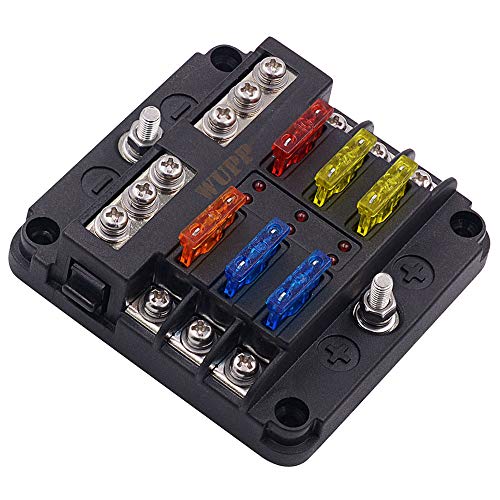
This six‑circuit fuse block is designed for 12–24V systems with a damp‑proof cover and a neutral bus. It includes six fuses and a clean wiring design to simplify the installation on boats or RVs. LED indicators help identify a blown fuse quickly. Choose this for smaller electrical layouts or space‑constrained installations.
Best for: compact boats or vehicles needing a tidy 6‑circuit solution with straightforward fault indication.
Limitation: Lower circuit count may require parallel blocks for more devices on larger boats.
WUPP Boat Marine Fuse Block Panel
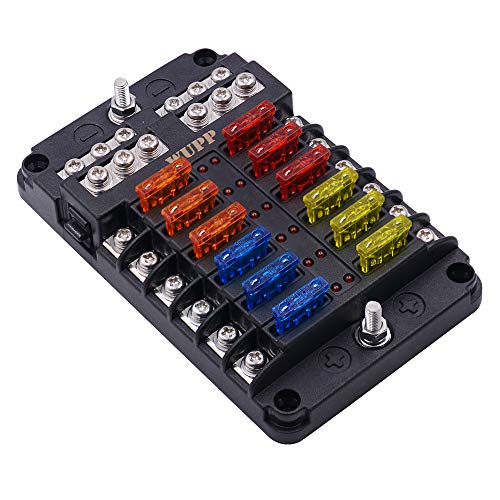
This 12‑circuit fuse block includes a negative bus and a damp‑proof cover, designed for boats and marine environments. It features LED warning indicators for each circuit and a 12‑fuse layout. The package focuses on ease of wiring and quick fault localization, making it suitable for mid‑size marine installations.
Best for: boat owners who want a robust, weather‑resistant panel with clear per‑circuit alerts and good labeling options.
Limitation: May be bulkier than ultra‑compact panels, potentially affecting panel space on smaller vessels.
Buying Guide
What should you consider when choosing a boat fuse panel?
- Circuit count vs. space: Match the number of circuits to your onboard devices without overfitting space.
- Waterproofing and durability: Look for damp or IP-rated covers to resist marine exposure.
- Indicator features: LED or visual indicators speed fault location and replacement timing.
- Grounding and bus design: A built‑in negative bus simplifies wiring and maintenance on larger systems.
- Compatibility: Ensure the panel supports your fuse types (ATO/ATC) and voltage range (12V/24V).
- Accessories: A complete kit with fuses, terminals, and labeling materials saves setup time.
How to install a boat fuse panel efficiently?
- Plan wire routing: Sketch a layout to minimize cross‑overs and keep the cabinet tidy.
- Label circuits: Use included stickers or labels to identify each circuit for quick maintenance.
- Protect wiring: Use heat‑shrink tubing and insulation sleeves to protect exposed connections.
- Test methodically: After wiring, test each circuit and verify LED indicators illuminate when fuses blow.
What tradeoffs might matter?
- Higher amperage capacity offers future headroom but can add cost and size.
- Integrated grounding buses simplify wiring but may limit module expansion in some layouts.
- More fuses and accessories improve convenience but increase packaging and setup time.
FAQ
Do I need a fuse block with a grounding bus for a small boat?
Not always, but a negative bus simplifies wiring and provides a clear fault path for each circuit.
Can I mix fuse types in a single panel?
Most panels are designed for standard ATO/ATC fuses; verify compatibility in product specs.
Is LED fault indication essential?
LED indicators speed fault detection and replacement, especially in complex layouts.
What is the typical maximum current per circuit?
Many panels support up to 30A per circuit, with total panel capacity ranging from 100A or more.
Should I buy a complete kit or separate components?
Complete kits save installation time and ensure all necessary parts are included.