Best Fuse Block for Boat: Top 5 Marine-Ready Panels for 12V Systems
Identify the right fuse block for your boat’s 12V or 24V electrical system with a focus on marine-grade durability, clear fault indication, and tidy wiring. This guide highlights five fuse blocks that are well-suited for boats, RVs, and other marine applications. Each option is best for different setups, from compact installations to higher‑demand, multi‑circuit needs. See a quick summary below, then dive into detailed product sections to compare features and suitability for your vessel’s electrical needs.
| Product | Best For | Key Benefit |
|---|---|---|
| Cyrico 12 Circuits Fuse Block | Mid‑size boat systems requiring neat wiring | LED indicators, negative bus, 100A panel |
| Blue Sea Systems ST Blade 12 Circuit | High‑demand DC setups | Ground + cover, 100A max, clear labeling |
| TIGWIN 6 Way Fuse Block | Compact installations with LED fault visibility | 6 circuits, fire‑resist material |
| FASTSTORM 12 Way Fuse Block | Fully equipped kits for quick setup | LED fault alerts, complete fuse kit included |
| DaierTek 12 Way Fuse Block | Balanced 12–circuit needs with coverage | LED indicator, tidy wiring, broad voltage range |
Cyrico 12 Circuit Fuse Block With LED Indicator

Best for mid‑sized boat electrical systems that require neat wiring and individual circuit protection. Cyrico’s 12‑circuit panel uses PBT and PC materials, delivering heat resistance, good insulation, and flame retardance. Nickel‑plated copper busbars and fuse clips ensure reliable conductivity and corrosion resistance, a plus for saltwater environments. The PC cover adds dust and splash protection, extending service life. A negative busbar simplifies DC grounding in complex layouts, while 12 independent slots keep devices isolated and easy to inspect. The LED indicator quickly flags a blown fuse, and the included labeling stickers simplify maintenance. Caution: watch for the total 100A panel rating and individual 30A fuses when sizing per circuit.
Who it’s best for: Boats that need organized, multi‑circuit protection with clear fault signaling and straightforward maintenance. Ideal for owners who want a compact, robust block without sacrificing visibility of blown fuses.
Why selected: It combines a durable marine-friendly build with a practical LED alert system and labeling aids, making routine checks faster and safer on the water.
Blue Sea Systems ST Blade Fuse Block 12 Circuit

Best for high‑demand DC systems where multiple circuits need reliable protection and straightforward labeling. This block supports twelve circuits with an integrated negative bus and up to 100 A total capacity, making it suitable for boats with multiple essential systems (navigation, lighting, pumps, etc.). The insulating cover features a secure push‑button latch, spare fuse storage, and recessed label areas to simplify circuit identification. The design emphasizes robust protection in harsh marine conditions and easy serviceability. Caution: ensure each circuit stays within the 30 A per‑circuit limit when using standard ATO/ATC fuses.
Who it’s best for: Vessel setups that demand rugged performance and obvious circuit labeling, where quick access and reliability are priorities during routine checks or emergencies.
Why selected: Its combination of a negative bus, clear labeling, and protected storage makes it a practical centerpiece for organized, maintenance‑friendly marine wiring.
TIGWIN 12V 6 Way Fuse Box With LED
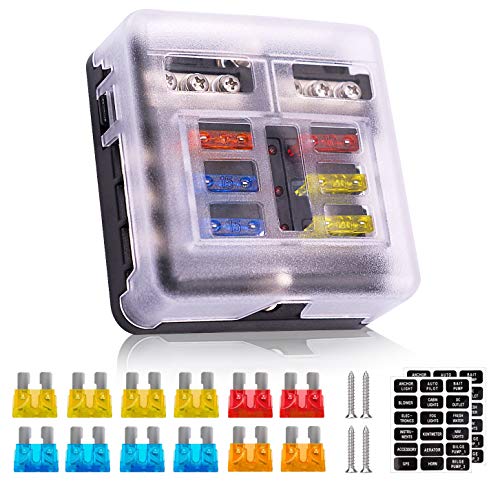
Best for compact installations needing visible fuse status and straightforward wiring. This 6‑way block is designed for 12V systems (also compatible with 24V), with a red LED that lights when a fuse blows. It’s built from fire‑resistant PBT material, offering high mechanical strength and insulation, helping prevent fractures or short circuits. The unit provides six fused circuits plus a ground location, promoting tidy wiring. Caution: with fewer circuits, it’s less suitable for boats with many auxiliary devices; consider more circuits if your layout expands.
Who it’s best for: Small boats or tight spaces where quick fault identification and a simple, reliable fuse panel are most important.
Why selected: Its LED indication and compact footprint make it a practical choice for straightforward, low‑to‑moderate circuit setups without extra bulk.
FASTSTORM 12 Way Marine Fuse Block Kit

Best for a ready‑to‑go installation with a full set of fuses and accessories. The 12‑way block includes a complete 30A, 25A, 20A, 15A, and 10A fuses (six each), plus 24 heat‑shrink terminals and marine‑grade copper terminals. It features 12 dedicated fuse slots with a durable cover that resists dust, moisture, and corrosion. LED fault indicators help pinpoint issues quickly, and the pull‑out spare fuse storage adds convenience for field maintenance. Caution: bulkier than some 6‑ or 12‑way blocks; ensure space on your panel for the kit and cover.
Who it’s best for: Boat owners who want an all‑in‑one kit that minimizes separate purchases and speeds up installation, especially when upgrading or building a new electrical system.
Why selected: The complete fuse assortment and wiring accessories reduce guesswork and setup time, making it a strong choice for on‑the‑water reliability.
DaierTek 12 Way Fuse Block With LED Indicator

Best for balanced 12‑circuit needs where LED indication and protective features matter. DaierTek’s 12‑way unit provides LED indicators to show blown fuses, aiding rapid fault identification. It supports ATC/ATO fuses and is designed for 12V systems, with a 100A panel rating and up to 30A per circuit. The wiring layout keeps circuits organized, and the protective cover helps prevent dust and moisture intrusion. Caution: confirm the fuse types you plan to use align with the panel’s housing and terminals.
Who it’s best for: Boats requiring dependable multi‑circuit protection with clear fault signaling and a tidy, durable housing.
Buying Guide: Key Considerations For Choosing A Boat Fuse Block
What capacity do you need? For most recreational boats, 12V systems with 100A total capacity and 30A per circuit work well. If you run higher‑demand devices, consider panels that offer more circuits and a higher per‑circuit rating.
How important is fault signaling? LED indicators that light when a fuse blows speed troubleshooting and reduce diagnostic time at sea. A clear cover and labeled circuits help ongoing maintenance.
How should wiring be organized? Look for modules with dedicated fuse slots and a ground/negative bus where applicable. A neat wiring design reduces installation errors and makes future upgrades easier.
What about durability and materials? For marine use, choose blocks made of flame‑retardant, marine‑grade plastics with corrosion‑resistant busbars. A protective cover is valuable for splash resistance and dust protection.
What installation space is available? Some units are compact and mount flush, while others come as complete kits with fuses and terminals. Measure panel depth, height, and mounting options to fit your dash or battery box.
How future‑proof is the system? If you anticipate expanding electronics, prefer blocks with extra slots or modular options, along with labeling options to maintain clarity as circuits increase.
Quick FAQ
- What is a fuse block used for on a boat? It protects individual electrical circuits by breaking the circuit if an overcurrent occurs, preventing damage to wiring and devices.
- Do these blocks require special fuses? Most listed units use standard ATO/ATC or blade fuses; verify the per‑circuit rating and fuse type before installation.
- What is a negative bus used for? A negative bus collects all ground connections, simplifying wiring and improving fault tracing in multi‑circuit systems.
- Is water exposure a concern? Yes. Choose a fuse block with a protective cover and corrosion‑resistant components for marine environments.
- Can I upgrade later? Yes. Many blocks allow adding circuits or reconfiguring wiring, provided you stay within total amperage limits and use compatible fuses.
- Why use LED indicators? LED indicators quickly show which fuse has blown, reducing diagnostic time during boating operations.