Best Full Synthetic Marine Oil Options for Your Boat, PWC, or Outboard Engine
When selecting full synthetic marine oil, you want reliability under heat, corrosion protection, and compatibility with your engine type. This guide helps buyers choose five top full synthetic options that cover inboards, outboards, personal watercraft, and high-performance marine engines. The selections emphasize strong wear protection, excellent engine cleanliness, and robust oxidation resistance for long boating seasons. Best for frequent high-RPM operation, long runs, or exposed saltwater conditions, these oils aim to maximize protection and reduce downtime.
| Product | Best For | Key Benefit |
|---|---|---|
| Liqui Moly Marine PWC Oil SAE 10W-40 | Personal Watercraft and small marine engines | Excellent corrosion protection; optimum lubrication |
| TRIAX Marine Ultra 10W-30 | All four-stroke marine engines | Twice the life vs conventional oils; broad OEM compatibility |
| Valvoline 4-Stroke Marine Full Synthetic 1 Gallon | High-demand 4-stroke motors | Strong wear protection; excellent rust defense |
| Quicksilver 10W-40 4-Stroke Marine Engine Oil | Four-stroke outboards and sterndrives | Protects against corrosion and wear at high RPM |
| LIQUI MOLY Marine 4T 10W-40 | 4-stroke marine engines | Rapid oil penetration; aging stability |
Liqui Moly Marine PWC Oil SAE 10W-40

Best for personal watercraft and compact marine engines that require rapid lubrication under varied conditions. This 4-stroke oil is designed to deliver excellent corrosion protection and engine cleanliness, helping to minimize deposits in hot, salty, or humid environments. It suits operators who run short, frequent trips or operate in saltwater conditions where corrosion resistance is critical.
- Suitable for 4-stroke PWC and compact marine engines
- Excellent corrosion protection reduces rust risk during storage
- Maintains engine cleanliness for optimal performance
Best for enthusiasts and casual boaters who prioritize protection against corrosion and consistent lubrication in demanding environments. Limitations include standard recommendations for 4-stroke engines; verify compatibility with high-performance or specialized marine powertrains before use.
TRIAX Marine Ultra 10W-30 Full Synthetic 4-Stroke

Best for NMMA FC-W four-stroke outboards and inboards that run long hours under heavy loads. This true full synthetic formulation delivers extended oil life and robust protection, helping high-powered marine engines maintain performance with fewer top-offs. It’s compatible with major OEMs, including Kawasaki, Volvo, Mercury, and Yamaha, which makes it a versatile choice for mixed fleets.
- Designed for FC-W 4-stroke engines
- Up to twice the life of conventional oils
- Excellent high-load protection for long runs
Choose this if you operate high-hp boats or run continuous, demanding cruises. A potential limitation is cost relative to conventional blends, but the longevity of protection can offset this over time.
Valvoline 4-Stroke Marine Full Synthetic Engine Oil 1 Gallon

Best for 4-stroke marine motors that demand robust wear protection and moisture defense. Valvoline emphasizes 50% stronger wear protection and up to eight times better rust defense, making it a strong choice for boats stored in damp or saltwater environments. It’s engineered to meet marine engine demands across various hull types and operating conditions.
- Excellent wear protection for high RPMs
- Moisture-related rust defense for storage and operation
- Engineered for the unique needs of marine motors
Best for boats requiring strong rust resistance and sustained protection during storage. The main limitation is that performance claims may vary with engine configuration and running conditions; verify compatibility with your particular drive system.
Quicksilver 25W-40 4-Stroke Synthetic Blend

Best for 4-stroke inboard and outboard engines that require FC-W compatibility with a focus on high-temperature performance. This synthetic blend offers corrosion resistance and wear protection suited for high-RPM operation in demanding marine environments. It’s a practical pick for mixed fleets and operators who need reliable performance across different engine setups.
- Direct compatibility with 4-stroke marine engines
- High-RPM protection for extended runs
- Corrosion resistance under demanding conditions
Choose this if you want a reliable oil that balances performance and cost. A limitation is that 25W-40 is thicker at startup in very cold conditions; consider seasonal needs or regional climate when selecting.
Quicksilver 10W-40 4-Stroke Marine Engine Oil

Best for all 4-stroke marine outboard, inboard, and sterndrive engines. This formulation emphasizes protection against corrosion and wear, designed to withstand heat and high-RPM operation. It suits engines that experience sustained high-speed running or frequent ignition cycles in challenging conditions.
- Broad compatibility across 4-stroke marine engines
- Corrosion and wear protection under heat stress
- Robust performance for high-RPM operation
Limitations include being a single-grade option; in very cold climates, a thinner oil may improve cold-start performance. Ensure the grade matches regional temperature needs.
LIQUI MOLY Marine 4T 10W-40
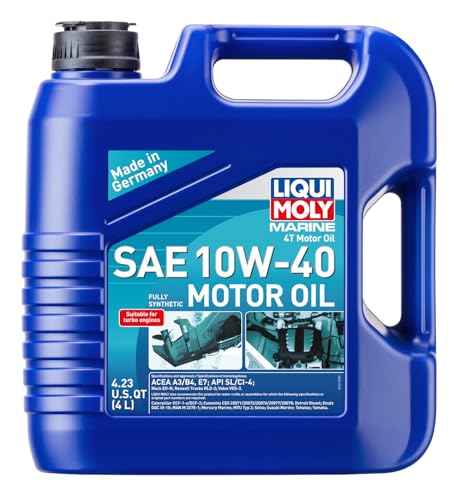
Best for reliable rapid oil penetration and aging stability in 4-stroke marine engines. Liqui Moly’s oil aims to protect against corrosion while sustaining viscosity stability as engines age, helping maintain performance over time. This is a versatile option for boats that run in varying conditions and need consistent lubrication across seasons.
- Rapid oil penetration aids cold starts
- Outstanding corrosion protection
- Stability against aging and viscosity changes
Choose this for steady performance in aging engines or when you want solid overall protection. A potential limitation is that some engines may respond differently to specific oil baselines; always follow manufacturer recommendations for viscosity and approvals.
Buying Guide: Key Purchase Considerations
What engine type do you service most often? Inboards, outboards, personal watercraft, or sterndrives each have lubrication nuances. Ensure the oil meets your OEM FC-W, API SM, JASO MA, or equivalent specifications.
How does climate affect your choice? Colder regions may benefit from thinner viscosities (e.g., 10W-30), while hot, saltwater conditions favor stable protection against corrosion and wear, even at high RPMs.
Is oil longevity important? Oils advertised as “true full synthetic” or “up to twice the life” can reduce oil-change frequency, particularly for engines under heavy load. Balance cost against replacement intervals and labor savings.
What about rust and storage protection? Boats stored in damp conditions or saltwater environments benefit from oils with strong rust defense and moisture tolerance to reduce corrosion during storage and operation.
How should you verify compatibility? Check OEM approvals and the engine family (Kawasaki, Mercury, Yamaha, Volvo, etc.). Cross-reference with your engine’s service manual to avoid mismatches in viscosity and performance expectations.
FAQ
- What is the difference between full synthetic and synthetic blend for marine engines?
Full synthetic oils typically offer higher oxidation stability, better temperature performance, and longer intervals between changes. Synthetic blends mix synthetic and conventional oils for a balance of protection and cost.
- Is 10W-40 suitable for all marine engines?
No. Check your engine’s recommended viscosity and approvals. Some engines require 10W-30 or specific FC-W/MA designations.
- Can I mix engine oils from different brands?
It’s not generally recommended. Mixing can alter performance and protection. If mixing is unavoidable, consult the engine manual and consider using oils with similar specifications.
- How often should I change marine oil?
Follow the OEM interval or after heavy use in saltwater or high-load conditions. For some engines, synthetic oils may extend change intervals, but local conditions and maintenance practices matter.
- Do these oils meet international marine standards?
Many products advertise compatibility with major OEMs and FC-W/MA formulations. Always confirm the exact specification in the product details and your engine manual.