Best Fuel Stabilizers for Outboard Motors: Top Picks for Long-Term Storage and in-Season Performance
The best fuel stabilizers for outboard motors help prevent corrosion, keep fuel fresh, and protect delicate fuel systems from gum, varnish, and phase separation. This guide highlights five top products, each suited to different boat owner needs—seasonal storage, in-season maintenance, or extended storage between uses. Read on to find clear, practical distinctions so you can choose the right stabilizer for your outboard and typical usage patterns.
| Product | Best For | Key Benefit |
|---|---|---|
| STA-BIL 360 Marine Ethanol Treatment | Active boaters needing comprehensive fuel-system protection | Cleans fuel system and guards against corrosion |
| Yamaha Yamalube Outboard Fuel Stabilizer & Conditioner Plus (12 oz) | Owners of Yamaha engines needing ethanol compatibility | Alcohol-free formula; protects against oxidation and phase separation |
| Quicksilver Quickstor Fuel Treatment | Long-term storage for boats and power equipment | Stabilizes fuel up to two years |
| STA-BIL 360 Marine Fuel System Treatment (32 oz) | Boats with higher fuel use or cleaner fuel systems | Comprehensive fuel system cleaner and corrosion protection |
| Mercury Quickare Fuel Treatment Additive (12 oz) | Maintaining fresh fuel between fills | Cleans varnish deposits and controls ethanol-related issues |
STA-BIL 360 Marine Ethanol Treatment and Fuel Stabilizer

Best for: Boat owners who want an all-in-one solution that both cleans and protects the fuel system. This STA-BIL formulation uses PEA additives to clean fuel injectors, lines, and pumps while removing water, gum, and varnish. It also provides corrosion protection designed for in-season cleaning and protection of internal fuel parts. Use this when you value fuel-system longevity and a measurable boost to fuel efficiency.
Why this selection: The dual action of cleaning and corrosion protection makes it suitable for boats operated year-round or in varying climates. It helps prevent rust in metal components and supports efficient combustion for better engine life. Caution: The product targets ethanol-related issues, so verify compatibility with older, non-ethanol-fuel systems before application.
Yamaha Yamalube Outboard Fuel Stabilizer & Conditioner Plus (12 Oz)

Best for: Yamaha engine owners seeking ethanol resistance and long storage stability. This alcohol-free formula helps prevent fuel oxidation and phase separation caused by moisture, keeping fuel fresh for up to a year when stored. The metal-filmers offer added protection for steel and aluminum parts.
Why this selection: Long-term storage compatibility and Yamaha-brand alignment make it a strong choice for Yamaha-powered boats or when ethanol-related storage concerns are prominent. Caution: It is described as model-specific; verify compatibility with your exact Yamaha model before purchase.
Quicksilver 8M0047922 Quickstor Fuel Treatment and Stabilizer (12 Oz)

Best for: Powerboats, sailboats, and other equipment needing long-term fuel stabilization during off-season storage. It stabilizes regular and ethanol-blended fuels for up to two years, treating about 5 gallons per ounce, which offers practical cost-per-gallon efficiency.
Why this selection: The two-year stabilizing window is advantageous for boats stored between seasons or for equipment stored in garages or sheds. Caution: The dosage guidance should be followed exactly to ensure proper stabilization; avoid under-dosing for effective protection.
STA-BIL 360 Marine Fuel System Treatment (32 oz)
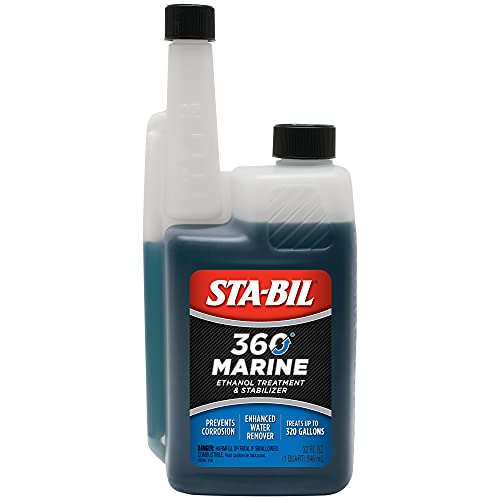
Best for: Boaters seeking a dedicated fuel-system cleaner with ongoing protection. The 32-ounce bottle treats up to 320 gallons and emphasizes cleaning the entire fuel system, including injectors and pumps, while offering corrosion protection.
Why this selection: Its emphasis on cleaning and protecting multiple fuel-system components makes it a versatile option for boats with higher usage or those running ethanol-blended fuels. Caution: This product is more focused on system cleansing; readers should pair it with a separate stabilizer if long-term storage is anticipated.
Mercury Quickare Fuel Treatment Additive (12 Oz)
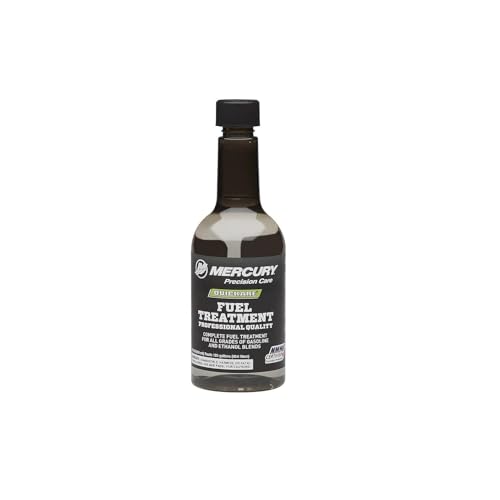
Best for: Boat owners looking to keep fuel fresh between fills and address varnish, gum, and ethanol-related issues. Quickare cleans varnish and gum in fuel lines, tanks, carburetors, injectors, and valves, while helping control corrosion and phase separation problems.
Why this selection: Mercury’s additive targets multiple common sticking points in older engines or systems with mixed fuel sources. Caution: It’s a compact bottle; frequent use may be needed depending on fuel turnover and storage duration.
Buying Guide: Key Purchase Considerations
- Fuel type compatibility: Check ethanol content in your fuel and pick a stabilizer that explicitly addresses ethanol-related issues to prevent phase separation and moisture-related corrosion.
- Storage duration: If you store your boat for extended periods, choose stabilizers with long-term storage benefits, such as those advertising stabilization up to two years.
- System cleaning vs. stabilization: Some products focus on cleaning the fuel system, while others emphasize corrosion protection. For older systems, a combination approach may be best.
- Engine compatibility: Some formulas are marketed as model-specific or brand-aligned. Verify compatibility with your engine make and model, especially if you own a Yamaha, Mercury, or other branded outboard.
- Storage and usage patterns: If you use your boat year-round, prioritize corrosion protection and fuel cleanliness. For seasonal boats, prioritize long-term stabilization and moisture control.
FAQ
- How often should I use fuel stabilizer in-season? Use per product instructions when fueling or refilling to maintain fuel system cleanliness and prevent moisture-related issues.
- Can stabilizers be used with ethanol-free fuels? Yes, but select a formula that explicitly supports ethanol content if ethanol is present in your fuel supply.
- Is it better to use a single product or a combination? A single comprehensive stabilizer works for many boats, but combining a cleaner with a stabilizer can offer better long-term protection for older systems.
- Will stabilizers harm my engine if used incorrectly? When used according to label directions, stabilizers are designed to protect fuel systems; avoid overdosing or using incompatible products with your specific engine.
- Do I need a different product for long-term storage vs. regular use? Yes. For long-term storage, choose a stabilizer designed for extended storage; for regular use, a cleaner plus corrosion protection is often beneficial.
- Do these products work with two-stroke and four-stroke outboards? Most are compatible with common gasoline engines, but verify compatibility with your specific engine type and model.