Best Foam Blocks and Foams for Boats and Marine Floats
When keeping a boat buoyant, protected, and properly supported, choosing the right foam blocks and pour foams is essential. This guide highlights five marine-grade foam products that balance buoyancy, insulation, and ease of use for boats, docks, and flotation needs. Read on to compare features and find the best option for your craft.
Summary of chosen products:
- Attwood 11401-4 Pontoon Winter Storage Block (Set of 4) — universal fit storage blocks.
- Lifeboat Urethane Pour Foam — 2 lb density, 1 gallon kit for marine flotation and insulation.
- Fiberglass Supply Depot 2 Lb Density Expanding Pour Foam — 1 gallon kit for buoyancy and void filling.
- TotalBoat 2 Lb Density Expanding Foam Kit — 2 Part closed-cell pourable polyurethane for flotation and insulation.
- TotalBoat 6 Lb Density Expanding Foam Kit — 2 Part closed-cell, high-density marine foam for flotation and reinforcement.
Attwood Pontoon Winter Storage Blocks — Set of 4
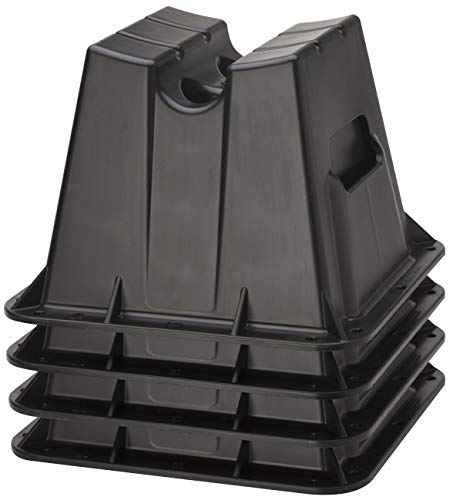
These storage blocks are designed for pontoon boats and other marine applications, offering a universal fit for standard equipment. The set of four blocks is optimized to provide stable support during winter storage, helping to prevent hull deformation and ensure even weight distribution. The OEM-equivalent part number and universal fit notes suggest compatibility with a wide range of marine setups. Use these blocks to elevate pontoons, protect keels, or stabilize gear when vessels are docked for long periods. Suitable for dry storage or slip-based setups, they provide a simple, durable means to preserve boat geometry while not in use.
Key considerations:
- Compatibility with marine equipment and standard hull designs.
- Durable construction for seasonal storage conditions.
- Set of four for balanced support across the vessel’s length.
- Simple deployment and removal for annual use.
Lifeboat Urethane Pour Foam — 2lb Density

This 2 lb density, 1-gallon kit provides liquid expanding foam that cures into a rigid, closed-cell structure. It’s marketed for marine flotation, insulation, and soundproofing, making it versatile for boat buoyancy applications, fill gaps, and voids in docks or other marine spaces. The 1:1 mix ratio and quick expansion support manageable pours in confined areas. The kit is designed to expand into about 4 cubic feet, offering substantial volume per application. It is suitable for both novice and experienced users who want dependable, controllable foam expansion with strong buoyancy characteristics.
Important notes:
- Liquid urethane foam that expands and hardens in place.
- One-gallon kit, 1:1 mixing ratio, quick cure time under proper conditions.
- Best used in controlled pours to avoid excessive expansion in tight spaces.
- Suitable for flotation, insulation, and noise reduction in marine contexts.
Fiberglass Supply Depot 2 Lb Density Pour Foam

This 2 lb density polyurethane flotation foam is a two-part system designed for nonstructural void filling, buoyancy, and light soundproofing. Supplied as a gallon kit with equal parts A and B, it expands to fill cavities and under-deck spaces, providing buoyancy and thermal insulation where needed. The foam is suitable for marine applications and expands to a measurable volume, enabling targeted fills in boats, docks, and other flotation-enabled structures. It’s a practical option for DIY repairs and upgrades that require a balance of light weight and buoyancy.
Product insights:
- Two-part, 1:1 mix ratio for controlled curing.
- Expands to provide buoyancy in voids and cavities.
- 1 gallon kit yields several cubic feet of foam post-curing.
- Suitable for novice installers and experienced users alike.
TotalBoat 2 Lb Density Expanding Foam Kit

The TotalBoat 2 lb density kit delivers a two-part polyurethane foam suitable for marine flotation, insulation, and void filling. It offers a simple 1:1 mix ratio and expands rapidly to a closed-cell structure, which resists water absorption and solvent damage. The foam is designed for nonstructural applications and can be layered for deeper fills under decks or within cavities. It cures quickly at typical temperatures, allowing for multi-step builds in a single project. Once cured, it can be coated with compatible resins and trimmed as needed.
Main features:
- 2-part system with 1:1 mixing ratio.
- Approximately 4–5 cubic feet of foam per gallon kit depending on application.
- 94% closed-cell structure for moisture resistance.
- Compatible with epoxy, polyester, or vinyl ester resins after curing.
TotalBoat 6 Lb Density Expanding Foam Kit

This higher-density foam kit is designed for marine and residential uses requiring stronger buoyancy and rigidity. The product cures to a rigid, high-compression-strength foam with a 94% closed-cell structure, offering excellent resistance to water, oil, and gas. It is ideal for structural reinforcement, flotation under decks, and applications where a more solid, load-bearing foam is beneficial. The kit is a two-part system with a 1:1 mix ratio and is compatible with common resins for coating after curing. Because of its density, it is better suited for deeper fills and heavy-duty applications.
Key points:
- 6 lb per cubic foot density for higher rigidity.
- Cures to a closed-cell structure, minimizing water absorption.
- Versatile for floating platforms, boat rebuilding, and ornamental fills.
- Requires careful mixing and batch planning for uniform results.
Buying Guide
Choosing the right foam for boating applications depends on buoyancy needs, curing speed, and space constraints. Consider the following perspectives to make an informed decision:
- Foam density: Higher density provides more rigidity and load-bearing capability, suitable for structural reinforcement and heavy fills. Lower density is often easier to work with for general flotation and insulation.
- Open vs closed cell: Closed-cell foams resist water and solvents, making them ideal for flotation. Open-cell foams absorb water and are generally used for insulation or soundproofing where buoyancy is less critical.
- Mix ratio and working time: 1:1 ratios simplify mixing, but some kits require careful measurement and timing. Plan pours in stages to avoid runaway expansion in confined spaces.
- Cure conditions: Temperature and humidity affect cure rate. Warmer conditions speed curing, but ensure you follow safety and ventilation guidelines during mixing and application.
- Coating and compatibility: If you plan to coat cured foam with resins or paints, verify compatibility with epoxy, polyester, or vinyl ester resins to ensure a good finish.
- Application scale: For large boats or dock projects, kits with higher volume output or multi-kit plans may reduce handling complexity and provide better continuity of buoyancy across areas.
- Safety: Use appropriate protective gear, work in a well-ventilated area, and follow manufacturer safety instructions for handling chemical components and curing compounds.