Best Floating Docks for Saltwater
Finding the right floating dock for saltwater needs careful consideration of durability, buoyancy, and maintenance. This guide highlights five top options that balance strength, assembly ease, and long‑term performance for commercial, marina, and DIY setups. Each pick serves different buyers: marinas seeking heavy‑duty reliability, DIYers needing simple installs, and families wanting stable, safe platforms for water activities.
Summary of selected products:
| Product | Best for | Key benefit |
|---|---|---|
| Eagle Float Dock Float | Marinas and DIY docks | Strong HDPE shell with EPS core for weather resistance |
| Taylor Made Dock Floats 24x48x16 | Durable, salt‑water environments | UV‑resistant shell and foam core protection |
| SPECRAFT Inflatable Floating Dock | Flexible, expandable floating space | Thick, puncture‑resistant PVC with 2‑in‑1 dry/wet design |
| HeySplash Inflatable Floating Dock | Family lake and coastal use | All‑in‑one ladder and anti‑slip surface |
| Patriot Docks Low‑Profile Floating Dock Section | Shallow water access and compact setups | Low profile with durable floats for easy reach |
Eagle Float Dock Float — Extra Small 2’x3’x8

The Eagle Float is designed for high strength and long life in saltwater environments. It uses a 100% virgin polyethylene shell with an EPS core and a .15 inch wall thickness to resist impact and weathering. Best for: small docks, DIY piers, and marinas needing reliable buoyancy with straightforward installation. Caution: installation hardware is not included, so plan for compatible mounting hardware when attaching to your structure.
Taylor Made Dock Floats 24″x48″x16″ — Tough Shell

Taylor Made floats feature a UV‑resistant black polyethylene shell with an EPS foam core. The shell protects the foam from saltwater and chemicals, reducing sinking risk if the shell is compromised. Best for: saltwater docks needing robust protection and easy stay‑in installation with mounting slots. Limitation: availability varies by flotation options, so match buoyancy to your dock size and weight needs.
SPECRAFT Inflatable Floating Dock — 12×8 ft
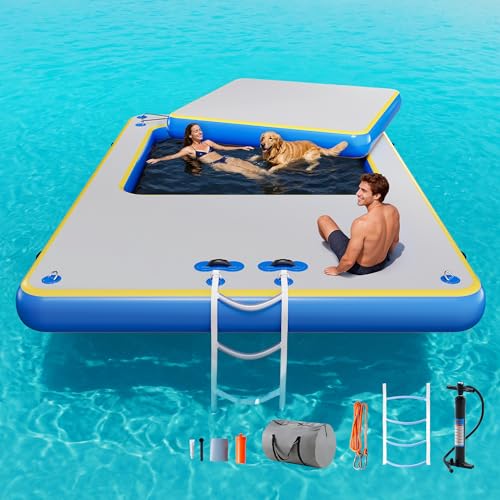
The SPECRAFT inflatable dock uses brushed PVC with a reinforced drop‑stitch core, delivering a 6.1 inch thick, puncture‑resistant platform. It supports up to 880 lb and offers a 2‑in‑1 dry/wet design for versatility. Best for: flexible waterfront spaces where a modular, expandable dock is advantageous. Caution: inflatable platforms can be sensitive to sharp objects and require proper anchoring to stay stable in tides or waves.
HeySplash Inflatable Floating Dock — 8×6 ft

The HeySplash dock measures 8×6 feet when inflated, supporting up to 675 pounds and 4–6 people. It combines an inflatable platform with an integrated ladder for easy entry and exit. Best for: family activities on lakes, ponds, or coastal areas where a portable, all‑in‑one dock is preferred. Caution: inflatable wear, punctures, or seam failures can affect buoyancy; inspect regularly and store appropriately when not in use.
Patriot Docks Low‑Profile Floating Dock Section

This low‑profile dock section sits closer to the waterline for easy access, with a durable HDPE flotation system and modular design. Best for: shallow water docks or anyone seeking a streamlined platform that minimizes splash and height while maintaining buoyancy. Limitation: lower profile may offer less deck space than larger platforms, requiring careful layout planning for activities and equipment.
Buying Guide
- Durability and environment: For saltwater, prioritize UV resistance, corrosion protection, and foam‑filled cores to reduce buoyancy loss over time.
- Buoyancy and weight handling: Match floatation capacity to your dock length, loading, and anticipated foot traffic. Inflatables require higher inspection and maintenance.
- Installation and maintenance: Consider whether you prefer wheel‑in stability with mounting slots or a lighter, modular inflatable that’s easier to store.
- Maintenance considerations: UV and salt resistances extend life; plan for occasional cleaning and hardware checks.
- Expansion potential: If you expect growth, choose products with modularity or connectable platforms to expand later.
FAQ
- What float material is best for saltwater docks?
Polyethylene shells with EPS cores are common for durability and buoyancy in saltwater environments. - Are inflatable docks suitable for deep or rough waters?
They can work in calm to moderate conditions but require careful anchoring and regular inspections; consider fixed floats for heavy waves. - How much buoyancy do I need for a small dock?
Estimate total weight including people and gear, then select floats with a buffer above that total to prevent sinking. - Do floating docks require specialized installation hardware?
Some products include mounting slots, while others require separate hardware; verify compatibility before purchase. - Can I expand a dock later?
Many modular docks support expansion, but confirm with the manufacturer or product specs to ensure compatibility.