Best Flat Black Marine Paints for Above-Waterline Finishes
Answering your sailing and boating needs, this guide highlights top flat black marine paints suited for fiberglass, wood, aluminum, and steel above the waterline. The selections favor durability, drying time, and easy application, helping buyers choose surfaces where camouflage, non-reflective finishes, or simple maintenance matter most. Best for DIY boat upkeep, hobbyists patching chips, and anglers who want a low-glare hull. The table below compares five strong options to simplify your decision.
| Product | Surface Fit | Finish | Best For | Notes |
|---|---|---|---|---|
| Rust-Oleum Marine Coatings Topside Paint (Quart) | Fiberglass, Wood, Metal | Flat Black | General topside coating | Fast dry; good leveling |
| TotalBoat Aluminum Boat Paint (Quart) | Aluminum, Galvanized | Low-Sheen Black | Aluminum hulls and trailers | Excellent adhesion; no priming |
| Rust-Oleum Camouflage Paint (Quart) | Sporting or hunting gear; watercraft | Flat Black | Non-reflective camouflage | Water-based; quick dry |
| underthecloud Marine Paint (35 oz) | Wood, Fiberglass, Metals | Gloss Black | Chips and repairs on hulls | Durable polyurethane; not for submerged use |
| TotalBoat Wet Edge Topside (Quart) | Fiberglass, Metal, Wood | Black | Topside finish with gloss control | One-part; high gloss, durable |
Rust-Oleum 207006 Marine Coatings Topside Paint, Quart, Black

Product overview: This oil-based topside paint is designed for fiberglass, wood, or metal surfaces above the waterline. The formula is flexible and applies with excellent leveling, delivering a smooth finish. It dries to the touch in 1–2 hours and covers up to 100 sq ft.
Who it’s best for: DIY boaters seeking a traditional, easy-to-spread topside coating with quick curing. It is well suited for small to mid-sized boats that require a durable, non-glossy black finish above waterline areas.
Why selected: It emphasizes flexible oil-based performance, good leveling, and relatively fast drying for quick project turnaround.
Caution or limitation: Oil-based paints may require proper ventilation and solvent cleanup; ensure compatibility with existing coatings on your vessel and follow safety guidelines for application.
TotalBoat Aluminum Boat Paint Quart
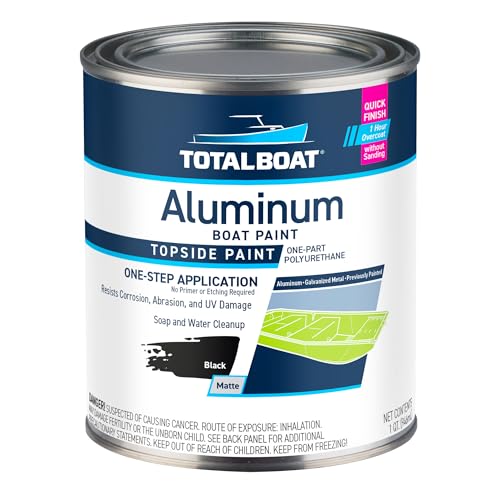
Product overview: A specialized marine paint reformulated for better finish adhesion on aluminum and galvanized metal. It offers improved resistance to chips, scratches, lifting, peeling, fading, and chemical damage. The finish is attractive with a low sheen and supports multi-use applications, including hunting camo patterns.
Who it’s best for: Boat owners with aluminum canoes, Jon boats, pontoons, or trailers that need durable adhesion and a versatile, low-sheen finish.
Why selected: It combines strong adhesion on non-painted metals with easy application (2–3 coats) and quick overcoating, making it practical for aluminum hull maintenance.
Caution or limitation: No priming is required in many cases, but surface prep with the recommended wash can boost adhesion for best results.
Rust-Oleum 379558 Camouflage Paint, Quart
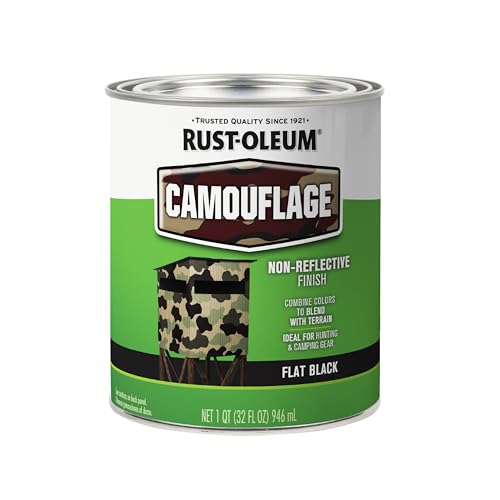
Product overview: This camouflage-rated, flat black paint is designed to provide a non-reflective finish that blends with terrain and reduces visibility. It is water-based and dries to the touch in about 30 minutes, with a full dry in 2–4 hours.
Who it’s best for: Buyers seeking a non-reflective camouflage solution for hunting gear, boat decks, or equipment that benefits from reduced glare in outdoor environments.
Why selected: The water-based formula offers easy cleanup and quicker handling compared with oil-based options, while maintaining a durable flat finish.
Caution or limitation: Designed for camouflage use; consider whether a non-slick, flat finish is appropriate for waterline areas or above-waterline coatings that require chemical resistance.
underthecloud Boat Paint 35 Oz Gloss Marine Paint
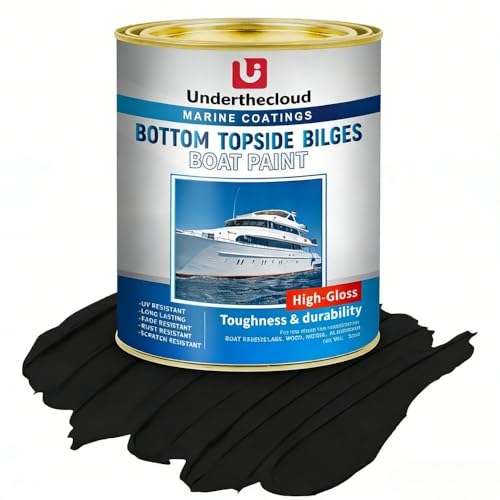
Product overview: This specialty repair coating is designed to fix chips, cracks, pits, gouges, scratches, and holes on watercraft made of wood, fiberglass, aluminum, or metals. It is an ultra-durable polyurethane finish offering abrasion resistance and UV protection, suitable for hull coatings and exterior parts.
Who it’s best for: Boat owners performing hull repairs or applying a durable topcoat over previously painted surfaces that require robust abrasion resistance.
Why selected: It shines in repair scenarios, providing a strong, durable coating that resists UV and chemical exposure and suits composite parts used in boats and motorcycles.
Caution or limitation: Not intended for continuous submersion on boat bottoms that stay in the water for more than 72 hours.
TotalBoat Wet Edge Topside Marine Paint Quart

Product overview: A durable, high-gloss marine-grade paint designed for above-waterline use. It provides a scratch and chemical-resistant finish with maximum color and gloss retention. The one-part formula supports easy application via brush, roller, or spray.
Who it’s best for: Boat owners who want a versatile, easy-to-apply topside paint that maintains its appearance over multiple seasons on fiberglass, metal, or wood hulls.
Why selected: Wet Edge combines ease of application with long-lasting gloss and resistance to fading, cracking, and peeling, reducing the need for frequent touchups.
Caution or limitation: Best results are achieved above the waterline; ensure compatibility with existing coatings before use.
Buying Guide: Key Considerations for Flat Black Marine Paints
What surface will you coat? Match the paint to your hull material (fiberglass, wood, aluminum, steel). Aluminum-specific formulas often deliver better adhesion on metal surfaces.
What are your durability needs? For high-traffic areas, choose polyurethane or epoxy-based formulations that resist chips and UV damage. For camouflage or non-reflective goals, consider flat or low-sheen finishes.
How important is drying time? Oil-based paints cure slowly but level well; water-based or fast-dry options let you finish sooner but may require more careful handling between coats.
Is priming required? Some products note no priming necessary on properly prepared surfaces; others benefit from surface etch Wash or primers for maximum adhesion.
What about recoat windows? Check overcoat times to avoid sanding between coats; quick overcoat times can speed up project timelines.
FAQs
- What is the difference between flat and matte marine finishes?
Flat finishes minimize glare and reflections, while matte finishes reduce glare but may show wear sooner than glossier options. Choose based on visibility and maintenance needs.
- Can I use camouflage paint on boat hulls?
Camouflage formulations are designed for non-reflective, terrain-blending finishes. Verify compatibility with hull materials and water exposure before use.
- Do I need a primer for aluminum boat paint?
Many aluminum paints claim no priming necessary, but following surface prep steps, like etching, can improve adhesion and longevity.
- How should I prepare above-waterline surfaces?
Clean, dry, and free of wax or grease. Lightly scuff with a fine-grit pad to improve adhesion, then follow the product’s application instructions.
- Is oil-based paint safer than water-based for boats?
Oil-based paints offer durability and leveling, but require solvents and greater ventilation. Water-based paints clean up with water and are easier to handle onboard.