Best Fishing Kayaks for Beginners: Easy, Stable Models for New Anglers
New to fishing from a kayak? This guide highlights beginner-friendly options that prioritize stability, simple setup, and practical storage. The top picks below are best for entry-level anglers who want a safe, straightforward experience on lakes, rivers, or calm coastal waters. Each entry explains who it’s best for and why it stands out, with simple caveats to consider before buying.
| Product | Best For | Why It Stands Out |
|---|---|---|
| WETURE Inflatable Kayak 2 Person | Couples and beginners who want portability | High visibility, complete accessory kit, quick setup |
| Pelican Catch Mode 110 Fishing Kayak | Dedicated anglers seeking comfort | Stable tunnel hull, ErgoBoost seat, ample gear storage |
| Pelican Sentinel 100X Angler | Compact solo paddlers | Ergolounge seating, removable ExoPak storage |
| Pelican Catch Classic 100 Angler | Budget-conscious stand-out stability | Tunnel hull stability, multiple storage options |
| TT KAYAK Modular Fishing Kayak | Versatile solo anglers with gear | Two-piece modular design, heavy-duty cart, 360° seat |
WETURE Inflatable Kayak 2 Person

Best for pairs or family beginners who want a portable, easy-to-store option. This two-person inflatable kayak uses luminous strips for daytime visibility and night glow, enhancing safety. It includes two adjustable seats, two paddles, tail fins, a hand pump, repair kit, and a carry bag, making setup straightforward for first-time users.
- Best for: Beginners who want a complete, ready-to-paddle package for two.
- Why chosen: High visibility, quick inflation/deflation, and comprehensive kit reduce upfront hurdles.
- Caution: Inflatable designs require careful inflation and frequent checks for punctures and leaks.
Pelican Catch Mode 110 Fishing Kayak

Designed for anglers who want a stable, comfortable ride with premium fishing features. The tunnel hull provides stability and easy entry/exit, while the ErgoBoost seat offers adjustable comfort. Multiple rigging tracks, front/rear storage wells, and extra rod holders support organized gear, making it a solid choice for beginners who plan longer sessions.
- Best for: Solo anglers who value comfort and ample gear organization.
- Why chosen: Stability and adjustable seating reduce fatigue for new paddlers.
- Caution: The larger feature set may require more setup space and storage at home or on the vehicle.
Pelican Sentinel 100X Angler

Lightweight and compact, this sit-on-top angler is ideal for beginners who want a straightforward, solo setup. The Ergolounge seating system adds cushion and back support, while the ExoPak removable storage keeps accessories organized and accessible. This model emphasizes ease of use and travel-friendly design.
- Best for: Beginners who prioritize light weight and easy storage.
- Why chosen: Comfortable seating and removable storage streamline learning and trips.
- Caution: Smaller overall deck may limit large gear setups for longer excursions.
Pelican Catch Classic 100 Angler

A budget-friendly option with strong stability and practical storage. The tunnel hull helps new kayakers stay balanced, while the dual-position ErgoCast seating system adapts to different paddling styles and comfort needs. Front hatch and rear tank well provide organized space for essentials, making it a sensible first fishing kayak.
- Best for: Beginners seeking stable, budget-conscious fishing kayak.
- Why chosen: Solid stability with multiple storage features at a lower price point.
- Caution: Fewer advanced customization options compared to higher-end models.
TT KAYAK Modular Fishing Kayak
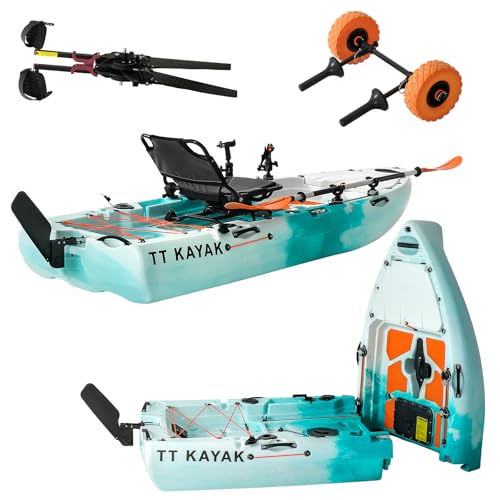
A versatile option for solo anglers who want modular adaptability. This 110″ sit-on-top kayak splits into two sections for easier transport, features a 573 lb capacity, and includes a heavy-duty cart plus a 2-piece aluminum paddle. The 360° swivel seat and adjustable layout support varied casting angles and body sizes, making it practical for growing skills.
- Best for: Anglers who anticipate carrying gear and want modular setup.
- Why chosen: Large carrying capacity and included cart ease transportation and storage.
- Caution: Assembly and breakdown require a bit more effort than single-piece kayaks.
Buying Guide: Key Considerations for Beginner Fishing Kayaks
What matters most when selecting a beginner fishing kayak?
- Stability vs. speed: For beginners, stability should be prioritized to reduce capsizing risk. Tunnel stingers and wide hulls offer more balance.
- Seat comfort and adjustability: A padded, adjustable seat or Ergonomics-friendly design minimizes fatigue on longer sessions.
- Storage and organization: Look for front/rear tank wells, built-in hatches, and removable storage options to keep gear accessible.
- Weight and portability: Lighter models are easier to transport and launch; consider included carts or wheels for portability.
- Maintenance and durability: Inflatable models save space but require puncture awareness; hard-shell options offer ruggedness with easier repairs.
- Gear compatibility: Ensure the kayak has enough rigging tracks, rod holders, and bungee cords to accommodate basic fishing setups.
Frequently Asked Questions
- What size kayak is best for a beginner?
- Is an inflatable kayak suitable for fishing?
- Do I need special paddles for fishing kayaks?
- What safety gear should I add?
- Can beginners fish from sit-on-top kayaks?
- How should I store my kayak when not in use?
Most beginners start with 10–12 feet kayaks for easy handling and stability, though smaller 9–10 feet can work for calm waters.
Yes, inflatable models offer portability and adequate stability for calm waters. They require careful inflation and puncture prevention.
Typically a standard two-piece paddle suffices, but durable, corrosion-resistant paddles help in saltwater or rugged environments.
Always wear a personal flotation device, bring a whistle, a paddle leash, and a basic repair kit. A lightweight dry bag helps protect valuables.
Yes. Sit-on-top designs provide easy entry/exit and quick accessibility to gear, which benefits new anglers learning to balance and cast.
Store in a cool, dry place away from direct sunlight. Inflateable models should be checked for punctures and stored partially deflated if long-term storage is required.