Best Fire Extinguishers for Boats: Top Picks
Safeguarding a boat means having reliable, marine-rated fire extinguishers on board. This guide highlights five top-performing models designed for marine environments, focusing on class B (flammable liquids) and class C (electrical) fires, corrosion resistance, discharge performance, and ease of use. Each option below is selected for adaptability to boat layouts, Coast Guard considerations, and overall reliability on water. Read on to compare features and find the best fit for your vessel.
| Product | Brand | Type / Class | Key Benefits |
|---|---|---|---|
| Kidde Fire Extinguisher for Boats, Single-Use 5BC | Kidde | 5BC, Marine use | Aluminum/stainless steel construction; all-metal valve; corrosion resistance |
| Kidde Fire Extinguisher for Boats, Single-Use 10BC | Kidde | 10BC, Marine use | Fast discharge; strong range; corrosion resistant components |
| First Alert Marine1 Fire Extinguisher, UL Rated 1-A:10-B:C | First Alert | 1A:10B:C, Marine use | All-metal construction; versatile, rechargeable after service |
| Kidde Mariner 5 Fire Extinguisher for Boats, Single-Use 5BC | Kidde | 5BC, Marine use | Corrosion-resistant build; quick discharge |
| First Alert Fire Extinguisher for Car & Marine Use, UL 10-B:C | First Alert | 10B:C, Marine/Auto use | Durable metal head; solid for flammable liquids and electrical fires |
Kidde Fire Extinguisher for Boats, 5BC

Designed to address common marine fires, this 5BC unit targets Class B liquids and gases, plus electrical equipment (Class C). It features corrosion-resistant aluminum and stainless-steel components, an all-metal valve assembly, and a rust-resistant stainless-steel lever with an easy-pull safety pin. These attributes make it suitable for saltwater environments and compact boat cockpits, where durability and reliability matter most.
Kidde Fire Extinguisher for Boats, 10BC
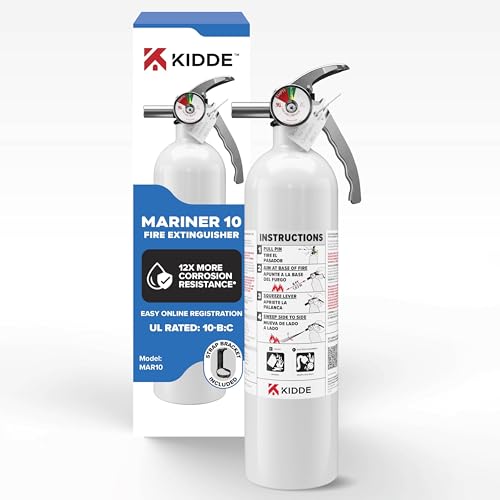
The 10BC version expands coverage for more extensive boat fire scenarios. It fights Class B and C fires, with a 12x improvement in corrosion resistance due to durable aluminum and stainless-steel components. Its discharge time ranges around 8–12 seconds, with an operational range of 6–8 feet and a nominal operating pressure of 100 PSI, enabling rapid suppression in tight spaces aboard a vessel.
First Alert Marine1 Fire Extinguisher
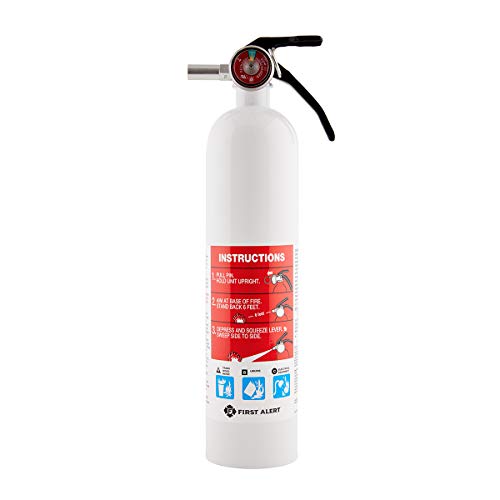
UL rated 1-A:10-B:C, this extinguisher uses the durable all-metal construction common to commercial equipment, with a metal valve and trigger designed for repeated use. It covers a broad spectrum of fires, including wood, paper, plastics, gasoline, oil, and electrical equipment, and is rechargeable by certified professionals after use, which can be beneficial for boats that require long-term serviceability.
Kidde Mariner 5 Fire Extinguisher for Boats

Another compact marine option, the Mariner 5 emphasizes fast action with a discharge time of 8–12 seconds and a 4–6 foot discharge range. Like other Kidde marine extinguishers, it relies on corrosion-resistant materials and is designed for reliable performance in salty environments, making it a solid match for smaller boats and berths with tight storage.
First Alert Marine1 Fire Extinguisher Bundle

This bundle includes a Marine1 extinguisher with a secure mounting bracket, offering Coast Guard–approved mounting compatibility when used with the included hardware. It shares the same UL rating and durable all-metal construction, delivering a dependable option for crews needing a ready-to-mount solution that won’t require frequent replacement.
First Alert Fire Extinguisher For Car & Marine Use

This model is UL rated 5-B: C for its intended dual use in cars and marine environments. It handles both flammable liquids and electrical fires, offering a practical option for vessels that double as land vehicles. The unit employs a classic sodium bicarbonate-based extinguishing agent and includes a robust metal head and valve assembly to withstand marine conditions.
Buying Guide
Key purchase considerations for boat fire extinguishers include:
- Fire class coverage: For most boats, extinguishers rated for Class B and Class C fires are essential, with some models also suitable for Class A (ordinary combustibles).
- Marine-grade construction: Look for all-metal valves and corrosion-resistant housings (aluminum or stainless steel) to resist saltwater environments.
- Discharge performance: Shorter discharge times and longer ranges can be beneficial in tight spaces; verify PSI and discharge time specs.
- Mounting and accessibility: Choose units that come with or accommodate mounting brackets; placement should be within easy reach of crew and away from heat sources.
- Rechargeability and service: Some units are rechargeable after professional service; others are single-use only. Consider maintenance plans and certifications.
- Certification and standards: UL ratings (e.g., 1-A:10-B:C, 5-B:C) and Coast Guard compatibility are important for marine use and regulatory compliance.
- Size and weight: Balance storage space with the required fire suppression capacity; smaller boats may benefit from 5BC or 5BC/10BC units, while larger vessels may need higher capacity options.
- Care and maintenance: Regular inspection, cleaning to prevent salt residue, and ensuring the pressure gauge is readable help maintain effectiveness.
When choosing, compare how each extinguisher aligns with your boat size, typical fuel type, electrical systems, and expected maintenance resources. Marine-specific extinguishers with corrosion-resistant components and reliable discharge performance tend to provide the best long-term value for American waterways.