Best Fiberglass Glue for Boats: Tough Adhesives and Sealants for Marine Repairs
When repairing fiberglass boats, choose adhesives and sealants designed for water exposure, UV resistance, and flexible bonds. This guide highlights five reliable options, detailing who they’re best for, how they perform, and potential limitations. Ideal buyers include DIY yacht owners, maintenance crews, and anyone needing durable, watertight bonds on hulls, decks, and fittings. A quick summary table below compares key points to help you pick the right product fast.
| Product | Best For | Key Benefit | Limitation |
|---|---|---|---|
| J-B Weld MarineWeld Syringe | Small-to-medium repairs | 1:1 mix ratio, waterproof and UV resistant | Two-part system requires precise mixing |
| TotalBoat Thixo | Overhead or vertical surfaces | Thickened epoxy that stays in place | Cartridge-based, need proper dispensing |
| Berkland 5200 Fast Cure | Through-hull and above/below waterline | 24-hour cure, flexible waterproof bond | Fast cure may limit open time |
| Fortivo 5200 Marine Sealant | Heavy-duty bonding | High load bearing, UV resistant | White sealant; visibility on dark surfaces |
| Globalcom Fiberglass Repair Kit (White) | Repairing chips, cracks, and holes | All-in-one epoxy repair with UV resistance | Set time can vary; requires surface prep |
J-B Weld MarineWeld Syringe
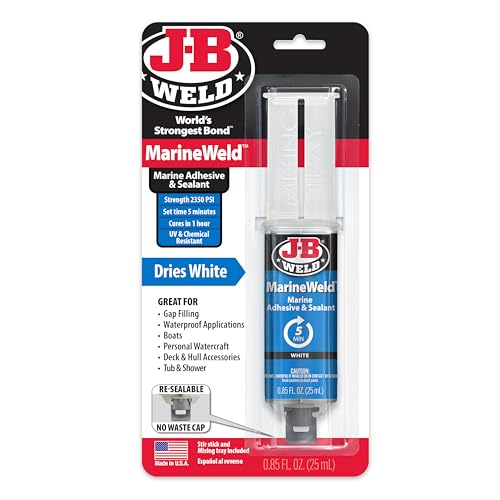
Product overview: J-B Weld MarineWeld is a specially formulated two-part adhesive and sealant that creates a strong, flexible bond resistant to water, chemicals, and UV exposure. The syringe design supports easy 1:1 mixing, making it suited for small to medium repairs on boats, such as sealing deck fittings or patching minor hull nicks. Best for boat owners who prefer a clean, controlled application with predictable cure. Caution: mixing accuracy matters for optimal strength; avoid applying in overly humid conditions that can affect cure time.
Best for: Small to medium hull and deck repairs, seamen who value a controlled, one-to-one mix and a waterproof seal. Why selected: The 1:1 syringe simplifies mixing, and the product’s water and UV resistance align with typical marine exposure. It’s well-suited for quick, reliable fixes where a flexible bond matters more than ultra-high load bearing.
Limitations to note: The adhesive’s performance hinges on correct mixing and surface prep. It may not be ideal for large structural repairs that require thicker or longer cure times.
TotalBoat Thixo (185ml Cartridge)

Product overview: TotalBoat Thixo is a high-strength, thickened two-part epoxy adhesive designed for bonding, gluing, sealing, and filling on wood, fiberglass, metals, brick, stone, glass, and tile. The 185 ml cartridge fits standard caulking guns, and the formula is 2:1 but designed to stay where applied, making it ideal for vertical or overhead work. It is 100% waterproof after curing and easy to drill, sand, and paint. It’s a strong choice when you need a durable bond that resists water and stays put on complex shapes.
Best for: Overhead or vertical installations on fiberglass surfaces where sagging must be avoided. Why selected: Thixo’s thickened consistency reduces running and dripping, which helps on hull seams, deck joints, and other vertical seams. It also works well for wet area repairs that require robust bonding before final finishing.
Limitations to note: While convenient, this product requires proper 2:1 mix accuracy and handling, and users should follow curing guidelines to achieve maximum strength.
Berkland [3 oz] Marine Adhesive Sealant 5200 Fast Cure

Product overview: Berkland’s 5200 Fast Cure is a permanent, watertight sealant designed for both above and below waterline use. It forms a flexible bond suitable for through-hulls, transducers, struts, and hull-to-deck joints and hardens quickly—tack-free in about two hours with handling strength in 24 hours. UV and weather resistant, it resists cracking, shrinking, and chalking under sun exposure. This is a strong choice for rapid repairs where a reliable, water-exposed seal is needed.
Best for: Through-hulls and hull-to-deck joints where quick cure time is essential. Why selected: Its fast cure accelerates boat readiness without sacrificing bond strength, ideal for urgent maintenance windows. Caution: Fast cure may reduce open working time; plan preparation accordingly.
Limitations to note: It’s a sealant first, so for some structural loads you may want to pair with a mechanical fastener or alternative adhesive depending on the project.
Fortivo 5200 Marine Sealant — Fast-Cure

Product overview: Fortivo 5200 Marine Sealant is a high-bond, UV-resistant adhesive sealant designed for boats, hulls, decks, and RVs. It comes with gloves and nozzle for convenient application and claims high load bearing capacity with all-weather performance. It cures within about 24 hours to deliver a durable, flexible seal that withstands marine conditions. It’s positioned as a robust option for heavy-duty sealing tasks while remaining user-friendly for typical boat repairs.
Best for: Heavy-duty sealing and bonding where UV exposure and water immersion are ongoing concerns. Why selected: The combination of high bond strength and UV resistance makes it a solid all-around marine sealant for difficult joints. Caution: The white color can be conspicuous on darker surfaces; consider color-matching or painting after curing if appearance matters.
Limitations to note: As with many 5200 formulations, you should verify surface compatibility and cure times in your specific environment to ensure the best outcome.
Globalcom Fiberglass Boat Repair Kit White

Product overview: Globalcom’s fiberglass repair kit is a multifunctional solution for repairing chips, cracks, pits, gouges, scratches, and holes on watercraft made from fiberglass and related surfaces. It promises UV resistance and waterproof performance after curing, with simple, step-by-step mixing guidance. The kit is designed for a range of vessels from jet skis to yachts, aiming for durable, above-waterline repairs with strong adhesion to fiberglass.
Best for: Quick, all-in-one fiberglass repairs on boats and personal watercraft. Why selected: The kit targets common fiberglass damage with a durable adhesive system and practical curing steps suitable for DIYers. Caution: Full cure times vary; surface prep and clean-up affect the final strength and finish.
Buying Guide: Key Considerations For Marine Adhesives And Sealants
- Bond vs seal: Some products emphasize permanent bonding, others focus on flexible sealing. Choose based on whether you need structural adhesion or watertight sealing.
- Drying and cure times: Fast-curing formulas save downtime but may reduce open time. Plan around your project timeline.
- Water exposure: Look for UV-resistant and waterproof formulations for exterior hull or deck use.
- Surface compatibility: Verify if the adhesive works on fiberglass, gel coat, wood, metal, or plastics in your application.
- Thickness and sag resistance: Thickeners help if you’re applying on vertical surfaces or overhead locations.
- Color and finish: Some products leave visible residues; consider matching to the surface or painting after cure.
Frequently Asked Questions
- What is the difference between marine glue and sealant?
– Glue (adhesive) creates a bond between materials, while a sealant forms a flexible, watertight seal that resists movement and water exposure. - Can these products be used underwater?
– Some are rated for underwater use or below-waterline application; check each product’s specifications for immersion tolerance. - Is mixing important for epoxy-based products?
– Yes. Many epoxy kits require precise ratios and thorough mixing to achieve full strength and cure consistency. - How long before I can use the boat after sealing?
– Cure times vary by product; plan for handling strength within hours and full cure within 24 hours or more in some cases. - Are these products safe for gel coat and gelcoat repair?
– Several options are formulated to adhere to fiberglass and gel coat, but always test a small area first and follow manufacturer instructions. - Should I use more than one product for a repair?
– For best results, combine products where appropriate (adhesive for bonding, sealant for joints) and avoid over-reliance on a single compound if the job involves movement or vibration.