Best Fiberglass Boat Polishing Compound Solutions for Every Boating Style
When searching for the best fiberglass boat polishing compound, you want options that restore shine, remove oxidation, and protect gel coat. This guide highlights five top products that address common needs—whether you own a small runabout or a larger vessel. Each choice is best for specific boat types and routines, from heavy oxidation removal to a high-gloss finish.
Buyer note: choose products based on your boat’s gel coat condition, your preferred application method, and how aggressive you want the correction to be. The table below gives a quick snapshot to help you compare at a glance.
| Product | Brand | Best For |
|---|---|---|
| Meguiar’s Marine/RV Fiberglass Restoration System | Meguiar’s | Complete restoration kits for oxidized gel coat |
| 3M Perfect-It Gelcoat Medium Cutting Compound + Wax | 3M | Moderate oxidation and scratches, one-step polish and wax |
| Meguiar’s M4916 Heavy Duty Oxidation Remover | Meguiar’s | Severe oxidation and color restoration |
| Better Boat Boat Polishing Compound Gelcoat Restorer | Better Boat | High-gloss finish with easy, fast results |
| Meguiar’s Marine/RV High Gloss Polish M45 | Meguiar’s | Final gloss and depth after cleaning |
Meguiar’s Marine/RV Fiberglass Restoration System

This 3-piece system provides a complete approach: oxidation remover to tackle stains, a gel coat cleaner, and a high-gloss polish for a showroom finish. Best for boat owners who want an all-in-one restoration cycle. The kit is designed to restore color and clarity on fiberglass surfaces, making it suitable for aging gel coats or vessels with visible wear. Use with standard buffers for best results. A single kit can simplify maintenance for seasonal boat care.
Best for: boaters seeking a comprehensive restoration package, including oxidation removal and a high-gloss finish. Limitations: kit contents may require additional sealant or wax for long-term protection in harsher climates.
3M Perfect-It Gelcoat Medium Cutting Compound + Wax
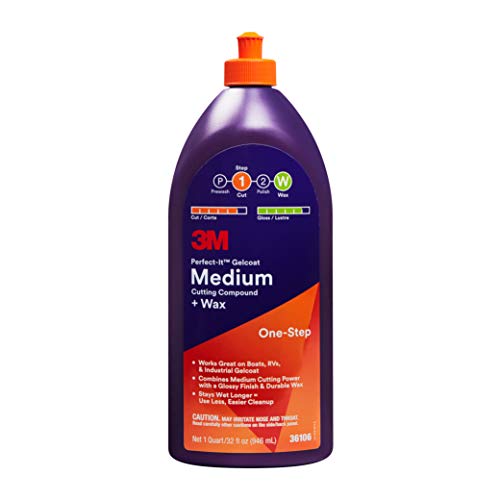
3M’s gelcoat compound combines cutting power with a protective wax in a single step. It’s well-suited for boats that need effective oxidation and scratch removal without a multi-step process. The formulation is intended for gelcoats and fiberglass, helping restore color vibrancy while laying down a protective film. Best for: DIY enthusiasts and professionals who want a straightforward, one-step solution.
Caution: The product is designed for gelcoat and fiberglass; compatibility with very delicate finishes should be tested on a small area first.
Meguiar’s M4916 Heavy Duty Oxidation Remover

Designed for older gel coats and fiberglass, this product aggressively removes oxidation, water spots, and stains. It’s best for boats with heavy layer buildup where restoration is a priority. The formula uses a powerful abrasive mix with polishing oils to reveal a brighter finish. Best for: vessels with deep oxidation or color fade; consider a follow-up polish for final shine.
Limitation: This is a strong compound; it benefits from careful, controlled application to avoid leaving micro-scratches in sensitive areas.
Better Boat Boat Polishing Compound Gelcoat Restorer

Better Boat’s polishing compound offers a fast, easy route to a high-gloss finish. It’s designed for light to medium oxidation and can be used with a machine polisher or by hand. The one- or two-step approach makes it flexible for newer boats or more neglected vessels that need a quick refresh. Best for: boat owners seeking a simple, time-efficient polish with a glassy, wet-look result.
Caution: Suitable for light to medium oxidation; heavy oxidation may require a more aggressive product first for best results.
Meguiar’s Marine/RV High Gloss Polish M45

Meguiar’s M45 High Gloss Polish focuses on depth and a brilliant finish after cleaning. It feeds gel coat and fiberglass surfaces with polishing oils to sustain a rich, wet-look shine. It’s a good final-step product after removing oxidation and smoothing the surface. Best for: achieving showroom-grade depth and gloss after preparation. Limitation: not a heavy oxidation remover; use it after you’ve corrected the surface.
Buying Guide
What should you look for in a fiberglass boat polishing compound?
Consider oxidation severity, gel coat condition, and whether you prefer a one-step solution or a multi-step process. Aggressive compounds remove more material and can scratch if misused; milder formulas preserve more gel coat while restoring shine. Look for compatibility with fiberglass and gel coat, and whether the product includes oils or wax for protection.
One-step vs multi-step approaches
One-step products mix cutting and finishing in a single pass, ideal for newer boats with light oxidation or busy schedules. Multi-step systems separate cutting, polishing, and protection, delivering deeper correction and longer-lasting gloss on aged vessels.
Application method and tools
Most compounds work with a dual-action machine polisher or foam/wool pads. Follow pad recommendations and pressure guidelines to avoid swirl marks. Testing on a small area first is advised, especially on older gel coats.
Protection and longevity
Glossy finishes look impressive, but lasting protection is essential in sun and salt environments. Consider finishing with a dedicated wax or sealant after polishing to lock in shine and shield against oxidation.
Safety and maintenance tips
Wear eye protection and gloves when using abrasive compounds. Work in a shaded area to prevent rapid drying, and clean the surface between passes. Store products as directed to maintain performance over time.
FAQ
- Q: Can I use any polish on a fiberglass boat hull?
- A: Use products formulated for gel coat or fiberglass surfaces to avoid damage. Check the label for compatibility and recommended use.
- Q: Do I need a machine polisher?
- A: A machine polisher often yields more even results, especially for oxidation. Manual application works for lighter jobs or spot treatment.
- Q: How often should I polish?
- A: Frequency depends on exposure and climate. Light maintenance can be quarterly; severe exposure may require more frequent care or protective coatings.
- Q: Is wax necessary after polishing?
- A: Wax or sealant adds protection and enhances gloss, helping extend the life of the polish finish.