Best External Boat Fuel Tank Options for Safe, Efficient Onboard Refueling
When selecting an external boat fuel tank, the goal is reliable capacity, safe materials, and compatibility with your outboard motor. This guide highlights five solid choices ideal for American boaters who want ready-to-use, portable fueling while on the water. Each option suits different boat sizes, fuel needs, and storage space. Read on to compare capacities, features, and suitability so you can choose confidently for your next voyage.
Summary of chosen products:
| Product | Capacity | Best For | Key Benefit |
|---|---|---|---|
| AloneGoer 3 Gallon Portable Boat Fuel Tank | 3 gallons | Owners needing a compact spare or replacement for Yamaha setups | Low-permeation, UV-stable, corrosion-resistant |
| Scepter 12 Gallon Portable Marine Gas Can (08668) | 12 gallons | Longer running times for mid-size boats | Built-in fuel gauge, vented cap |
| Scepter 08669 Rectangular 12 Gallon Tank | 12 gallons | Low-profile storage under seats | Two-way vent, built-in gauge |
| VEVOR Boat Fuel Tank, 3.17-Gallon | 3.17 gallons | Compact, versatile on smaller craft | Long hose, compatible with Yamaha connectors |
| VEVOR Marine Tank, 14.53 Gallon | 55 liters / 14.53 gallons | Higher capacity for bigger boats | Visible gauge, durable HDPE |
AloneGoer 3 Gallon Portable Boat Fuel Tank
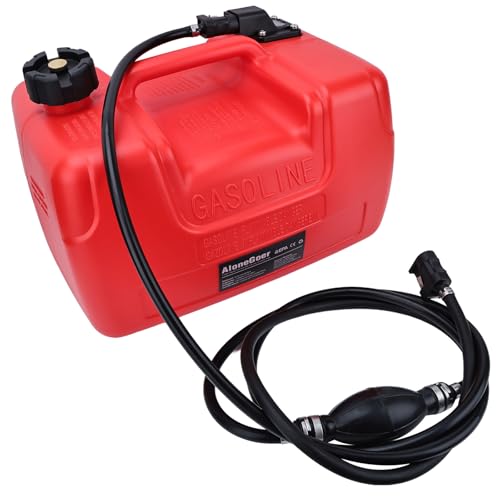
The AloneGoer 3 Gallon Tank is designed for outboard motors, inflatable boats, and as an on-board spare fuel solution. It uses a multi-layer HDPE-EVOH-HDPE barrier to minimize fuel permeation and evaporative loss. The unit is UV-stabilized and formulated for salt spray environments, making it a practical choice for high-humidity waters. Best for boaters who need a compact, reliable backup or a replacement for Yamaha 6YL-24201-24-00 style tanks.
Best for: small to mid-sized boats where space is at a premium and backup fuel is prudent. This tank excels in corrosion resistance and reduced evaporation, protecting fuel quality between refills. Caution: check compatibility with your motor’s fuel line connector to ensure a snug fit.
Scepter 12 Gallon Portable Marine Gas Can (08668)

This portable 12-gallon tank provides ample capacity without taking over deck space. Its built-in fuel gauge helps monitor levels at a glance, while the two-way vented cap assists during refueling by releasing pressure safely. The can is EPA and CARB compliant, and compatible with diesel and ethanol-blended fuels. Best for: boaters who want longer running time between refuels and an integrated gauge for quick checks. Consideration: the fuel line must be purchased separately and fits standard marine hose connections.
Scepter 08669 Rectangular 12 Gallon Tank

This low-profile 12-gallon container is ideal for tight storage under seats or in small cockpit areas. It features a two-way vented cap to manage pressure and a built-in gauge for quick fuel checks. Suitable for diesel and ethanol-blended fuels, it accepts standard 1/4 NPT marine fittings for easy hookup. Best for: boats needing a compact profile without sacrificing capacity. Limitation: ensure your mounting or stowage area accommodates its length and width.
VEVOR Boat Fuel Tank, 3.17-Gallon

VEVOR’s 3.17-gallon tank focuses on portability with a long 9.8-foot hose and compatibility with Yamaha connectors. The tank is HDPE-based, designed to resist aging, impact, and corrosion, and includes a molded top handle for easy carrying. Best for: small boats or as a portable transfer tank when you need a flexible, easy-to-handle fuel option. Caution: avoid prolonged direct sun exposure to minimize aging and expansion risk.
VEVOR Marine Tank, 14.53 Gallon

This larger capacity tank (14.53 gallons) is built from high-density polyethylene for durability and resistance to corrosion. It includes a 9.8-foot hose, a visible gauge, and a two-way vent cap for safe on-water operation. Best for: bigger boats or vessels with longer cruising ranges where higher fuel capacity reduces refueling frequency. Note: avoid prolonged sun exposure to prevent aging and expansion.
Scepter 6 Gallon Portable Marine Gas Can

The 6-gallon Scepter tank strikes a balance between capacity and compact form, suitable for under-seat storage. It includes a 2-way vented cap to prevent vapor buildup, a built-in fuel gauge, and a side-attached fuel line option. Best for: boats requiring moderate fuel capacity with easy under-seat storage. Limitation: smaller fuel capacity than the 12-gallon variants may necessitate more frequent refueling on longer trips.
Attwood 8806LP2 EPA Certified 6 Gallon Tank

Attwood’s 6-gallon portable tank focuses on regulatory compliance, including EPA and CARB standards. It features a cap with a built-in vacuum valve to reduce the need for manual venting. Best for: buyers who prioritize regulatory compliance and simple, maintenance-free operation. Caution: verify that the built-in venting system matches your refueling setup to ensure smooth operation.
Buying Guide
What size is right for your boat?
Choose capacity based on your typical cruise length and engine economy. Smaller boats benefit from compact 3–6 gallon tanks for short trips, while mid- to large-sized vessels may require 12–14 gallon options to minimize refills.
What about compatibility?
Check hose length, inner diameter, and connector type to ensure a proper fit with Yamaha and other outboard motors. Look for tanks that advertise compatibility with common marine fittings and diesel/ethanol fuels if you use blended fuels.
Materials and durability
HDPE-based tanks with UV stabilization and corrosion-resistant formulations perform best in saltwater environments. Multi-layer barriers can drastically reduce fuel permeation and evaporation.
Venting and safety features
Vented caps help manage vapor buildup during refueling. EPA/CARB compliance ensures regulatory peace of mind. A built-in gauge aids quick fuel checks without opening the cap.
Storage and handling considerations
Look for molded handles and low-profile shapes for easy transport and under-seat storage. Ensure storage space can accommodate the tank’s dimensions and weight when full.
Maintenance and durability tips
Store away from direct sunlight when possible, inspect hoses for wear, and avoid exposing fuel tanks to extreme heat to minimize aging and expansion risks.
FAQ
- What capacity should I choose for a small bay boat?
Typically a 3–6 gallon tank is sufficient for short runs and as a spare. For longer trips, a 12-gallon tank provides more onboard fuel without frequent refills.
- Are marine fuel tanks compatible with ethanol blends?
Many are; verify the tank’s stated compatibility with diesel and ethanol-blended fuels to avoid material degradation or seal damage.
- Do these tanks include hoses?
Some models include hoses or offer compatible hoses sold separately. Check product details to confirm hose length and connector type.
- Is venting important for safety?
Yes. Vented caps manage pressure and reduce vapor buildup, which helps prevent hazardous conditions during refueling.
- What maintenance steps prolong tank life?
Keep the tank out of direct sun, inspect hoses regularly, and store in a shaded, ventilated area when not in use.