Best Epoxy Paint for Boat Bottoms: Top Picks for Protection and Performance
Choosing the right epoxy or antifouling coating for a boat bottom hinges on where the boat will spend most of its time, what you’re protecting (fiberglass, wood, steel, or aluminum), and how you use the vessel. This guide highlights five top options that balance durability, ease of application, and environmental considerations. Ideal buyers include saltwater and freshwater boaters, recreational skippers, airboat operators, and DIY enthusiasts looking for long-lasting hull protection. The quick-reference table below helps you compare core details at a glance.
| Product | Best For | Coating Type | Notes |
|---|---|---|---|
| Fasco Epoxies Super Slick 2000 Epoxy Bottom Coating | Boats needing a slick, low-drag hull | Two-part epoxy with PTFE | Excellent friction reduction; durable on multiple hull materials |
| TotalBoat JD Select Ablative Antifouling (Black) | Saltwater or mixed-water boats with fouling concerns | Ablative antifouling | Self-polishing, low odor, easy cleanup |
| TotalBoat TotalBilge Epoxy Based Bilge Paint | Bilges, engine rooms, and lockers | Epoxy-based | Chemical and solvent resistant; brightens and protects |
| underthecloud Boat Paint 35 Oz Gloss Marine Enamel | Versatile topside and bottom repairs | Oil-based epoxy enamel | Abrasion-resistant; not for prolonged submersion |
| Rust-Oleum 396967 Marine Antifouling Paint | Fiberglass, wood, or steel bottoms needing fouling protection | Antifouling paint with copper release | Simple recoating; covers sizeable areas |
Fasco Epoxies Super Slick 2000 Epoxy Bottom Coating

Best for boats where minimizing drag is a priority. This two-part epoxy uses PTFE and friction-reducing additives to deliver a notably slick hull surface, which can improve glide across grass, mud, sand, and water. The formulation emphasizes durability and abrasion resistance, making it a strong choice for airboats, jon boats, aluminum hulls, fiberglass, PWCs, and jet skis. It is designed to maintain slick surface integrity even in harsh environments with repeated exposure to water and movement.
Who this is for: boaters seeking a high-slip, low-drag bottom coat that stands up to rugged use and frequent launches. Why selected: it combines a proven epoxy system with friction-reducing technology for longer-lasting slickness. Caution: preparation and curing conditions matter; improper surface prep can reduce adhesion or performance over time.
TotalBoat JD Select Ablative Antifouling Bottom Paint (Black, Gallon)

Best for boats that operate in water with a fouling challenge, especially in mixed or saltwater. This ablative antifouling coating wears away as the boat moves, minimizing bottom paint buildup and reducing the sanding workload next season. It’s a low-odor, low-VOC, water-based option that cleans up with soap and water, suitable for marinas and yards with environmental restrictions. Best applied in prepared fiberglass, wood, or metal surfaces with appropriate priming.
Who this is for: boaters who want a self-polishing protection that reduces maintenance over time. Why selected: combines antifouling performance with environmental considerations and ease of cleanup. Caution: not a universal fix for all hull materials; ensure proper surface prep and compatibility with your boat’s substrate.
TotalBoat TotalBilge Epoxy Based Bilge Paint

This epoxy-based bilge paint is designed for tough, water-resistant finishes in engine rooms, lazarettes, and stowage areas. It resists chemicals, oils, acids, alkyds, and solvents, creating a hard, durable layer that helps protect internal areas of the hull. Best for: bilges and compartments that face exposure to splash and humidity. Why selected: epoxy-based protection offers robust chemical resistance and a cleanable, waterproof surface. Caution: not intended for continuous exterior submersion environments beyond typical bilge use.
underthecloud Boat Paint 35 Oz Gloss Marine Enamel
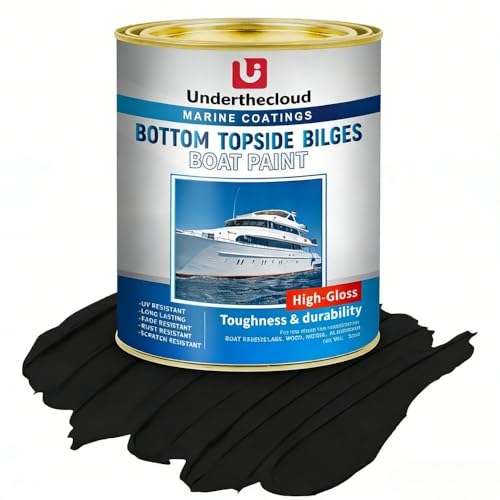
Best for versatile topside and bottom repair where a durable, gloss finish is desired. This oil-based epoxy enamel provides an abrasion-resistant coat suitable for boats, wood, fiberglass, aluminum, and metal surfaces. It resists UV damage and corrosion, heightening the surface’s longevity. Not suitable for continuous submersion conditions on hull bottoms that stay in water for extended periods. Best for: quick, resilient touch-ups and components above waterline.
Rust-Oleum Marine Flat Antifouling Paint (Quart)

Best for fiberglass, wood, or steel bottoms needing fouling protection with a simple coating process. The formula slowly releases copper to deter fouling, with a coating that can be recoated in about four hours and launched in roughly 16 hours. It covers up to about 110 square feet per quart, making it a cost-effective option for smaller to medium-sized hulls. Choose this if you want a straightforward antifouling solution with predictable recoat timing. Caution: copper-based formulas may require environmental and marina compliance checks in sensitive areas.
SENVEN Boat Paint 35 Oz Gloss White

Best for all-in-one topside, bottom, and waterline finishing where a high-gloss marine finish is desired. This oil-based epoxy grey option adheres well to marine substrates like fiberglass, wood, metal, and previously painted surfaces. The polyurethane-like hardness provides abrasion resistance and a polished look. Not for prolonged submersion of hull bottoms. Best for: hull surfaces needing a glossy, durable coat above the waterline. Caution: not designed for continuous exposure underwater.
Buying Guide: Key Considerations For Choosing Epoxy And Antifouling Boat Coatings
What type of coating is best for your boat? Epoxy bottom coatings form a hard, protective shell ideal for abrasion resistance and a slick underside, while ablative antifouling paints wear away to release protection, reducing fouling with ongoing use. For bilges and internal spaces, epoxy-based bilge paints provide chemical resistance and easy cleanup. If you need versatility for topside and bottom work, enamel-based or all-in-one marine paints offer practical performance with a cosmetic finish.
Material compatibility
Confirm substrate compatibility—fiberglass, wood, aluminum, or steel each respond differently to epoxy and antifouling formulations. Surface preparation, including cleaning, sanding, and priming where required, is essential for maximum adhesion and durability.
Environmental and marina considerations
Low-VOC or water-based antifouling options are preferable where environmental restrictions apply. Some copper-based or heavy-metal formulations may be restricted in certain marinas or waterways, so verify local guidelines before applying.
Durability versus maintenance
Ablative antifoulants generally offer continuous protection with less sanding between seasons but require repainting as the coating wears. Two-part epoxies deliver strong abrasion resistance and long-term durability, while enamel-like options provide a glossy finish with manageable maintenance for topside use.
Application and cure times
Consider surface prep effort, priming needs, and cure times before launch. Some antifoulants require specific drying windows and humidity conditions; epoxies demand precise mixing ratios and temperature control for optimal cure.
Final selection tips
- Best for minimal drag and high slickness: Fasco Epoxies Super Slick 2000.
- Best for fouling control with easy cleanup: TotalBoat JD Select Ablative Antifouling.
- Best for internal protection: TotalBoat TotalBilge Epoxy Based Bilge Paint.
- Best for versatile topside and bottom touch-ups: underthecloud Boat Paint.
- Best budget-friendly antifouling: Rust-Oleum Marine Antifouling Paint.
Frequently asked questions
- What is the difference between epoxy bottom coatings and antifouling paints? Epoxy coatings protect against abrasion and water intrusion, while antifouling paints resist organism growth on the hull.
- Can I use epoxy coatings on aluminum hulls? Yes, but follow manufacturer surface prep instructions and compatibility notes for aluminum substrates.
- Do these products require a primer? Some do; others are self-priming or require primers for specific materials. Always read the product data sheet.
- Are low-VOC options as effective as traditional coatings? Many low-VOC options provide comparable performance with the added environmental benefit; performance depends on preparation and proper application.
- Is copper-based antifouling safe for marinas? Some marinas restrict copper-based products due to environmental concerns; verify local rules before applying.