Best Electric Motors for Inflatable Boats
The best electric motor for an inflatable boat combines light weight, reliable power, and durable build while preserving battery life. This guide highlights five suitable models and explains who each one is best for. Ideal buyers include casual weekend inflator-users, kayak or canoe anglers, and small-boat explorers who need quiet, efficient propulsion without exhaust. A quick summary table below helps compare key traits at a glance.
| Product | Thrust | Voltage | Shaft Length | |
|---|---|---|---|---|
| Minn Kota Endura C2 Transom-Mount | 30 lb | 12V | 30 in | Medium-sized inflatables needing good low-end torque |
| Newport NV-Series 36lb | 36 lb | 12V / 24V | 30 in | Lightweight, efficient propulsion for small boats |
| Newport NT300 Electric Outboard | 110 lb thrust (3HP equivalent) | 36V | Not listed (approx. 24.6 in shaft) | Extended range, quiet operation for longer trips |
| Newport NV-Series 46lb | 46 lb | 12V / 24V | 30 in | Stronger push for inflatables and small boats |
| Newport NV-Series 55lb | 55 lb | 12V | 30 in | All-around high-power solution for larger inflatables |
Use this article to match your inflatable boat size, typical water conditions, and desired runtime with a motor that minimizes cost and maintenance while maximizing reliability. The products below are organized to help you quickly compare practical trade-offs such as thrust, propeller design, and control features.
Minn Kota Endura C2 Transom-Mount – 30 Lb Thrust
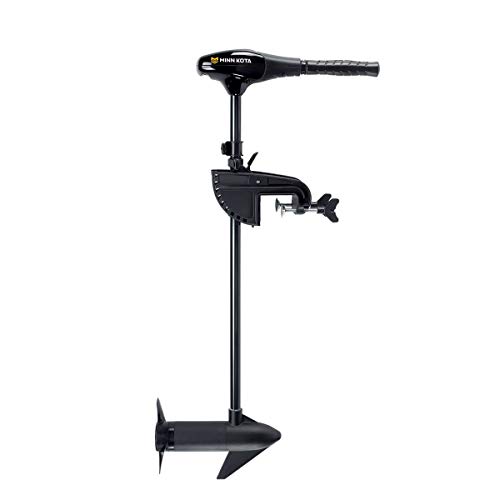
The Endura C2 provides a compact 30-pound thrust with a 30-inch shaft designed for stable steering on smaller inflatables. Its Telescoping Tiller adds a 6-inch range for comfortable control during long days on the water. A Push-to-test battery meter helps monitor power, which is useful for anglers who need assurance before a outing. The 10-Position Lever Lock Bracket allows quick angle changes, while reinforced composite construction resists UV damage and warping. This motor is best for entries into trolling on mid-sized inflatables and for buyers who prioritize simple setup and tunable mounting.
Selected for users who value intuitive control and durability in marine environments. Best for casual fishing trips and calm-water exploration where maneuverability matters most. Caution: the motor head supports a 3-1/4″ motor diameter, so verify compatibility with your boat’s mounting hardware.
Newport NV-Series 36lb Thrust – 12V/24V

The 36-pound thrust Newport NV-Series is built for small craft like kayaks, canoes, and inflatables. It supports both 12V and 24V systems, enhancing flexibility for different battery setups. The design emphasizes corrosion resistance to withstand saltwater and freshwater use, and it employs a lightweight 2-blade propeller for efficient power use. This motor is best for buyers seeking a compact, quiet option that still delivers dependable thrust without draining batteries quickly. It’s a solid match for shorter trips or lighter gear loads.
Best choice for small boats where battery life and portability matter. Avoid this if you need heavy-duty, high-thrust propulsion for larger inflatables or deep-water trolling in strong currents.
Newport NT300 Electric Outboard – 3HP Equiv

The NT300 offers a high-thrust 110 lb (3HP equivalent) output with 36V power. It features a digital throttle with an LCD display and a 24.6″ shaft length, plus a 9.8″ two-blade composite propeller. The trim/tilt range and field-oriented control enable smooth operation across various water conditions. This motor suits anglers and explorers who need long-range, quiet propulsion and a broader speed range. It’s best for longer trips where runtime and efficiency matter more than ultra-lightweight setups.
Choose this if you require strong torque for faster planing and extended trips. It may be heavier and more expensive than smaller electric motors, so balance your boat weight and battery capacity first.
Newport NV-Series 55lb – High Power
This 55-pound thrust model is built for saltwater use and larger inflatables. It offers a 30-inch shaft, a 5-LED battery meter, a 6-inch telescoping tiller, and a 3-blade propeller. Eight-speed control (5 forward, 3 reverse) provides a broad tuning range for slow trolling to faster travel. The motor is designed to run all day with minimized heat and noise to avoid spooking fish. It’s best for boaters needing more power without stepping up to a gas engine. Limitations include greater weight and a higher price point relative to lighter options.
Buying Guide
What to consider before buying an electric motor for an inflatable boat:
- Boat size and load: Match thrust to vessel weight and cargo. Smaller inflatables benefit from 30–36 lb thrust; larger inflatables may require 46–55 lb options.
- Voltage and battery life: 12V systems are common and easy to pair with portable trolling batteries; 24V or 36V setups offer more power but require compatible batteries and wiring.
- Shaft length: A 30-inch shaft is standard for many inflatables; longer shafts help keep the propeller in clean water and reduce cavitation in choppy conditions.
- Propeller design: 2-blade designs are efficient for lighter loads; 3-blade props provide better thrust in wind or current but may draw more battery power.
- Durability and environment: Look for corrosion-resistant components for saltwater use and UV-resistant housings for longevity in marine settings.
- Control features: Telescoping tiller, digital throttle, and battery indicators improve day-to-day usability and monitoring on longer trips.
- Installation and compatibility: Verify mounting brackets, motor diameter, and tiller compatibility with your inflatable transom or mount.
Practical buying questions
- Do I need 12V or 24V power? Choose 12V for light usage and easy battery options; go 24V for longer runtimes and more thrust on bigger inflatables.
- Is a 30-inch shaft enough? For most inflatables with low transom height, yes; opt for 36 inches if you operate in choppier water or need the prop further from the hull.
- Should I pick a 2-blade or 3-blade propeller? 2-blade props are efficient for cruising; 3-blade props give better thrust under heavier loads or wind.
- Is noise a concern? Electric motors are generally quiet, but models with higher thrust and advanced controls may produce more motor whine at higher speeds.
- What maintenance is required? Regularly check fittings, seals, and battery connections; rinse after saltwater use and store with battery removed if possible.
FAQ
- What is the typical runtime on a 12V trolling motor? Runtime depends on battery capacity, boat weight, and speed; a higher capacity battery generally increases run time.
- Can I use a trolling motor with inflatable boats in saltwater? Yes, provided the motor has corrosion-resistant components and proper mounting hardware.
- Are transom-mount motors compatible with all inflatable transoms? Most inflatables use transom mounts; verify mounting dimensions and fit before purchase.
- How do I choose between 2- and 3-blade props? Consider load and current: for calm water and light boats, 2-blade is efficient; for wind or heavier loads, 3-blade can improve thrust.
- Do these motors require maintenance? Yes, periodic checks for corrosion, seals, and electrical connections help prolong life and performance.