Best Electric Marine Outboard Motors for Quiet, Efficient Boating
Electric marine outboard motors offer quiet propulsion, low maintenance, and emissions-free operation for saltwater and freshwater use. This guide highlights five standout options suited to anglers, casual boaters, and small craft enthusiasts. Each pick emphasizes portability, efficiency, and ease of use while noting practical limits for real-world conditions.
Summary table of chosen products:
- Newport NT300 Electric Outboard Motor — Best for extended trips with high efficiency and digital throttle.
- Newport NV-Series 55lb Trolling Motor — Best for all-day trolling with adjustable control.
- LIYUANJUN 48V 1000W Electric Outboard — Best for budget-friendly, compact inflatables.
- Minn Kota Endura C2 Transom-Mount — Best for freshwater fans needing proven reliability.
- Newport NV-Series 36lb Trolling Motor — Best for lightweight, portable setups and quick trips.
Newport NT300 Electric Outboard Motor — 3HP 1300W

Best for: anglers and small-boat owners who want long-range, quiet propulsion with digital control. The NT300 delivers 110 lb of thrust and up to 66 miles on a single charge, with a top speed around 6.5 MPH, making it suitable for extended freshwater trips or coastal excursions where noise and emissions matter.
Why chosen: This model combines a 36V system with a digital throttle and LCD display for precise control. Features include a 24.6″ shaft, 9.8″ two-blade composite propeller, and selectable trim angles (0°, 7°, 14°, 21° / 70°). Field-oriented control supports smooth operation in varying water conditions.
Best use cases: boats that value electric efficiency, moderate runtime, and a quiet ride. It is well-suited for bassinets, sailboats in protected waters, and small runabout craft.
Caution: Real-world runtime depends on boat weight, hull efficiency, and water conditions; heavier loads can shorten range.
Newport NV-Series 36lb Thrust Trolling Motor

Best for: kayaks, canoes, inflatables, and small boats needing lightweight, efficient trolling power. The 36 lb thrust motor provides quiet propulsion with corrosion-resistant construction for both saltwater and freshwater use.
Why chosen: Efficient 2-blade propeller design extends battery life, ideal for light craft where portability and extended battery life matter most. It’s a solid pick for exploratory paddling or slow cruising with minimal wake.
Best use cases: calm-water cruising and dockside maneuvering where a compact electric trolling solution is ideal.
Caution: Lower thrust means slower acceleration for heavier setups; suitable for smaller vessels only.
LIYUANJUN 48V 1000W Electric Outboard

Best for: inflatable boats and compact craft that require a robust yet lightweight electric option. It uses a pure copper core brushless motor and a jet pump propeller to reduce weed buildup and improve efficiency.
Why chosen: The 48V, 1000W setup balances power and energy use, with a 42 cm transom height and 15 km/h top speed. Rotatable 90° bracket and jet propulsion provide reliable handling in tight spaces.
Best use: smaller vessels needing dependable outboard support without a heavy motor. It’s a practical option for casual fishing trips on calm water.
Caution: Requires an appropriate 48V battery and compatible charger for optimal performance; data notes suggest 30–120A battery storage considerations.
Newport NV-Series 55lb Thrust Saltwater Transom Trolling Motor
Best for: saltwater trolling enthusiasts who need steady power and adjustable control for larger boats or longer trolling sessions. The motor supports a long shaft and includes LED battery indicators for easy monitoring.
Why chosen: With 55 lb thrust, 8 speeds (5 forward, 3 reverse), and a 30″ shaft, this model provides robust trolling capability while maintaining quiet operation. It’s designed to handle typical trolling scenarios and varying boat shapes.
Best use: saltwater boats that require reliable all-day trolling without overheating or excessive noise. The combination of 3-blade propeller and adjustable mount adds versatility.
Caution: Performance is influenced by boat weight and water conditions; taller shafts may be beneficial in deeper transoms.
Minn Kota Endura C2 Transom-Mount Electric Trolling Motor
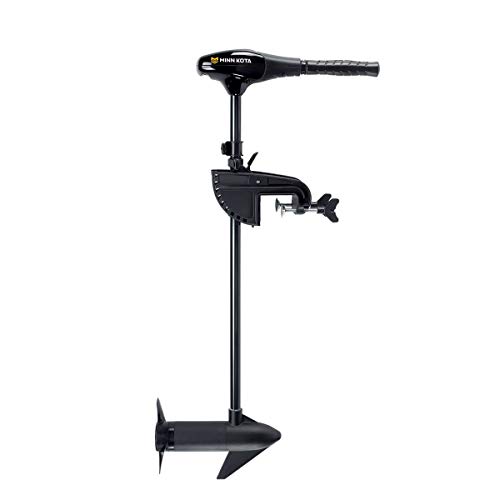
Best for: freshwater anglers seeking a proven, durable trolling solution with straightforward controls. The Endura C2 is known for reliability on lakes and rivers.
Why chosen: Features include a 6-inch telescoping tiller for easy steering and a 10-position lever-lock bracket for secure angle adjustment. The reinforced composite housing resists marine wear, and the power prop handles vegetation effectively.
Best use: classic freshwater trolling setups where a balance of ease-of-use and dependable power is preferred.
Caution: Primarily designed for freshwater use; saltwater suitability may require additional corrosion protection or models designed for saltwater use.
Cbhfmljd 4-Stroke 9HP Outboard Motor

Best for: inflatable boats and small yachts requiring a higher horsepower option with air cooling. This outboard is a gasoline-powered alternative for users evaluating power needs beyond electric options.
Why chosen: The 4-stroke 9HP unit offers robust thrust, 360-degree steering, and a start-in-gear protection feature. It uses a recoil start and a two-blade nylon propeller for reliable operation in a variety of small craft scenarios.
Best use: situations where internal combustion propulsion is preferred or necessary for longer range than typical electric setups.
Caution: This is a gasoline engine, not electric; consider maintenance, fuel logistics, and emissions when comparing options.
Buying Guide: Electric Outboard Motor Essentials
- Boat type and weight: Choose a motor with sufficient thrust for your vessel and target speeds. Heavier boats require more thrust, while smaller crafts benefit from lighter motors.
- Power source and voltage: Ensure your battery system matches the motor’s voltage (36V, 48V, etc.) and has an adequate runtime for planned trips.
- Propeller design: Two- or three-blade props affect efficiency and weed handling. Lighter craft benefit from efficient, compact propellers, while larger vessels may need higher thrust.
- Mounting and shaft length: Shaft length should suit transom height to ensure optimal propeller immersion and control. Adjustable mounts improve versatility across boats.
- Control interface: Digital throttles and LCD displays help with precision. Consider tiller controls for single-handed operation or ergonomic handles for long days on the water.
- Durability and materials: Saltwater use demands corrosion-resistant components. Aluminum/brass fittings and sealed housings extend life in harsh marine environments.
- Maintenance needs: Electric motors typically require less maintenance than gas engines, but battery care and regular inspections are still important for longevity.
- Trade-offs: Electric motors are quiet and emission-free but depend on battery range and charging infrastructure. Gas engines deliver instant range but require fuel management and more upkeep.
Frequently Asked Questions
- What is the typical runtime of an electric outboard motor?
Runtime depends on boat weight, battery capacity, and speed. Heavier loads reduce range; faster speeds consume more power. - Are electric outboards suitable for saltwater?
Yes, many models offer corrosion-resistant components and saltwater compatibility, but check the specific model’s rated environment and maintenance needs. - Do electric motors require a special battery?
Most require a compatible high-quality storage battery matched to the motor’s voltage and current requirements. Follow manufacturer guidelines for charging and storage. - Can electric outboards power larger boats?
Larger boats may require higher thrust and longer shaft lengths. For heavy vessels, consider models with greater thrust and robust control features. - What maintenance is needed for electric motors?
Routine checks include battery health, connections, propeller cleanliness, and motor housing integrity. Regular battery charging and storage care extend life. - Should I choose electric or gas for my boat?
If quiet operation, emissions-free use, and low maintenance are priorities, electric is advantageous. For long-range, high-power needs, a gas engine may be preferred.