Best Electric Motors for Boats: Top Trolling Motors and Outboard Options
Reliable electric propulsion helps boats move quietly, efficiently, and with precise control. This guide highlights five top electric engine choices for boats, including trolling motors for small to mid-size craft and an advanced electric outboard for larger setups. Best for anglers, small-boat enthusiasts, and weekend navigators, these models are noted for durability, efficiency, and ease of use. The table below compares the selected options at a glance.
| Product | Thrust / Power | Shaft Length | |
|---|---|---|---|
| Minn Kota Endura C2 Transom-Mount | 30 Lb thrust | 30 in. | Smaller boats, freshwater fishing |
| Newport NV-Series 55lb | 55 Lb thrust | 30 in. | General trolling, saltwater or freshwater |
| Newport NV-Series 36lb | 36 Lb thrust | 30 in. | Lightweight setups, kayaks and canoes |
| Newport NV-Series 62lb | 62 Lb thrust | 36 in. | Big boats, heavier loads, challenging conditions |
| Newport NT300 Electric Outboard | 1300W (3 HP equivalent), up to 110 lb thrust | 66-mile range, shaft length varies | Medium to large boats, high-efficiency electric option |
Buyer note: when choosing an electric motor, consider boat type, desired thrust, shaft length your setup, battery capacity, and typical water conditions. The selections below are arranged to help you compare common use cases, from lightweight kayaks to larger fishing craft.
Minn Kota Endura C2 Transom-Mount: 30 Lb Thrust
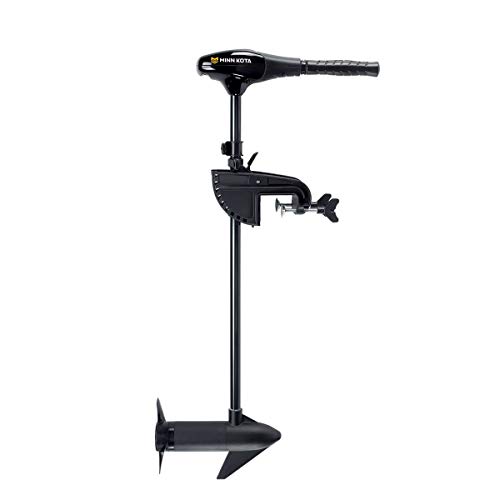
The Minn Kota Endura C2 is a compact transom-mount trolling motor with 30 pounds of thrust and a 30-inch shaft. Best for freshwater boats, small john boats, and compact aluminum craft. The telescoping tiller adds ergonomic control for long days on the water. A push-to-test battery meter helps monitor power while on the move. This model uses a reinforced composite construction, which helps resist UV damage and flexing in marine environments. If you fish in weedy or thick vegetation, the Power Prop designed for heavy vegetation can help push through cover. Best for anglers who want simple, reliable control in calm to moderate conditions. Limitation: smaller thrust means it may require larger batteries or slower speeds in windy or current-rich conditions.
Why selected: Lightweight, straightforward installation, and proven performance for freshwater users who prioritize easy handling and durability. The 30-inch shaft suits smaller boats where a longer shaft would be unnecessary.
Newport NV-Series 55lb: Saltwater Transom Motor

This 55-pound thrust trolling motor is built for both saltwater and freshwater use. It features a 30-inch shaft, a 5-LED battery meter, a 6-inch telescoping tiller, and a 3-blade propeller. Eight speeds (five forward, three reverse) offer versatile control for varying conditions. The mount angle, height, and direction can be adjusted and locked in place as needed. Best for boaters seeking reliable all-day performance with solid low-end torque for quiet, efficient propulsion. Caution: as with any saltwater-rated motor, routine maintenance of terminals and propeller is advised to prevent corrosion over time.
Why selected: Strong all-around performance, suitable for larger or medium boats that require dependable thrust and quiet operation with straightforward adjustments.
Newport NV-Series 36lb: Light Utility Motor
The 36-pound thrust NV-Series is designed for lightweight craft such as kayaks, canoes, and small boats. It emphasizes efficiency with a two-blade propeller that helps maximize battery life while providing steady movement. The 30-inch shaft suits compact setups, and the motor is designed for quiet operation to avoid spooking fish. Best for ultralight vessels or anglers who need portability and easy stowage. Limitation: lower thrust means slower acceleration under heavier loads or strong winds and currents.
Why selected: Ideal for minimalist rigs where weight and battery efficiency matter most, without sacrificing controllability on calm days.
Newport NV-Series 62lb: High-Thrust Trolling Motor
With 62 pounds of thrust, this model targets bigger boats and heavier loads. It is designed for challenging conditions where wind and current demand stronger propulsion. The 36-inch shaft provides additional clearance for deeper hulls, and the motor is built to withstand corrosive environments in saltwater and freshwater. Best for larger jon boats or heavier boats requiring robust propulsion. Caution: higher thrust can demand larger battery capacity and more careful handling to prevent trim issues on small vessels.
Why selected: A strong, high-thrust option for boats that routinely face wind, current, or heavier payloads, providing reliable power in demanding scenarios.
Newport NT300 Electric Outboard: Power and Quiet Efficiency

The NT300 is an electric outboard motor with 3 horsepower equivalent, offering 110 lb of thrust and a 66-mile range on a single charge. It features a digital throttle, a shaft length around 66 miles range, and a 9.8″ two-blade propeller effective for saltwater and freshwater use. Practical for boats that require quiet, emission-free propulsion and longer trips away from shore. Best for boats where an outboard solution is preferred over a trolling motor due to longer range and higher thrust. Limitation: high voltage and longer charging requirements may demand a robust battery system and charging setup.
Buying Guide: Key Considerations for Electric Boat Motors
- Boat size and weight: Larger or heavier boats require higher thrust and possibly longer shafts. Smaller craft benefit from lighter, more compact trolling motors.
- Water conditions: Saltwater use demands corrosion-resistant builds; rough water may justify higher thrust models.
- Battery compatibility: Check the motor’s voltage, run time, and compatibility with your existing battery bank and charging plan.
- Propeller type: A three-blade propeller provides strong push, while two-blade props maximize efficiency for lighter craft.
- Control and ergonomics: Telescoping tillers and adjustable mounts improve comfort and control during long days on the water.
- Maintenance needs: Look for reinforced materials and easy access to parts like prop pins, washers, and seals for longevity.
- Noise and vibration: Quieter, smoother operation helps with fishing activity and user experience on calm water.
Frequently Asked Questions
- What is the difference between a trolling motor and an electric outboard?
– A trolling motor is designed for precise maneuvering and quiet operation at low speeds, typically mounted on a transom. An electric outboard provides higher thrust and range, serving as a primary propulsion source for mid-sized boats. - How do I choose the right shaft length?
– Match shaft length to boat transom height and propwash clearance. Longer shafts reduce propeller cavitation and keep prop in clean water. - What should I consider for saltwater use?
– Look for corrosion-resistant housings, stainless fasteners, and protected connectors. Regular maintenance helps prevent salt buildup and corrosion. - Is higher thrust always better?
– Not always. Higher thrust improves planing and maneuverability for larger boats, but it increases battery consumption and weight. Choose a model that fits your boat and typical loads. - What is the typical runtime on a single charge?
– Runtime varies with boat size, weight, water conditions, and battery capacity. Start with manufacturer estimates and adjust based on real-world tests. - Are electric motors suitable for saltwater?
– Yes, many electric motors are designed for both saltwater and freshwater use when corrosion-resistant materials are used and proper maintenance is performed.