Best Electric Boat Winch for Trailer Towing and Loading
Answering the typical buyer question: these electric trailer winches are designed to load and unload boats quickly with minimal manual effort. The best options below suit different boat sizes, easing trailer loading for recreational boaters, weekend anglers, and small commercial operators. For each product, consider maximum boat weight, line pull, power source, and whether you prefer synthetic rope or steel cable. The following picks balance power, reliability, and ease of use across common trailer setups.
Product comparison at a glance
| Product | Rated Pull | Rope Type | Best For |
|---|---|---|---|
| Nilight Boat Trailer Winch (12V, 3500 lbs) | 3500 lbs | Steel | Small to mid-size boats up to 18 ft |
| Nilight Boat Trailer Winch (12V, 3500 lbs, Synthetic Rope) | 3500 lbs | Synthetic | Durable, corrosion resistance, easier rewinding |
| Megaflint Trailer Winch (12V, up to 6000 lbs) | Up to 6000 lbs | Dyneema synthetic | Higher-load boats, safe synthetic rope |
| Bravex Trailer Winch (12V, 6000 lbs) | 6000 lbs | Steel | Heavier boats, robust performance |
| Extreme Max 3006.8918 Reversible Winch (12V, 3500 lbs) | 3500 lbs | Steel | Budget-friendly, standard load |
Nilight Boat Trailer Winch 3500 lbs (Steel Rope)

Best for occasional boaters seeking a straightforward, cost-effective winch. This 12 V DC electric winch uses a 3-stage planetary gear drive to deliver up to 3500 lbs of line pull, with a marine-rated capability of 6500 lbs and a rolling capacity near 9500 lbs. The unit includes a dual-direction function and three control modes: wireless remote, wired remote, and a manual hand crank for emergencies. It is designed for boats up to about 18 ft and weight up to 5,000 lbs, making it suitable for many aluminum and small fiberglass hulls. Expect quiet operation and smooth pulling thanks to an automatic braking system.
Who it’s best for: boat owners seeking a dependable, mid-range winch for lighter to mid-weight vessels who value multiple control options and a compact, portable unit. Caution: towing performance will decline on steep ramps or heavily inclined trailers; plan for safe loading and avoid overloading beyond rated limits.
Nilight Boat Trailer Winch 3500 lbs (Synthetic Rope)

This variant uses a synthetic rope for enhanced safety and longer service life in marine environments. The same 12 V motor and 3-stage planetary gear system power a 3500 lbs pulling capacity, with the same dual-direction and triple-control scheme as the steel rope version. Synthetic rope reduces hard friction and kinks during spooling, which can improve long-term reliability on rough ramps. Best for boaters who prioritize easier rope handling and reduced memory kinks.
Who it’s best for: boat owners who want lower maintenance on rope and reduced electrical load while still pulling similar loads. Caution: synthetic rope can be more susceptible to UV damage over extended outdoor exposure; cover or store properly when not in use.
Megaflint Trailer Winch (Up to 6000 lbs)

Megaflint emphasizes higher pull capacity with a 30% boost over standard 6000 lbs models, using a Dyneema fiber synthetic rope. It supports dual-mode operation (Power-in, Power-out, Freewheel) and a manual option, with silent operation and robust construction. This winch is well-suited for heavier boats or more demanding trailer launches where extra margin matters. Best for those who want stronger performance without stepping up to industrial-grade hardware.
Caution: ensure the trailer and frame can accommodate higher winch loads; verify mounting points and battery capacity support 6000 lbs sustained operation.
Bravex Trailer Winch 6000LBS
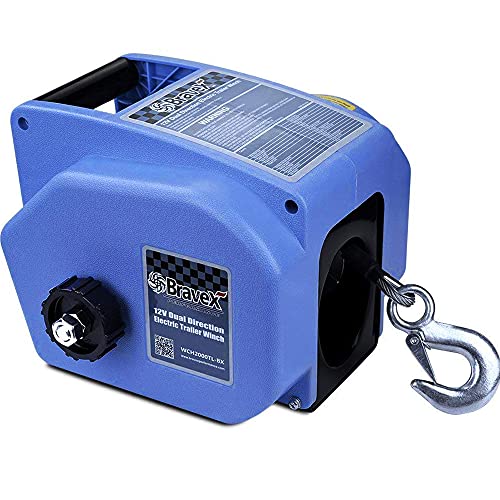
Bravex offers a 6000 lbs capacity with a dual-direction electric system and an integrated hand crank for emergency operation. The unit includes an electric automatic braking system and a relatively quiet operation profile. It is a strong choice for heavier boats or frequent launches where consistent power and reliable braking matter. Best for users who need a robust, all-in-one winch that can handle larger trailers and boats with confidence.
Limitation: higher capacity models may require more robust mounting hardware and a well-powered electrical supply; verify trailer frame compatibility before installation.
VEVOR Electric Boat Winch (2000 lbs)
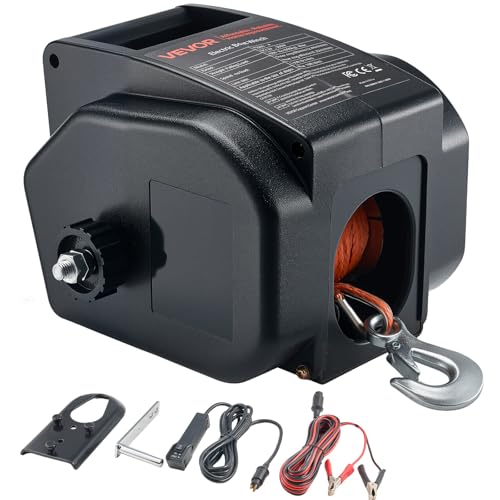
VEVOR’s model delivers up to 2000 lbs pulling force, making it a compact option for smaller boats up to 18 ft. It uses a copper motor and ships with a polyethylene rope that is lighter and easier to handle than steel. The dual control modes include electric operation and a manual crank, plus a 20 ft power cable for flexible wiring. Best for lighter boats or first-time buyers who prioritize a simple, affordable setup.
Caution: the 2000 lbs limit may be insufficient for heavier loads or steeper ramps; plan for conservative use with lighter craft.
Extreme Max 3006.8918 Reversible Electric Boat Winch

Extreme Max presents a 3500 lbs pulling capacity with a 11,000 lbs rolling and 9,900 lbs marine rating, complemented by a high-power motor and a steel cable. The unit is designed for 12 V DC operation with a dual-mode pull and manual override. It is a practical choice for those needing a proven, mid-weight solution with strong load ratings. Best for users who want a familiar, mainstream option with solid pulling power and a steel cable setup.
Caution: steel cables require regular inspection for wear and corrosion; protect against salt exposure to extend service life.
Endvler 12V Trailer Winch (6000 lbs)

Endvler’s model targets the higher end of the spectrum with a 6000 lbs capacity and synthetic rope design. It emphasizes dual-mode operation (Power-in, Power-out, Freewheel) and adds a manual function for emergencies. The synthetic rope is touted for strength and flexibility, offering a safer handling experience on rough ramps. Best for users who need a higher-capacity, versatile setup with safer rope technology.
Limitation: ensure your trailer and vehicle electrical system can sustain frequent high-power pulls; confirm rope length and mounting compatibility before buying.
Buying Guide: How To Choose The Right Electric Boat Winch
Power needs: Match pulling capacity to your boat’s weight and trailer load. If you regularly tow heavier craft, choose a 6000 lbs class or higher with robust mounting and reliable braking.
Rope type: Synthetic rope offers safer handling and less memory; steel cable provides high strength and durability but requires careful maintenance and corrosion protection in marine environments.
Control options: Look for dual-direction operation with wireless and wired remotes, plus a manual crank for emergencies. A waterproof connection or sealed plug is a plus on saltwater ramps.
Mounting compatibility: Check trailer frame strength, mounting points, and availability of a compatible gear drive. Some winches require additional brackets or longer bolts.
Power and wiring: Ensure your vehicle’s battery and wiring can support the winch’s current draw. Some models include longer cables or offer optional wiring kits for easier setup.
Rope life and maintenance: Synthetic ropes may last longer in corrosive environments but need inspection for fraying. Steel cables need lubrication and rust protection; store and maintain properly.
Installation and safety: Follow manufacturer guidance for mounting torque, electrical connections, and braking system testing. Use a remote switch with protective coverage to prevent accidental activation.
FAQ
- What pulling capacity do I need for a typical small boat? Generally, a 3500–6000 lbs winch covers most small-to-mid-size boats on 18 ft trailers.
- Is synthetic rope safer than steel for boat trailers? Synthetic rope is lighter and safer to handle, but requires care to avoid UV damage and abrasion; steel is stronger but heavier and requires more maintenance.
- Can I install a winch on a standard aluminum trailer? Yes, but ensure the mounting hardware and trailer frame can support the load and that electrical wiring meets required standards.
- Do I need a remote control? Wireless and wired remotes improve convenience, especially on uneven ramps; a manual crank is helpful in emergencies.
- How important is braking on a boat winch? Automatic braking helps prevent uncontrolled spooling and provides safer loading and unloading.
- Should I choose a higher-capacity winch for future boats? If you anticipate heavier boats or longer ramps, higher capacity can offer margin and reduce load on the winch.