Best Dock Lines and Rope for Secure Boat Mooring and Easy Handling
Answer: For reliable boat docking, choose double-braided nylon dock lines with pre-spliced loops and lengths that fit your vessel. This guide highlights five top options that balance strength, handling, and weather resistance for common American mooring needs. Best for: small-to-mid-size boats, weekenders, and pontoon operators who want dependable performance without fuss.
Overview table
| Product | Size / Length | Best For | Key Benefit |
|---|---|---|---|
| PACTHSD 2 Pack 3/8″ x 20′ Dock Lines | 3/8″ x 20′ | Mid-size boats | Low-stretch, easy handling, durable |
| PACTHSD 2 Pack 1/2″ x 20′ Dock Lines | 1/2″ x 20′ | Lakes, rivers, marinas | High strength, fray resistant |
| PropelTech 4 Pack 3/8″ x 15’ Dock Lines | 3/8″ x 15′ | Smaller boats, pontoon rigs | Pre-spliced with 12″ eyelet |
| 4 Pack 1/2″ x 15’ Dock Lines | 1/2″ x 15′ | Moderate mooring needs | Double braided nylon, high strength |
| RainierSupplyCo Dock Lines 2-Pack 50′ x 3/4″ | 50′ x 3/4″ | Longer mooring, larger craft | High tensile strength, durable double braiding |
PropelTech 3/8″ x 15’ Dock Lines (4 Pack)

Features: Diameter 3/8 inch; 15 ft length; Black; Four lines per package. The lines resist kinking and rotation, protecting boat paintwork. Double-braided nylon offers flexibility and sufficient stretch to minimize shock during towing. UV, oil, salt, and corrosion resistance help preserve bumpers and boat finishes. Breaking force up to 1565 lbs. Best for boats under 21 feet in length.
Best for: Small to mid-sized boats that require a compact, pre-spliced mooring solution. Choose this if you want a ready-to-use set that reduces handling time. Caution: Not ideal for larger vessels or heavy-duty mooring in high-wload conditions.
PACTHSD 1/2″ x 20′ Dock Lines

Features: 1/2″ diameter; 20′ length; Double braided nylon; Low stretch; All-weather performance for secure docking. Durable construction supports shock-load absorption and abrasion resistance across lakes, rivers, and marinas. Designed for reliable mooring in challenging conditions with fray resistance.
Best for: Boats that need extra strength and protection for sensitive finishes. Choose this if you regularly dock in variable weather. Caution: Heavier lines may be harder to handle for smaller crews.
PACTHSD 1/2″ x 15′ Dock Lines (4 Pack)

Features: 1/2″ x 15′ each; High-strength double-braided nylon; Low stretch; 4 lines per package. Designed to handle heavy loads without kinking, protecting boat paintwork. All-weather performance suitable for lakes, rivers, and marinas. Data suggests up to 7500 lbs breaking force in some sets. Best for: Boats up to a moderate size seeking a compact, four-line package. Limitation: Shorter length than some long-haul mooring lines.
Rainier Supply Co Dock Lines 2-Pack
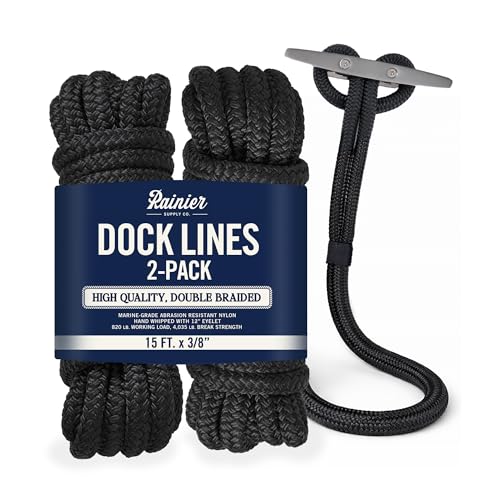
Features: Two 50′ x 3/4″ double-braided nylon ropes with a 18” eyelet heat-treated at throat and bitter ends to prevent fraying; tensile strength about 10,503 lbs; recommended working load up to 2,430 lbs. Softer on hands and boat finishes, with durable construction for long-term use. Best for: Larger boats or those needing longer mooring lines. Caution: Longer length can be bulkier to store and handle in tight spaces.
PropelTech 4 Pack 1/2″ x 15’ Dock Lines

Features: Diameter 1/2 inch; 15 ft length; Black; Four lines per package. Double-braided nylon provides flexibility and sufficient stretch to minimize shock on towing. UV, oil, salt, acid, and corrosion resistance, protecting boat bumpers and finishes. Breaking force up to 7500 lbs; recommended for boats under 30 feet. Best for: Vessels requiring robust mooring with a compact setup. Limitation: May be heavier for very small craft or solo docking tasks.
Buying Guide
- What to look for: Material (marine-grade double-braided nylon), length (14–50 feet covers most small to mid-size boats), and diameter (3/8″ to 1/2″ is typical for recreational craft).
- Length vs. handling: Longer lines reduce jetting risk but are harder to store. Shorter lines are lighter and quicker to handle but may require more to moor in larger waters.
- Pre-spliced loops: A 12″ loop or eyelet eases docking and reduces snags; consider whether you need pre-spliced options.
- Weather and chemical resistance: Look for UV, salt, and oil resistance to extend line life in marine environments.
- Use-case alignment: Choose 3/8″ lines for mid-size boats and 1/2″ lines for heavier loads or larger vessels; longer lines (50′) are better for bigger slips or tidal moorings.
- Safety and handling: Softer fibers are gentler on boat finishes; stiff lines may cause abrasion or chafing in docks and cleats.
FAQ
- What diameter is best for a small boat? Typically 3/8″ is a good starting point for small-to-mid-size craft; 1/2″ is preferred for heavier loads.
- Should I choose pre-spliced lines? Pre-spliced lines save time and reduce fraying risk; they’re convenient for quick docking.
- Are longer lines always better? Longer lines offer more flexibility in bigger slips or tidal areas but are harder to manage and store.
- How important is UV resistance? High UV resistance extends line life in sunny climates and reduces brittleness from sun exposure.
- What’s a safe working load? Look for options with working loads well above your boat’s expected loading to ensure margin for shock loads.
- Can I mix line types? Yes, but ensure all lines provide adequate strength for the specific docking scenario and keep emergency backup lines accessible.