Best Deep Cycle Marine Battery Options for Serious Boat Power
Finding the right deep cycle marine battery hinges on how you use your boat. This guide highlights five strong choices for American boaters, from lightweight AGM models to high-cycle LiFePO4 batteries. Each pick targets specific needs: trolling-motor efficiency, long cycle life, maintenance-free operation, and reliable performance in variable weather. Read on to match your vessel and usage pattern with the most suitable option. A quick buyer’s table below summarizes key attributes to compare at a glance.
| Product | Chemistry | Capacity | Best For |
|---|---|---|---|
| Newport 12V50Ah Deep Cycle AGM | AGM Lead-Acid | 50 Ah | Lightweight trolling motor use |
| VEMDIA 12V 100Ah LiFePO4 | LiFePO4 | 100 Ah | Long life, high cycles, RV/marine |
| Renogy 12V 100Ah AGM | AGM Lead-Acid | 100 Ah | Safe, maintenance-free power |
| WEIZE 12V 100Ah AGM | AGM Lead-Acid | 100 Ah | Versatile off-grid marine use |
| Interstate 12V 100Ah Marine/RV AGM | AGM Lead-Acid | 100 Ah | Dual-purpose cranking and deep cycle |
Newport 12V50Ah Deep Cycle AGM – Light & Trolling-Ready

The Newport 12V50Ah is a lightweight, sealed AGM deep cycle battery designed for trolling motor compatibility. It weighs 32 pounds, making it easy to transport and install on small-to-mid-size boats. Best for anglers or recreational boaters who want reliable, maintenance-free power without excess weight.
Best for: boaters needing a compact, easy-to-handle AGM option that delivers steady trolling motor energy. Why selected: combines a light footprint with sealed, leak-proof construction for on-water confidence.
Caution: 50 Ah capacity is best suited for shorter offshore runs or lighter boats; for demanding high-draw setups, consider larger capacity options.
VEMDIA 12V 100Ah LiFePO4 – Long-Lasting Marine Power

This 12V 100Ah LiFePO4 battery uses a smart 100A BMS and offers up to 15,000 cycles at moderate DoD. It’s a drop-in replacement for Group 31 boxes, ideal for marine trolling motors, RVs, or home backup needs. Its low weight (about 24 pounds) facilitates easy installation and upgrades for power-hungry setups.
Best for: high-cycle, long-life marine or RV power applications. Why selected: exceptionally long lifespan and robust safety features with low maintenance.
Caution: Not intended for engine starting; best used for auxiliary power or storage applications rather than as a starter battery.
Renogy Deep Cycle AGM 100Ah – Safe & Reliable
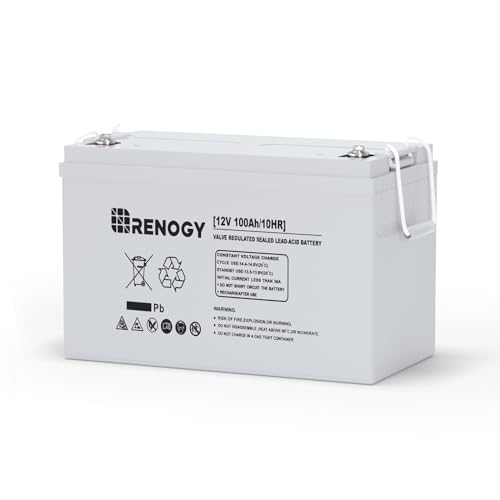
Renogy’s AGM 12V 100Ah battery is a trusted choice with safe chemistry and minimal troubleshooting. Supports series and parallel configurations (up to 4P) for scalable power. It’s a solid option for marine, RV, and off-grid systems seeking stability and reliability.
Best for: boats requiring a safe, maintenance-free AGM with easy expansion. Why selected: Renogy’s established reputation and flexible configuration simplify complex power setups.
Caution: AGM performance can be sensitive to high temperatures; ensure proper venting and storage conditions to preserve longevity.
WEIZE 12V 100Ah AGM – All-Round Marine Suitability

WEIZE’s AGM 12V 100Ah battery emphasizes maintenance-free operation and a low self-discharge rate. It supports long storage without frequent recharging, with a typical operating temperature range enabling marine use in varied climates. It’s a versatile choice for trolling motors, solar, and off-grid needs.
Best for: boaters who want a balanced, maintenance-free AGM with strong longevity. Why selected: solid general-purpose AGM that performs well in mixed marine duties.
Caution: The stated capacity and performance depend on proper temperature and discharge patterns; avoid extreme draw spikes that could reduce lifespan.
Interstate Batteries 12V 100Ah AGM Dual-Purpose

This Marine/RV AGM battery is designed for dual-purpose use, offering strong cranking power and deep-cycle support. It’s built to withstand rugged conditions and provides reliable power for both starting and trolling motor needs, with durability emphasized for long trips.
Best for: boaters who need a versatile battery capable of starting engines and powering accessories. Why selected: dual-purpose design reduces the number of batteries required for some setups.
Caution: Higher deep-cycle demand can reduce starting capacity over time; plan your power architecture accordingly if you rely primarily on trolling motor energy.
Buying Guide: Key Considerations For Marine Deep Cycle Batteries
- Battery chemistry: AGM batteries are maintenance-free and spill-proof, while LiFePO4 offers longer cycle life and lower weight but at higher upfront cost. Choose based on desired longevity and budget.
- Capacity and DoD: Higher Ah ratings and deep discharge tolerance enable longer running times. For trolling motors, balance weight and available space with required runtime.
- Weight and size: Lighter LiFePO4 options are easier to install on smaller vessels; ensure fit within battery boxes and mounting areas.
- Temperature tolerance: Look for batteries with temperature protection or low-temperature cut-off to avoid charging damage in cold climates.
- Maintenance: AGM batteries are maintenance-free; flooded or gassing designs require periodic checks. LiFePO4 generally requires no electrolyte maintenance.
- Expansion options: If future upgrades are planned, consider batteries that support series/parallel configurations for scalable power.
Frequently Asked Questions
- What’s the difference between AGM and LiFePO4 for marine use? AGM is maintenance-free and leak-proof, but LiFePO4 offers longer cycle life and lighter weight, often at a higher upfront cost.
- How many amp-hours do I need for a trolling motor? It depends on the motor’s draw, runtime, and boat size. Larger boats or longer trips typically require higher Ah or LiFePO4 with better cycle life.
- Can I mix battery chemistries on a boat? Mixing chemistries is not recommended due to different voltage profiles and charging needs, which can stress charging systems.
- Do LiFePO4 batteries require special chargers? Yes, use a charger compatible with LiFePO4 chemistry or a charger with a LiFePO4 charging profile to avoid damage.
- How should I store batteries between trips? Keep batteries charged to about 50-80% for LiFePO4 and AGM in moderate temperatures; store in a dry, ventilated area away from extreme heat.