Best Deep Cycle Batteries for Boats: Reliable Power on the Water
Answering the needs of boaters, this guide compares top deep cycle marine batteries to help you choose the right one for trolling motors, electronics, and auxiliary power. These options suit anglers, weekend boaters, and RV/marine hybrids seeking dependable, maintenance-friendly power. The list includes compact lightweight models for small spaces and higher-capacity units for larger vessels. Below, you’ll find five carefully chosen products with clear, buyer-friendly reasoning to match your boat’s electrical demands.
| Product | Best For | |
|---|---|---|
| Newport 12V50Ah Deep Cycle AGM | Smaller boats and trolling-motor setups | 50 |
| UPLUS 12V 79Ah Dual Purpose | All-in-one starter + deep cycle for space-saving layouts | 79 |
| Renogy Deep Cycle AGM 100Ah | General marine and off-grid auxiliary power | 100 |
| WEIZE 12V 100Ah AGM | Budget-friendly, maintenance-free marine power | 100 |
| OPTIMA D34M Bluetop 55Ah | Dual-purpose with compact size and strong starting power | 55 |
Newport 12V50Ah Deep Cycle AGM Marine Battery

The Newport 12V50Ah is a lightweight, sealed AGM deep cycle battery suitable for trolling motor setups. It weighs about 32 pounds, making transport and installation easier on smaller boats. Best for boaters who need reliable power without adding significant weight, this model emphasizes sealed construction for leak-proof operation and long-term marine use. It’s a strong pick for anglers and casual cruisers who prioritize ease of handling and steady 12V performance.
Best for: Small to mid-sized boats with trolling motors and electronics that benefit from a compact, maintenance-free battery. Choosing this model supports lightweight, simple installations where weight matters more than maximum capacity.
Caution: Verify your trolling motor and on-board electrical system compatibility with AGM sealed batteries to avoid mismatched charging profiles.
UPLUS BCI Group 24M Dual Purpose Marine Battery

The UPLUS 12V 79Ah dual-purpose marine battery combines starting and deep-cycle functions in a single unit. With dimensions around 10.24″ x 6.61″ x 9.17″ and about 39.9 pounds, it fits space-conscious layouts while delivering 150RC and 550CCA for reliable engine starts and extended house power. Best for boats that need an all-in-one solution to reduce wiring clutter and battery count.
Best for: Boats requiring a compact, space-saving dual-purpose battery that can power engines, lights, and navigation devices without carrying separate starting and house batteries.
Caution: Confirm the battery compartment fits the size and terminal configuration before ordering to ensure proper mounting and connections.
Interstate Batteries 12V 35Ah SLA Deep Cycle

The Interstate DCM0035 is a smaller-capacity deep cycle option designed for mobility and lighter loads. It’s described as maintenance-free with AGM and spill-proof advantages, tailored for devices or auxiliary systems requiring steady power over longer durations than a typical starting battery. Best for lightweight systems on compact boats or as a supplementary unit for navigation devices and lighting.
Best for: Boats needing a compact, maintenance-free deep cycle option to support electronics and small loads, rather than full-house power. Choose this if space is extremely limited.
Caution: This battery’s 35Ah capacity may require more frequent recharging for high-draw equipment or extended use; consider larger capacity if power demand is heavy.
Renogy Deep Cycle AGM 12V 100Ah Battery
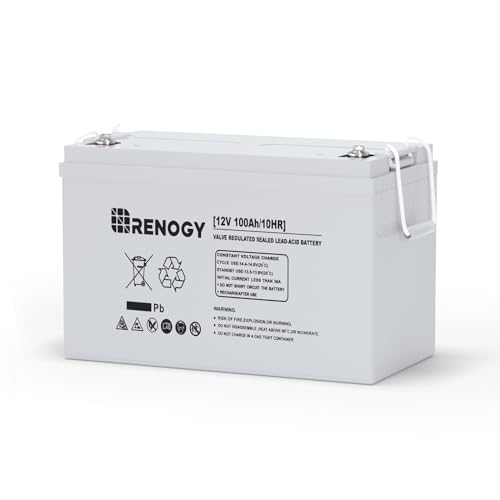
Renogy’s 100Ah AGM battery is a well-known, safe, and robust choice for marine and off-grid systems. It supports series and parallel configurations (up to 4P) and emphasizes safety and stability with its sealed design, reducing troubleshooting compared with other chemistries. This model is a versatile option for auxiliary power, RV use, and camping setups on boats seeking reliable long-term power without maintenance.
Best for: Boat owners needing a dependable, long-lasting 12V house battery with straightforward safety features and flexible system integration.
Caution: Not designed for engine starting; intended for auxiliary power and deep-cycle demands.
WEIZE Deep Cycle AGM 12V 100Ah Battery

WEIZE’s 100Ah AGM battery is a maintenance-free option designed for a variety of marine and off-grid uses. It features low self-discharge and a robust 1150A max discharge, making it suitable for trolling motors, RVs, solar setups, and marine electronics. The battery’s large capacity is appealing for boats that require sustained power across long day trips or overnight stays.
Best for: Budget-conscious boaters needing a reliable, high-capacity AGM option that’s maintenance-free and easy to replace.
Caution: While affordable, verify compatibility with your boat’s charging system and ensure space for a 100Ah unit and its terminals.
OPTIMA Bluetop D34M Dual-Purpose AGM Battery

OPTIMA’s Bluetop D34M is a dual-purpose 12V marine battery with 750 CCA and 55Ah capacity. It uses SpiralCell Technology for higher power output and faster charging. The compact size and dual terminal posts support versatile mounting and wiring. Best for boats needing strong starting power in a smaller footprint, with reliable deep-cycle support for electronics and lighting.
Best for: Vessels that require solid cranking power in a compact form factor, plus consistent reserve capacity for auxiliary loads.
Caution: Limited capacity compared to 100Ah models; plan for higher-demand days by matching with appropriate charging and load management.
Buying Guide
What boat power needs should I consider?
Determine the total draw of your trolling motor, navigation gear, lighting, and pumps. Start with a battery that meets or exceeds the highest continuous load you expect, plus headroom for peak demands during start-up and charging cycles.
AGM vs flooded vs lithium — which is right for you?
AGM (absorbent glass mat) batteries are maintenance-free and spill-proof, making them ideal for boats. Flooded batteries require maintenance but can be cheaper per amp-hour. Lithium iron phosphate (LiFePO4) offers lighter weight and longer life but at a higher upfront cost. For many boaters, AGM provides a balanced mix of safety, performance, and value.
How much capacity do you need?
Higher Ah ratings extend run time but require more space and weight. If you have a larger boat with multiple devices, a 100Ah battery or a pair of 50-100Ah units may be ideal. For small boats and trolling motors, 50-79Ah units can suffice, especially when paired with efficient electronics and careful load management.
Mounting, space, and wiring considerations
Check dimensions, terminal types, and mounting options. Ensure space for ventilation, access for maintenance, and compatibility with your boat’s battery tray and charger. Dual-purpose units simplify wiring but verify that starting and deep-cycle modes align with your engine size and propulsion needs.
Maintenance and lifecycle considerations
Maintenance-free AGM options are generally preferred for boats. Consider expected lifecycle, recharge times, and the ability to withstand marine temperatures. BMS-equipped LiFePO4 batteries offer long lifespans but require careful integration with existing charging systems.
Which model should you pick?
- For lightweight, trolling-motor focused boats: Newport 50Ah is a strong balance of weight and reliability.
- For all-in-one power with space savings: UPLUS 79Ah dual-purpose is a practical choice.
- For reliable auxiliary power on mid-sized boats: Renogy 100Ah provides robust capacity with safety features.
- On a budget and need 100Ah capacity: WEIZE 100Ah AGM offers value with solid performance.
- For compact space with strong starting power: OPTIMA Bluetop 55Ah suits tight compartments requiring quick starts.
FAQ
- What is the difference between a dual-purpose and a deep-cycle marine battery?
– Dual-purpose batteries handle starting and deep-cycle needs, while deep-cycle batteries are optimized for sustained discharge to run electronics longer. - Can I mix different battery sizes on the same boat?
– Mixing sizes is generally not recommended because it can lead to imbalanced charging and uneven wear. If mixing, ensure matched chemistries and a compatible charger. - How do I know which Ah rating I need for my trolling motor?
– Compare motor thrust, boat weight, and runtime goals. A higher Ah battery will provide longer operation between charges but adds weight and space considerations. - Is maintenance needed for AGM marine batteries?
– Most AGM marine batteries are maintenance-free, but periodic checks of connections and charging equipment help maintain performance. - Do lithium batteries fit in standard boat trays?
– Many LiFePO4 batteries are drop-in replacements for lead-acid sizes like Group 24, but verify dimensions and terminal types before purchasing. - How can I maximize battery life on a boat?
– Use a suitable charger, avoid extreme temperatures, and minimize deep discharges to extend cycle life.