Best Cutting Compounds for Boats: Restore Gel Coat Shine Safely
Answering the common search for boat gel coat restoration, this guide highlights top cutting compounds that remove oxidation, scratches, and swirl marks on fiberglass and gel coat. These picks are suitable for most DIY boat owners, professional detailers, and RV enthusiasts seeking faster, noticeable results. Each product is described with who it fits best, why it was chosen, and practical cautions.
| Product | Best For | Why It Stands Out |
|---|---|---|
| 3M Perfect-It Gelcoat Heavy Cutting Compound, 1 Quart | Boat owners with heavy oxidation on gelcoat | Fast cutting for severe surface issues; trusted brand for professional-grade results |
| Meguiar’s M6732 Marine/RV One Step Compound | DIYers seeking simplified restores | All-in-one cleaner and polish, great for moderate oxidation and staining |
| Meguiar’s Marine/RV Power Cut Compound M9132 | Owners tackling deep scratches and oxidation | Fast-cutting formula with reduced swirling on fiberglass |
| 3D Marine & RV Gel-Coat Cutting Compound | Heavy correction on gel coat | No fillers; true correction with adaptive abrasives |
| Meguiar’s M4965 Marine/RV Fiberglass Restoration System | Complete restoration kits | Includes oxidation remover and polish for a full reshine |
3M Perfect-It Gelcoat Heavy Cutting Compound

Best for heavy oxidation on gelcoat where clear removal of deep scratches is needed. This product is widely used by professionals on marine gel coats and is suitable for boats that show significant dulling. It’s a strong choice when rapid correction is prioritized and the user is comfortable with higher-cut compounds. Use with appropriate pads and eye protection. Best for boat owners facing stubborn oxidation and large surface areas that require aggressive cut. Avoid if you’re new to cutting compounds or working on delicate finishes without prior testing.
Meguiar’s M6732 Marine/RV One Step Compound
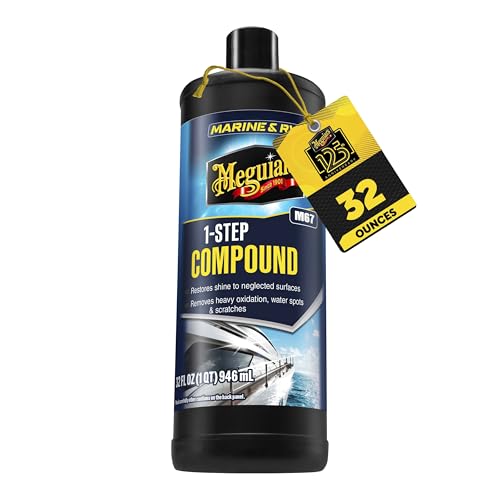
Best for DIY boaters who want a straightforward restoration that cleans and imparts gloss on fiberglass gel coat. This one-step formula is designed to remove moderate oxidation, stains, and water spots while restoring color. It’s a solid choice for smaller to mid-size projects or maintenance rounds, where a quick, bright finish is the goal. If you’re dealing with heavy pitting or deep scratches, consider a dedicated cutting compound first, then follow with polishing and waxing for a lasting shine.
Meguiar’s Marine/RV Power Cut Compound M9132
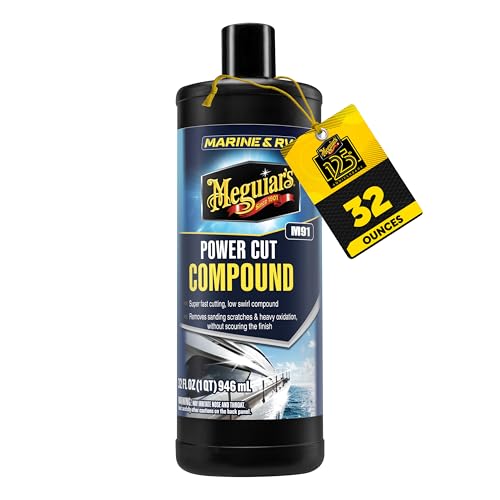
Best for removing heavy oxidation and scratches on fiberglass with a fast-cutting action. The product is designed for professional-grade results yet remains accessible to amateur detailers aiming for efficiency. Choose this if you want a rapid, aggressive correction that reduces swirl likelihood compared with older heavy-cut compounds. Limitations include potential dust creation and the need for proper pad choice and surface testing to avoid haze on delicate finishes.
3D Marine & RV Gel-Coat Cutting Compound
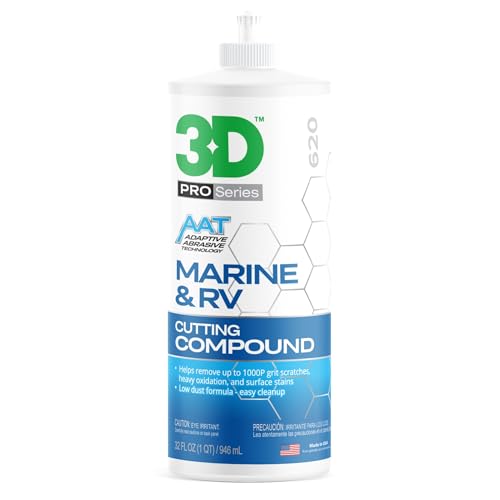
Best for heavy-cut gel coat correction with a no-fillers approach. The product targets up to P1000 grit scratches, oxidation, and stains while offering a true correction rather than masking issues. It’s suitable for boats with stubborn imperfections and works with multiple pad types. A caution: ensure you use compatible pads and follow by a polishing step to achieve a balanced finish, as aggressive cuts can leave micro-marring if not refined.
Meguiar’s M4965 Marine/RV Fiberglass Restoration System

This 3-piece system combines oxidation remover, polish, and a protective wax, offering a complete restoration workflow for fiberglass finishes. It’s best for boat owners who want a guided process from cleaning to shine, particularly on surfaces that have seen long-term exposure to sun and salt. Consider this kit when you prefer a cohesive, stepwise approach rather than sourcing discrete products. A limitation is that it may require multiple steps and applications to reach optimal gloss on very oxidized surfaces.
Buying Guide: Key Considerations for Boat Gel Coat Compounds
What should you think about before buying a cutting compound for boats?
- Surface condition: Heavy oxidation versus light staining determines whether you need a fast-cut option or a gentler polish.
- Gel coat type: Fiberglass gel coat responds differently than painted surfaces; stick to products formulated for gel coat.
- Cutting strength: Higher-cut formulas remove more material but can introduce swirl if not refined with polishing.
- Pad compatibility: Wool pads offer aggressive cutting; foam pads can provide a smoother finish. Match pad type to product.
- Workflow: Some products combine cleaning, cutting, and polishing in one step; others require separate steps for best results.
- Safety and testing: Work in a shaded area, wear eye protection, and test on a small area first to avoid over-correction.
Frequently Asked Questions
- What is the difference between cutting and polishing compounds for boats?
Cutting compounds remove defects and oxidation; polishing compounds refine the surface to a high-gloss finish. Often used together for a complete restoration. - Can I use a cutting compound on painted hulls?
Most gel coat and fiberglass cutting compounds are formulated for gel coats and fiberglass. Check product labels to avoid coatings not intended for painted surfaces. - How do I prevent swirl marks after cutting?
Use a clean, appropriate pad, work in moderate speeds, and follow with a dedicated polishing step to refine the finish. - Is a one-step compound better for beginners?
One-step formulas are convenient for smaller jobs and DIYers, but for severe oxidation, a dedicated cutting product followed by polish yields better results. - Should I wax after restoring gel coat?
Yes. After polishing, apply a protective wax or sealant to maintain shine and slow future oxidation. - How do I choose between the products listed here?
Consider the level of oxidation, project size, and whether you prefer a single-step approach or a multi-step restoration.