Best Copper Bottom Paint for Boats: Protect Your Hull With Smart Antifouling Choices
Answering the question for boaters: copper-based bottom paints offer durable single-season protection against barnacles, weeds, and slime. This guide highlights copper-containing and copper-free options to suit different hull materials and water conditions. It helps sailors, powerboat owners, and commercial operators choose the right coating for fiberglass, wood, steel, and aluminum hulls. The top picks below are selected for ease of use, season-long performance, and compatibility with common marina restrictions.
| Product | Best For | Material Compatibility | Notes |
|---|---|---|---|
| TotalBoat Underdog Marine Antifouling Bottom Paint | Frequent boaters seeking single-season protection | Fiberglass, Wood, Steel | Copper biocide; ablative wear-away; easy next-season prep |
| TotalBoat JD Select Ablative | Saltwater and mixed-water boats needing minimal buildup | Fiberglass, Wood, Steel | Self-polishing; low odor; easy cleanup |
| Rust-Oleum Marine Antifouling | Fiberglass, Wood, Steel in varied water | Fiberglass, Wood, Steel | Copper-based; recoat in 4 hours; easy launch timeline |
| TotalBoat Krypton Copper Free | Aluminum, Pontoon boats, outdrives | Fiberglass, Wood, Steel, Aluminum | Copper-free; bright colors; suitable below waterline |
| TotalBoat JD Select Ablative (Quart) | Season-long protection with easy maintenance | Fiberglass, Wood, Steel | Ablative wear, low odor; environmental-friendly |
TotalBoat Underdog Marine Antifouling Bottom Paint
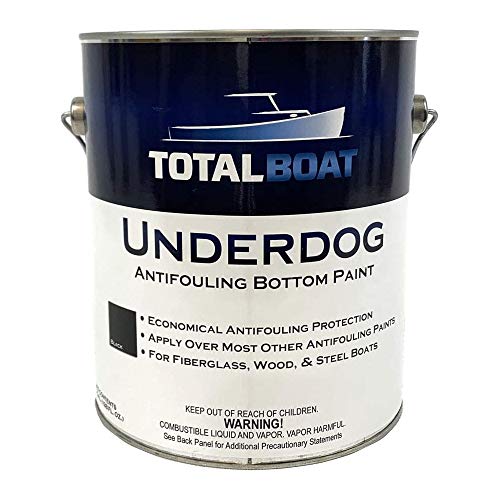
Best for sailors and power boats that need solid, single-season protection. This copper-based antifouling uses a biocide to deter barnacles and mussels on properly prepped hulls. It is designed for fiberglass, wood, and steel and offers durability under trailering and beaching. The ablative formula means the coating wears away during the season, leaving less buildup for easier maintenance next year.
Who it’s best for: boats used frequently in saltwater or mixed conditions; owners who want simple annual reapplication without heavy sanding.
Limitations: as an ablative coating, expect gradual wear; ensure hull is properly prepped to maximize performance.
TotalBoat JD Select Ablative Antifouling Bottom Paint

This is a hybrid anti-fouling coating that self-polishes as the boat moves, reducing paint buildup and simplifying cleanup. Suitable for fiberglass, wood, and steel in salt and fresh water, its ablative action helps sustain smooth hull feel and potential fuel efficiency. It also features low odor and low VOCs for marina compatibility.
Who it’s best for: boaters seeking a balance of performance and easier post-season sanding with low environmental impact.
Limitations: may require burnishing for best speed aunclear; verify launch timing with local marina rules.
Rust-Oleum 396967 Marine Antifouling Paint

Designed for fiberglass, wood, or steel hulls, this copper-releasing formula helps prevent fouling below the waterline. It offers a practical recoat window and coverage up to about 110 square feet per quart. Recoating guidance should be followed to maintain effectiveness and launch readiness.
Who it’s best for: boaters needing a reliable, widely available copper-based option with straightforward recoat timelines.
Limitations: performance can vary with water temperature and biofouling pressure; ensure compatibility with marina environmental rules.
TotalBoat Krypton Copper Free Antifouling
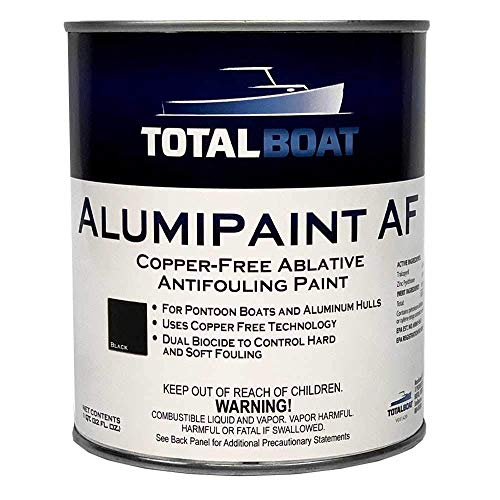
Designed for aluminum and pontoon boats as well as other hull materials, this copper-free formula avoids galvanic issues on aluminum, outdrives, and trim tabs. It provides robust protection while maintaining brighter color options. Suitable below the waterline for multiple materials, it minimizes copper-related concerns.
Who it’s best for: aluminum hulls, pontoons, and vessels with sensitive galvanic environments. Choose this if copper-based paints raise corrosion worries.
Limitations: as a copper-free option, it may require careful attention to surface prep to maximize performance in challenging fouling conditions.
TotalBoat Krypton Copper Free (Gallon) Alternative

Makes sense for boats needing copper-free protection on a gallon scale, suitable for diverse hull materials. It avoids copper biocide, designed to reduce galvanic concerns for aluminum components while delivering season-long antifouling action.
Who it’s best for: buyers prioritizing copper-free formulas with broad material compatibility. Consider this for aluminum or mixed-hull fleets.
Limitations: color brightness and performance can differ from copper-based paints; plan for marina guidelines regarding non-copper coatings.
Buying Guide: Key Considerations For Copper Bottom Paints
What should you evaluate before buying antifouling paint?
- Hull material compatibility: fiberglass, wood, steel, aluminum, and pontoon surfaces each respond differently to ablative and copper-based formulations.
- Water type and usage: saltwater, brackish, and freshwater environments influence the longevity and biocide release dynamics.
- Coating type: ablative vs. hard, self-polishing vs. non-polishing coatings affect buildup, sanding needs, and reapplication timing.
- Marina restrictions: some facilities limit copper-based paints due to environmental concerns; copper-free options may be required.
- Recoat and launch timing: drying and curing windows vary; plan around haul-out schedules and launch readiness.
- Environmental impact: low VOCs and low odor options simplify compliance with local rules and improve air quality during application.
FAQ
- What is the main difference between ablative and ablative/copper paints?
AbBlative coatings wear away with water movement, exposing fresh biocide; copper-containing versions release copper biocide to deter fouling. - Are copper-free paints effective for boats in heavy fouling areas?
Copper-free formulas can perform well, especially for aluminum components, but copper-based paints may offer stronger long-season protection in high fouling zones. - Can I use copper-based paint on aluminum hulls?
Yes, but galvanic considerations exist; copper-free options are often preferred for aluminum to avoid galvanic corrosion. - How soon after painting can I launch?
Launch times vary by product; follow product-specific drying and curing guidance and marina launch rules. - Is environmental compliance a concern with these paints?
Many low-VOC and low-odor formulations exist; some marinas restrict copper-based coatings, so copper-free options can be advantageous. - Which paint is best for frequent trailering?
Ablative coatings with easier maintenance and resistance to buildup are generally suitable, but ensure surface prep is thorough for best adhesion.